

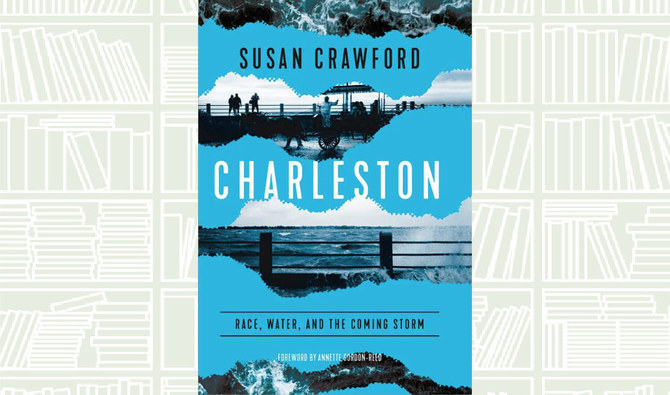
What We Are Reading Today: Charleston by Susan Crawford

Short Url
Updated 18 April 2023
Follow

What We Are Reading Today: Charleston by Susan Crawford

Susan Crawford tells the story of a city that has played a central role in America’s painful racial history for centuries and now, as the waters rise, stands at the intersection of climate and race.

A bellwether for other towns and cities, Charleston is emblematic of vast portions of the American coast, with a future of inundation juxtaposed against little planning to ensure a thriving future for all residents.

All true climate-change stories are about the abuse of power. Knowing this, Crawford makes a plea for climate justice in “Charleston,” her sweeping case study of the South Carolina city.

“Her premise is that this imperiled place is a bellwether for the rest of the coastal US, where government at every level is failing to prepare for the catastrophic effects of sea level rise and increasingly severe storms, which are threatening lives and causing billions of dollars in damage,” said Emily Raboteau in a review for The New York Times.

“Charleston” joins a platoon of important books published in the last few years that, each in its own way, have sounded the same alarm, said Raboteau.


What We Are Reading Today: Can College Level the Playing Field? 

Updated 13 March 2026
Follow

What We Are Reading Today: Can College Level the Playing Field? 

Authors: Sandy Baum and Michael McPherson

We often think that a college degree will open doors to opportunity regardless of one’s background or upbringing. In this eye-opening book, two of today’s leading economists argue that higher education alone cannot overcome the lasting effects of inequality that continue to plague us, and offer sensible solutions for building a more just and equitable society.

Sandy Baum and Michael McPherson document the starkly different educational and social environments in which children of different races and economic backgrounds grow up, and explain why social equity requires sustained efforts to provide the broadest possible access to high-quality early childhood and K–12 education. 

They dismiss panaceas like eliminating college tuition and replacing the classroom experience with online education.