BRUSSELS: Belgium on Tuesday said it had formally asked Iran to repatriate jailed aid worker Olivier Vandecasteele from Tehran, after a disputed prisoner exchange treaty entered into force.
Belgian Foreign Minister Hadja Lahbib said she had informed her Iranian counterpart Hossein Amir-Abdollahian of the “transfer request for our compatriot Olivier Vandecasteele.”
“I denounced his conditions of detention and requested a visit by our ambassador in Iran,” she wrote in a social media post.
Iran arrested Vandecasteele, 42, in February 2022 and sentenced him to 40 years for spying, in a move condemned as “hostage diplomacy” by his backers.
Brussels is eyeing a swap for Iranian official Assadollah Assadi, jailed in Belgium after he was convicted of masterminding a plot to blow up a 2018 Iranian opposition event outside Paris.
But a potential exchange was held up for months after a legal challenge by an Iranian opposition group to a prisoner exchange treaty with Tehran.
The complaint was dismissed by Belgium’s Constitutional Court last month, fueling hopes that Vandecasteele could be returned home.
The treaty formally entered into force on Tuesday.
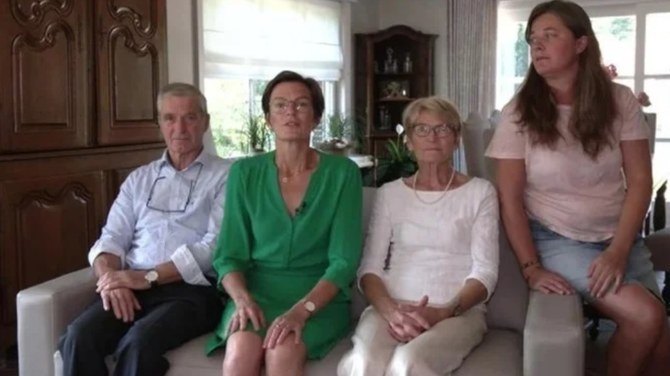
The family of Vandecasteele, who worked for aid organizations in Iran for six years, said he was transferred to Tehran’s Evin prison 10 days ago and was being held in solitary confinement.
They said he complained in a brief phone call that “he could no longer sleep and could barely stand up straight because of excruciating muscle and nerve pain.”
“He is not being treated for this. His detention conditions have not changed and he is not given enough food to preserve his health,” the family said.
“Olivier is totally worn out. He cannot remain the pawn of talks between two countries. His life is at stake,” they said.


Belgium requests Iran return jailed aid worker
https://arab.news/mnuhu
Belgium requests Iran return jailed aid worker

- Belgian Foreign Minister Hadja Lahbib wrote on social media “I denounced his conditions of detention and requested a visit by our ambassador in Iran”
- Belgian Foreign Minister Hadja Lahbib wrote on social media “I denounced his conditions of detention and requested a visit by our ambassador in Iran”


Trump: ‘Iran will be hit very hard!’
- US president says Iran is no longer the ‘Bully of the Middle East’ in his social media post
DORAL, Florida: US President Donald Trump has warned in a social media post that more Iran officials will be targets in war, saying: ‘Today Iran will be hit very hard!’
“Iran, which is being beat to HELL, has apologized and surrendered to its Middle East neighbors, and promised that it will not shoot at them anymore. This promise was only made because of the relentless U.S. and Israeli attack,” Trump also said.
The US leader in his post threatened to expand strikes to include new targets.
“Under serious consideration for complete destruction and certain death, because of Iran’s bad behavior, are areas and groups of people that were not considered for targeting up until this moment in time,” Trump posted on his Truth Social account.
Trump also said that Iran is no longer the “Bully of the Middle East” in his post.
President Masoud Pezeshkian earlier apologized for Iran’s attacks on regional countries, insisting that Tehran would halt them and suggesting they were caused by miscommunication in the ranks.
Pezeshkian said its temporary leadership council had approved the suspension of attacks against neighboring countries unless an attack on Iran came from those countries.