

Worshippers pack out Makkah, Madinah Grand Mosques for Laylat Al-Qadr prayers

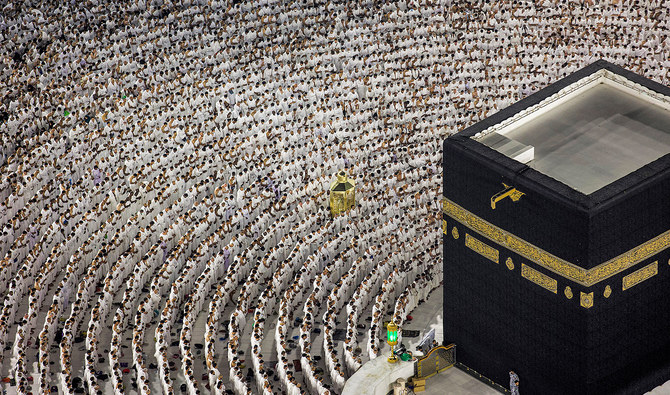
Muslim worshippers pray around the Kaaba, Islam's holiest shrine, at the Grand Mosque in the holy city of Mecca on April 17, 2023, on the night of 27 Ramadan, believed to be Laylat al-Qadr, one of the holiest nights during the holy fasting month of Ramadan. (Photo courtesy: AFP)
Short Url
Updated 18 April 2023
Follow

Worshippers pack out Makkah, Madinah Grand Mosques for Laylat Al-Qadr prayers

  • Laylat Al-Qadr is considered one of the most blessed nights in the Islamic calendar
  • Ramadan one of busiest times of the year at Grand Mosque in Makkah and Prophet's Mosque in Madinah

RIYADH: Millions of worshippers filled the Grand Mosques in Makkah and Madinah on the 27th night of Ramadan, considered by many to be Laylat Al-Qadr, a blessed night on the Islamic calendar.

Saudi authorities have been managing the influx of pilgrims to the holy mosques during the month of Ramadan, one of the busiest times of the year.

More than a million visitors were present at the Grand Mosque in Makkah on Sunday.

General Presidency for the Affairs of the Grand Mosque and the Prophet's Mosque said there were 4,000 workers on hand at the Grand Mosque in Makkah and that the mosque was being clean around the clock by 70 field teams.

A new initiative was launched at the Grand Mosque in Makkah to improve the visitor experience for elderly and disabled pilgrims.

The project is part of the “It is an Honor to Serve Our Pilgrims” campaign which looks to ensure worshippers receive the best possible service from the moment of their arrival until they depart.

The head of the presidency, Abdulrahman Al-Sudais, led worshippers in emotional night prayers in Makkah.


Makkah crafts exhibit showcases Kingdom’s heritage

Updated 11 sec ago
Follow

Makkah crafts exhibit showcases Kingdom’s heritage

Makkah: The Makkah crafts exhibition is spotlighting one of Saudi Arabia’s most significant heritage arts: the crafting of Arabian swords and daggers.

The showcase is a key feature of the Handicrafts Conference: Identity and Creativity, organized by Umm Al-Qura University to honor traditional arts.

Sword and dagger making is among the Kingdom’s oldest and most respected handicrafts, requiring exceptional skill and precision to balance strength with beauty, according to a Saudi Press Agency report.

Historically, these weapons reflected regional identities across Saudi Arabia, each marked by distinct styles and decorations.

Beyond their practical use, swords and daggers symbolize cultural identity. Once vital for defense, they now represent strength, courage and valor, and remain central to national celebrations and traditional attire.

The exhibition pieces feature diverse, refined designs, with each handmade weapon forged from high-quality steel and often adorned with gold or silver.

Their intricate engravings and filigree are more than decoration; they express Saudi Arabia’s rich history and artistic heritage, the SPA added.

The exhibition also highlights Sadu weaving, one of the Kingdom’s oldest traditional crafts, valued for its deep ties to the land and its role in Saudi cultural identity.

More than 100 artisans take part in live demonstrations, offering visitors an immersive glimpse into the nation’s collective memory.

Sadu weaving is a meticulous craft using natural materials and inherited techniques to produce textiles once central to daily life, from homes and desert tents to everyday essentials.

Beyond culture, the Makkah crafts exhibition supports the creative economy by helping artisans market their work and adapt traditional designs for modern demand.

These efforts strengthen handicrafts as a pillar of cultural and tourism development, enabling artisans to balance heritage with commercial sustainability.