

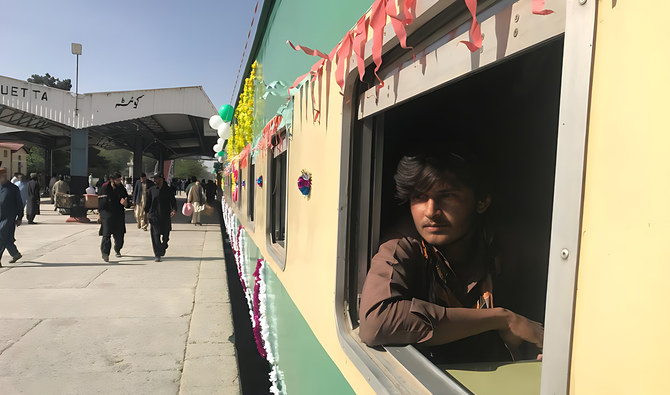

QUETTA: The Pakistan Railways has rebuilt a historical British colonial era bridge that collapsed after the last year’s massive floods in Balochistan, officials said on Saturday, with the rail service between the provincial capital of Quetta and the rest of the country being fully restored after eight months.
Deadly floods last year caused widespread death and destruction in Pakistan’s southern Sindh and southwestern Balochistan provinces, inundating a third of the South Asian country at one point. The deluges killed more than 1,700 people, affected 33 million and washed away key infrastructure.
Balochistan, a rugged mountainous region, has a historical railway passage built by the British more than a century ago that leads through various ravines and rocky tunnels. The floods washed away the Hirak Bridge, which lies some 60 kilometers away from the provincial capital of Quetta and was constructed in 1888 and disconnected Quetta from the rest of the country.
However, railway authorities have restored the bridge and reestablished the key communication link almost eight months after it was destroyed. A Peshawar-bound train, Jaffar Express, also left the Quetta railway station early Saturday morning, carrying more than 300 passengers for different cities in the Sindh, Punjab and Khyber Pakhtunkhwa provinces.
“The rains caused heavy floods in many ravines that lead through the Bolan Pass which caused destruction of the Hirak Bridge in August 2022,” Railways Divisional Superintendent (DS) Fareed Ahmed told reporters at the Quetta railway station.
“We have reconstructed two pillars of the destroyed bridge with the total cost of 656 million rupees ($2.3 million) and today Quetta has been re-connected with the rest of the cities through the train service.”
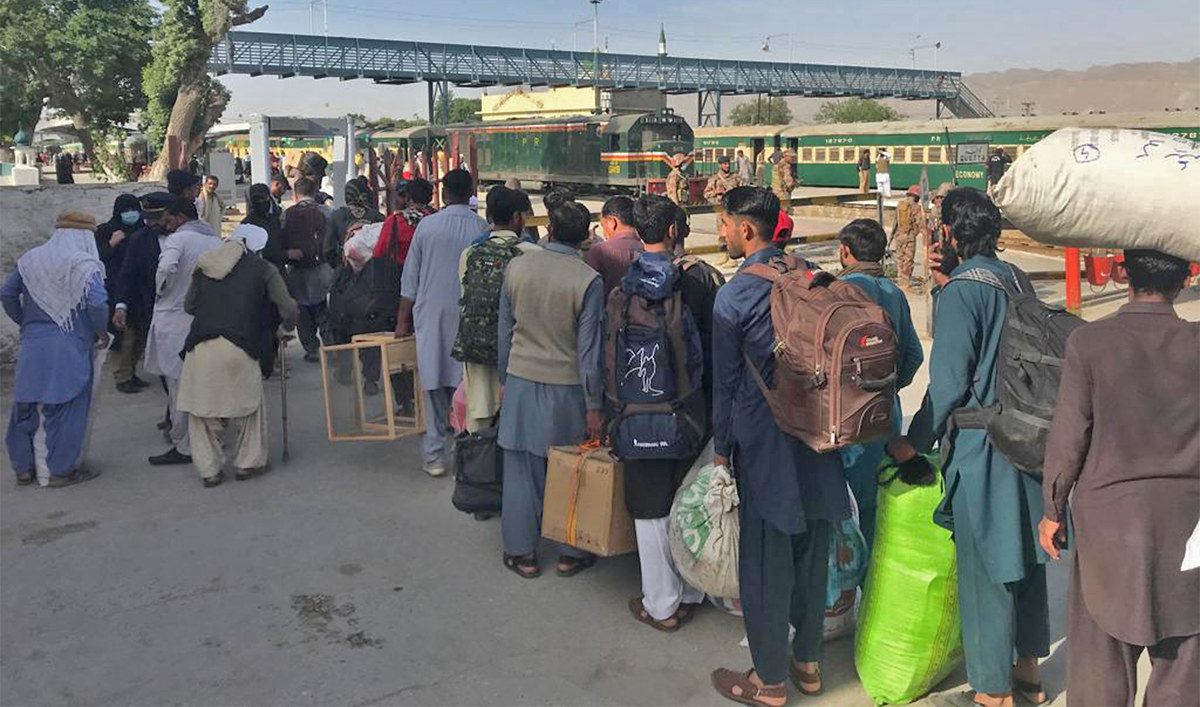
Passengers walk through a security gate at Quetta Railway Station in Quetta, Pakistan, on April 15, 2023. (AN Photo)
In November, Pakistan Railways partially resumed the train service from Balochistan’s Mach city, some 60km from Quetta. People traveled to Mach via road to board trains leaving for southern, eastern and northwestern parts of the country.
Aziz-ur-Rehman, 38, who has been working as a train driver with the Pakistan Railways, said the authorities have directed them to ensure the minimum speed of 15km per hour while crossing the newly restored bridge.
“The construction teams faced difficulties drilling into the rocky land that caused delay in the completion of the bridge,” Rehman told Arab News.
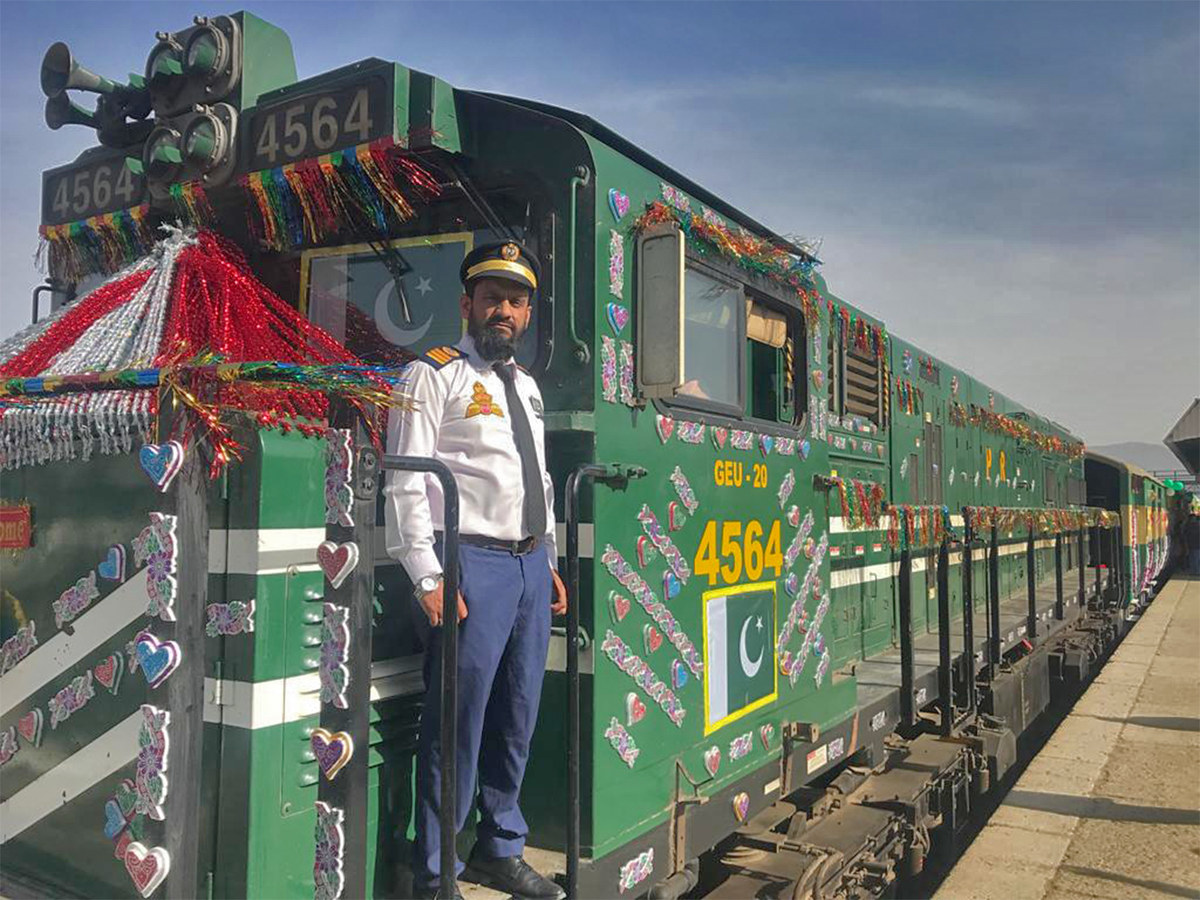
Aziz-ur-Rehman, a train driver, stands beside the train engine at Quetta Railway Station in Quetta, Pakistan, on April 15, 2023. (AN Photo)
The restoration of the rail link coincides with the last few days of the holy fasting month of Ramadan, which is followed by the Eid Al-Fitr religious holiday. A large number of people working in different parts of Pakistan use the train service to visit their hometowns to spend Eid with their loved ones as it is considered an easy and cheaper way to travel in the South Asian country.
Muhammad Nadim, a 16-year-old laborer who was traveling to Punjab’s Bahawalpur city, appreciated the restoration of the rail link from Quetta, saying poor passengers could not afford private transport due to fuel price hikes in the country.
“We are happy that the Jaffar Express has been departing from the Quetta railway station because many passengers were not comfortable with the train leaving from Mach,” Nadim told Arab News.
He requested railway authorities to resume suspended trains that once traveled from Quetta to Karachi and Faisalabad.


