Pakistan says new policy on Saudi refinery project to be finalized in ‘couple of weeks’

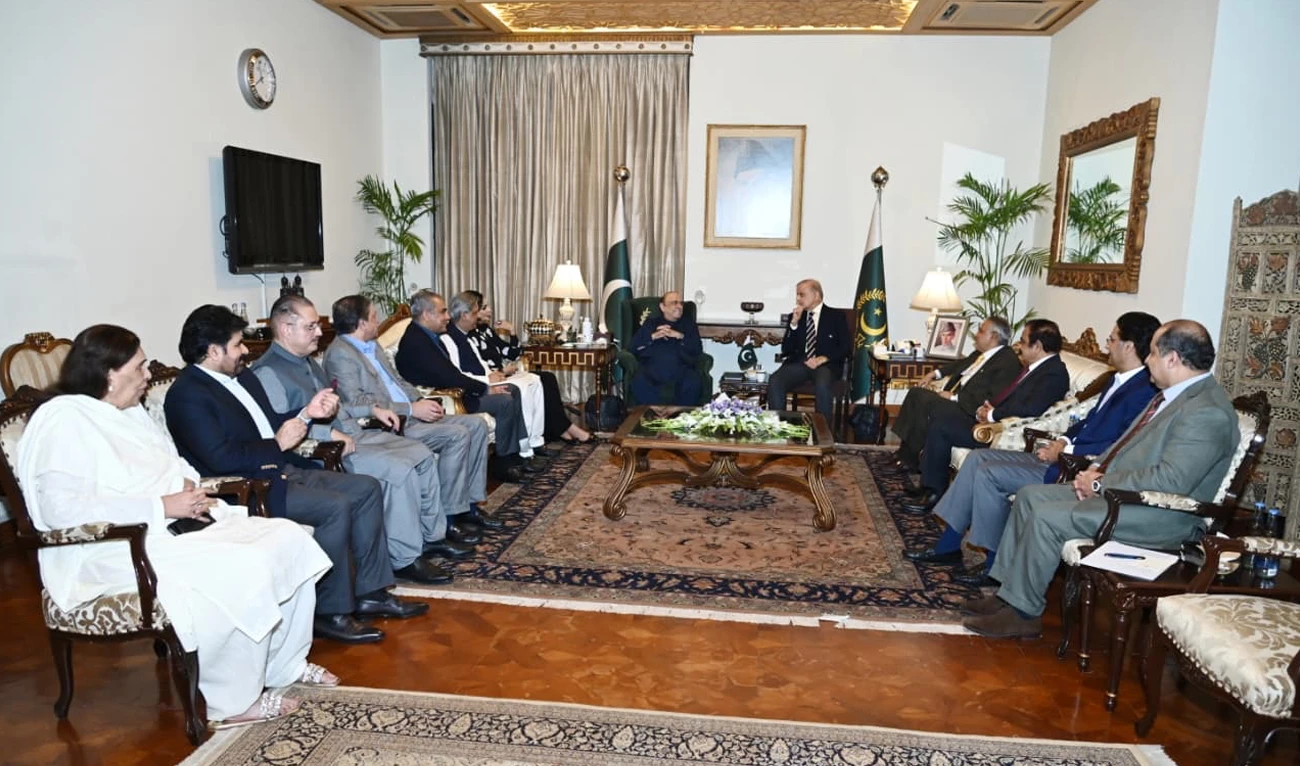
This handout picture, taken on January 12, 2019, released by the Saudi Embassy in Pakistan shows officials from Pakistan and Saudi Arabia discussing prospects of oil refinery and development of Gwadar in a meeting held in Gwadar. (Photo courtesy: Twitter/KSAembassyPK)
Short Url
Updated 14 April 2023
Follow

Pakistan says new policy on Saudi refinery project to be finalized in ‘couple of weeks’

  • Crown Prince Mohammed bin Salman announced the oil refinery project in 2019
  • The $10 billion project has not materialized mainly since due to feasibility issues

ISLAMABAD: State Minister for Petroleum Dr. Musadik Malik said this week a new policy for a $10 billion Saudi oil refinery to be set in Pakistan’s deep-water port of Gwadar, was being deliberated upon by the cabinet and would be finalized in a “couple of weeks.”

The South Asian nation, which is battling a wrenching economic crisis and is in dire need of foreign funds, is seeking to reduce the value of its fuel imports and protect itself from geopolitical shocks. Energy purchases account for most of Pakistan's import bill.

Crown Prince Mohammed bin Salman announced the oil refinery project in 2019 during a visit to Islamabad but it has not materialized mainly since due to feasibility issues, including that the Saudis have suggested a location near Karachi instead of Gwadar in the violence-prone southwestern Balochistan province.

Malik told Arab News in an interview on Wednesday that Pakistan was working “closely” with the Kingdom and delegations of both countries had met multiple times to discuss modalities of the refinery project.

“We have resolved problems around the refinery project,” he said. “We went to Saudi Arabia [for this] and we also met the Saudi team in Abu Dhabi.”

“Right now, the new refinery policy is with the cabinet and in a couple of weeks it will be finalized and we will re-engage with Saudi Arabia … We are really looking forward to it.”

Malik thanked the Kingdom for its continuous support for Pakistan during difficult times.

“Pakistan is receiving a huge amount of oil on deferred payment from Saudi Arabia,” the minister added. “It is about $1.2 billion which is a significant amount … for which we are very grateful.”

“As our needs evolve, we continue to engage with our brotherly country [for more oil on deferred payment] and see how best to move forward,” he added.

Last week, Pakistan said Saudi Arabia had told the International Monetary Fund (IMF) it would provide financing to Pakistan, a critical step needed to secure IMF funding.

Saudi Arabia's $2 billion pledged in external financing support to Pakistan is one of the final conditions for an IMF deal that Islamabad needs to avert a default.

The IMF has asked Pakistan to secure assurances on external financing from friendly countries and multilateral partners to fund its balance of payment gap for this fiscal year, which ends in June.
Pakistan to sell excess gas in international markets from Jan.1— petroleum minister

Updated 4 sec ago
Follow

Pakistan to sell excess gas in international markets from Jan.1— petroleum minister

  • Pakistan was reportedly exploring ways to reduce $378 million in annual losses from supply glut caused by excess fuel imports 
  • Move to sell excess LNG in international markets will limit $3.56 billion losses caused since 2018-19, says petroleum minister

ISLAMABAD: Pakistan will sell its excess liquefied natural gas (LNG) in international markets from Jan. 1, Petroleum Minister Ali Pervaiz Malik said, revealing the move would limit losses caused from a years-long supply gut. 

Local and international media outlets had reported in July that Pakistan was exploring ways to sell excess LNG cargoes amid a gas supply glut that government officials said was costing domestic producers $378 million in annual losses. News reports had said Pakistan had at least three LNG cargoes in excess that it imported from Qatar and has no immediate use for.

Speaking to reporters during a press conference on Sunday, Malik said there was an excess of imported gas in Pakistan as the use of this fuel for power generation had reduced in the country during the past few months. He said Islamabad had been forced to sell the gas to local consumers, due to which the circular debt in the gas sector from 2018 till now had ballooned to around Rs1,000 billion [$3.56 billion]. 

“From Jan. 1 we will sell this excess fuel in international markets to reduce our burden and limit our losses of this Rs1,000 billion [$3.56 billion],” Malik said. 

He said this move would also allow Pakistan’s state-owned enterprises in the sector to operate on their full capacity and generate profits and employment. 

Malik also spoke of foreign oil companies that were ready to invest millions in the country in the near future. 

The minister cited the recent visit of Turkish energy minister to Pakistan which had resulted in the state-owned Turkish Petroleum signing deals to carry out onshore and offshore drilling activities in Pakistan. 

“Turkish Petroleum will also open its office in Islamabad, where 10 to 15 Turkish nationals will be working,” Malik said. 

He also said that a delegation of the State Oil Company of Azerbaijan Republic (SOCAR) visit Pakistan this week, adding that it was also expected to collaborate with local companies for oil and gas exploration.

The minister said SOCAR was also opening its office in Pakistan. 

“It will also invest millions of dollars in the construction of an oil pipeline from Machike to Thalian in collaboration with the PSO (Pakistan State Oil) and FWO (Frontier Works Organization),” Malik said.