

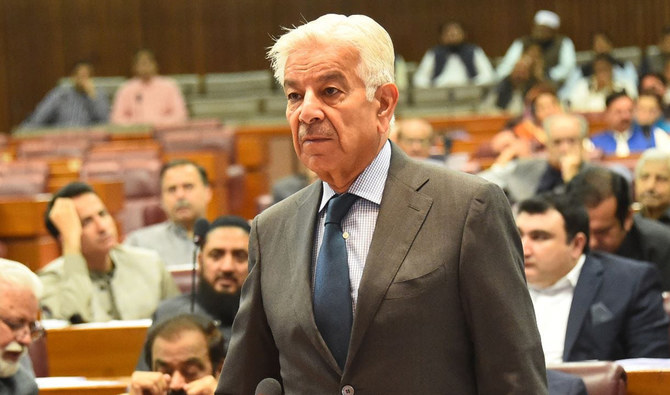

ISLAMABAD: Pakistan’s Defense Minister, Khawaja Asif, has said that while his country enjoyed cordial relations with the interim government in Afghanistan, Islamabad was concerned about the outlawed Tehreek-e-Taliban Pakistan (TTP) still using the Afghan soil to operate in different parts of Pakistan, an international media outlet reported on Monday.
Asif’s statement comes amid an uptick in militant attacks, mostly claimed by the TTP, across the South Asian country, particularly after the group called off its fragile truce with the government in November. The TTP is a separate group but closely aligned with the Afghan Taliban.
Relations between Pakistan and Afghanistan have also been strained lately due to skirmishes at the border, with Islamabad sharing on multiple occasions its concerns with Kabul regarding the presence of TTP in Afghanistan.
In February, Asif visited Afghanistan along with a delegation to hold talks on security issues with the interim Taliban administration and it to rein in the outlawed group whose top leaders took an oath of allegiance to the Afghan Taliban in August 2021.
“We have good relations with [Afghanistan] but the thing bothering us is that the TTP, to date, is using the Afghan soil to operate across Pakistan, especially in KP,” he said in an interview to Voice of America’s Urdu service.
The minister said both sides held a detailed discussion on the matter, while the Afghan Taliban also shared their “limitations” with the Pakistani delegation.
“We used different channels to bring this issue to Kabul’s notice, while I also visited Afghanistan to hold talks,” he said. “The [Afghan authorities] clearly demonstrated that they were willing to cooperate with Islamabad and would not allow the use of the Afghan soil for terrorism against any country as they were bound to do so under the Doha Agreement.”
The Pakistani government, during a meeting of the National Security Committee (NSC) last week, said the previous government, led by Imran Khan, was responsible for bringing the TTP back to Pakistan, which in turn had become a reason behind the recent surge in militant violence across the South Asian country.
“The Taliban were brought back under a program and Imran Khan has been signaling throughout his political career that he is an ideological supporter of the Taliban,” Asif said.
The defense minister opined that the Afghan Taliban were distancing themselves from the TTP, but since they fought together against the North Atlantic Treaty Organization (NATO) forces, they shared a “camaraderie.”
“According to my information about the TTP militants, 78,000 of them have been involved in the war with the Afghan Taliban against NATO forces,” he said. “From this point of view, there was a camaraderie between the Afghan and Pakistani Taliban which was also seen from their words in the meetings with the Taliban ‘that they are not in a position to oppose them but they also want to help Pakistan’.”
Asif said TTP members also had advanced equipment in their possession left by the US in Afghanistan, while he also accused India of helping the TTP.


