Lebanon marks a somber Ramadan this year 

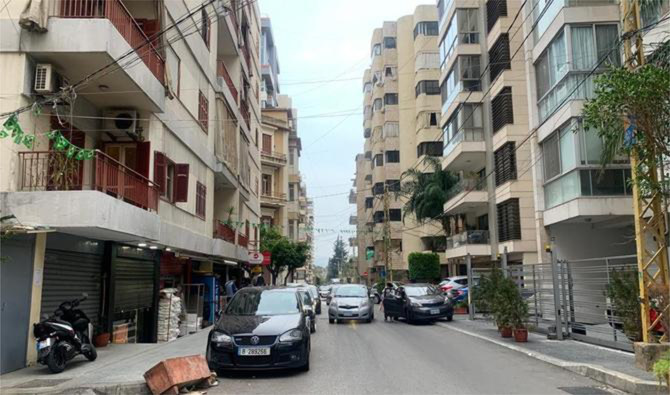
For more than three years, the land of the Cedar has been facing one of the world’s biggest economic crisis since the 19th century, according to the World Bank. The dollar has gone from a fixed rate of 1,500 Lebanese pounds in 2019 to more than 140,000 LBP this year. (Patricia Khoder)
Short Url
Updated 06 April 2023
Follow

Lebanon marks a somber Ramadan this year 

BEIRUT: It is a somber Ramadan for many in Lebanon, including 30-year-old Sherine, who works in a luxury boutique and used to be part of the middle class, which today hardly exists.

“We started preparations more than ten days before Ramadan. My sister, my mother and I would get together to make fatayers, rakakats and sambousseks, which we would put in the freezer to fry at the break of the fast to accompany other dishes. This year, we will replace them with chips and I’m sure we won’t be able to eat desserts or invite family as we used to,” she said. 

For more than three years, the land of the Cedar has been facing one of the world’s biggest economic crisis since the 19th century, according to the World Bank. The dollar has gone from a fixed rate of 1,500 Lebanese pounds in 2019 to more than 140,000 LBP this year. 

Known as the Switzerland of the Middle East, the country’s banking system has completely collapsed. For more than three years, depositors have not had access to their bank accounts and more than 82 percent of Lebanese live in multidimensional poverty according to the Economic and Social Commission for Western Asia. 

A UN report published earlier this week ranks Lebanon as the second saddest country in the world, after Afghanistan. 

“For the last three years, things have been getting worse and we haven’t hit rock bottom yet. With the lack of resources we are currently suffering from, we are even losing our traditions,” said Sherine, who used to love the family gatherings during the holy month, which are now no longer possible. 

A traditional iftar spread in Lebanon comprises jallab (raisin) syrup, Hindi tamer (tamarind) or amareddine (dried apricots), soup, salad, a meat and rice dish, appetizers such as rakakats, baba ghanoush, hummus and stuffed vine leaves, and a dessert usually based on fior di latte (a type of cheese). 

“At current prices, it costs around 100,000 LBP every day for a proper Ramadan meal. We are a family of five. How can I invite friends or relatives?” Sherine laments. 

In Nabaa, one of Beirut’s poorest neighborhoods, people look up to the sky when they think of the meals to be prepared. “We are relying on providence,” they say. 

Noura, who works as a cashier in a local supermarket, said: “This week we didn’t offer any chicken or meat. Our customers can’t even afford to buy a can of tuna anymore, how do you expect them to buy meat? Before the crisis, a bag of bread cost LBP 1,500, today it is LBP 55,000. All other products have followed the dollar rate.” 

In a small shop selling a variety of items, Nazir, a father of five children aged between 7 and 16, is pensive. “Eating has become secondary for us. This morning I received a visit from the owner of the flat. He gave me an ultimatum: I have to leave the house at the end of the month. I was paying $50 a month in rent, now he’s asking me for $200. I don’t have that money and I’m unable to get it. I am an employee in this shop and I earn a very small salary. My children eat twice a day. We haven’t eaten meat for months. I try to buy vegetables once a fortnight. As far as fruit is concerned, when I can afford it, I buy bananas. These are the cheapest fruits. And things won’t change for us for Ramadan,” he said.  

In the same neighborhood, Bilel, an employee of a fruit and vegetable shop, said that “many customers buy on credit. We have the cheapest shop in the area and our customers buy much less than before. They either buy fruit and vegetables one by one, or they buy no more than a kilo.” 

Tarek, in his thirties, has just got married. He is a welder and struggles to make ends meet. “It’s shameful! I even buy the little horns of fresh chillies one by one. But I have no choice. On top of that, I turned off the generator because I can’t afford it.” 

For more than two years, the Lebanese people have been living with almost no electricity. They rely on district generators whose subscription follows the price of crude oil, which has soared with the war in Ukraine over the past year. A recent UN study points out that the remaining middle-class households use 44 percent of their income to pay for the generator subscription. The less affluent prefer to cut off the subscription or share the equivalent of 2 or 3 amperes with their neighbors, which allows them to light a lamp after dark. 

Fadi Ghazzaoui is the head of an organization called Ras el-Nabeh Initiative — a collective that helps the inhabitants of this old district of Beirut, which has always been home to an educated middle class living in dignity. But this is no longer the case. 

“People lack everything. We help hundreds of people who live in the neighborhood. Some of them have cut their subscription to the generator. Others cannot afford to buy gas cylinders for cookers, so they cannot prepare hot food. Now people are relying on charity food banks to survive, but if they don’t have gas, how will they cook their food?” he said. 

Ghazzaoui said that the people he works with can no longer afford to buy medicine or visit a doctor. “They live with the fear of getting sick, because they know they can’t afford to go to hospital. We try to intervene as much as possible.”

“In Beirut, thousands of families rely on the charity food banks to be able to eat. For Ramadan, many NGOs and mosques will be distributing hot food, no doubt with meat or chicken, fruit or an oriental dessert,” he said.  

Fifty-seven-year-old Noha and her husband, both teachers, and their 19-year-old daughter have been helped by the Ras el-Nabeh Initiative. “We own a small house. Until the crisis, we lived with dignity. We were not rich, but we did not need anyone. My husband and I were working. Now my husband has retired and I have been unemployed since the crisis. I currently share 5 amps of generator with three neighbors. I cook once every three days to save gas. I mainly prepare lentils, rice, pasta, which is what we get at the food banks,” she said. 

Her daughter achieved outstanding results in her baccalaureate and was awarded a scholarship to one of the leading universities in Beirut. “She dreams of becoming a doctor and I will do anything to make her happy. Right now, everything is expensive and I am in debt to buy her sanitary towels. I try to provide her with pocket money, but she often goes to university without having enough money in her bag to buy a coffee,” said Noha, who stopped driving her car because she could no longer afford petrol. 


A Kurdish-majority neighborhood in Syria recovers from clashes with hope for the future

Updated 8 sec ago
Follow

A Kurdish-majority neighborhood in Syria recovers from clashes with hope for the future

ALEPPO: A month after clashes rocked a Kurdish-majority neighborhood in Syria ‘s second-largest city of Aleppo, most of the tens of thousands of residents who fled the fighting between government forces and the Kurdish-led Syrian Democratic Forces have returned — an unusually quick turnaround in a country where conflict has left many displaced for years.
“Ninety percent of the people have come back,” Aaliya Jaafar, a Kurdish resident of the Sheikh Maqsoud neighborhood who runs a hair salon, said Saturday. “And they didn’t take long. This was maybe the shortest displacement in Syria.”
Her family only briefly left their house when government forces launched a drone strike on a lot next door where weapons were stored, setting off explosions.
The Associated Press visited the community that was briefly at the center of Syria’s fragile transition from years of civil war as the new government tries to assert control over the country and gain the trust of minority groups anxious about their security.
Lessons learned
The clashes broke out Jan. 6 in the predominantly Kurdish neighborhoods of Sheikh Maqsoud, Achrafieh and Bani Zaid after the government and the SDF reached an impasse in talks on how to merge Syria’s largest remaining armed group into the national army. Security forces captured the neighborhoods after several days of intense fighting during which at least 23 people were killed and more than 140,000 people displaced.
However, Syria’s new government took measures to avoid civilians being harmed, unlike during previous outbreaks of violence between its forces and other groups on the coast and in the southern province of Sweida, during which hundreds of civilians from the Alawite and Druze religious minorities were killed in sectarian revenge attacks.
Before entering the contested Aleppo neighborhoods, the Syrian army opened corridors for civilians to flee.
Ali Sheikh Ahmad, a former member of the SDF-affiliated local police force who runs a secondhand clothing shop in Sheikh Maqsoud, was among those who left. He and his family returned a few days after the fighting stopped.
At first, he said, residents were afraid of revenge attacks after Kurdish forces withdrew and handed over the neighborhood to government forces. But that has not happened. A ceasefire agreement between Damascus and the SDF has been holding, and the two sides have made progress toward political and military integration.
“We didn’t have any serious problems like what happened on the coast or in Sweida,” Sheikh Ahmad said. The new security forces “treated us well,” and residents’ fears began to dissipate.
Jaafar agreed that residents had been afraid at first but that government forces “didn’t harm anyone, to be honest, and they imposed security, so people were reassured.”
The neighborhood’s shops have since reopened and traffic moves normally, but the checkpoint at the neighborhood’s entrance is now manned by government forces instead of Kurdish fighters.
Residents, both Kurds and Arabs, chatted with neighbors along the street. An Arab man who said he was named Saddam after the late Iraqi dictator — known for oppressing the Kurds — smiled as his son and a group of Kurdish children played with a dirty but friendly orange kitten.
Other children played with surgical staplers from a neighborhood hospital that was targeted during the recent fighting, holding them like toy guns. The government accused the SDF of taking over the hospital and using it as a military site, while the SDF said it was sheltering civilians.
One boy, looking pleased with himself, emerged from an alleyway carrying the remnant of an artillery shell.
Economic woes remain
On Friday, SDF leader Mazloum Abdi said he had held a “very productive meeting” with US Secretary of State Marco Rubio and Syrian Foreign Minister Asaad Al-Shibani on the sidelines of a security conference in Munich to discuss progress made on the integration agreement.
While the security situation is calm, residents said their economic plight has worsened. Many previously relied on jobs with the SDF-affiliated local authorities, who are no longer in charge. And small businesses suffered after the clashes drove away customers and interrupted electricity and other services.
“The economic situation has really deteriorated,” Jaafar said. “For more than a month, we’ve barely worked at all.”
Others are taking a longer view. Sheikh Ahmad said he hopes that if the ceasefire remains in place and the political situation stabilizes, he will be able to return to his original home in the town of Afrin near the border with Turkiye, which his family fled during a 2018 Turkish offensive against Kurdish forces.
Like many Syrians. Sheikh Ahmad has been displaced multiple times since mass protests against the government of then-President Bashar Assad spiraled into a brutal 14-year civil war.
Assad was ousted in November 2024 in an insurgent offensive, but the country has continued to see sporadic outbreaks of violence, and the new government has struggled to win the trust of religious and ethnic minorities.
Hopes for reconciliation
Last month, interim President Ahmad Al-Sharaa issued a decree strengthening the rights of Syria’s Kurdish minority, including recognizing Kurdish as a national language along with Arabic and adopting Nowruz, a traditional celebration of spring and renewal marked by Kurds around the region, as an official holiday. Kurds make up about 10 percent of Syria’s population.
The decree also restored the citizenship of tens of thousands of Kurds in northeastern Al-Hasakah province after they were stripped of it during the 1962 census
Sheikh Ahmad said he was encouraged by Al-Sharaa’s attempts to reassure the Kurds that they are equal citizens and hopes to see more than tolerance among Syria’s different communities.
“We want something better than that. We want people to love each other. We’ve had enough of wars after 15 years. It’s enough,” he said.