



KARACHI: At least 11 people were killed and several others injured on Friday, said officials, when a stampede broke out during a free ration distribution in Karachi, Pakistan’s southern port city, amid the country’s mounting inflation crisis.
The incident took place in a factory located in the SITE industrial area where hundreds had gathered to receive wheat flour and other food items during the holy month of Ramadan.
“At least eleven people, nine of them women, were brought dead to Abbasi Shaheed and Civil hospitals,” Dr. Sumaiyya Syed, Karachi police surgeon, told Arab News.
She added that five injured people were currently being treated at the city’s two medical facilities.
Mukhtar Ali Abro, deputy commissioner of district west, said the owner of the factory had invited people to benefit from the free ration distribution, an annual activity performed by affluent individuals in Pakistan during Ramadan.
“We have sealed the factory and arrested its manager along with six other staff members,” he told Arab News. “The owner of the facility, who left this morning to perform Umrah, has also been nominated in the case.”
Abro said the factory owner had not sought permission to distribute ration among such a large number of people, which led to a high death toll.
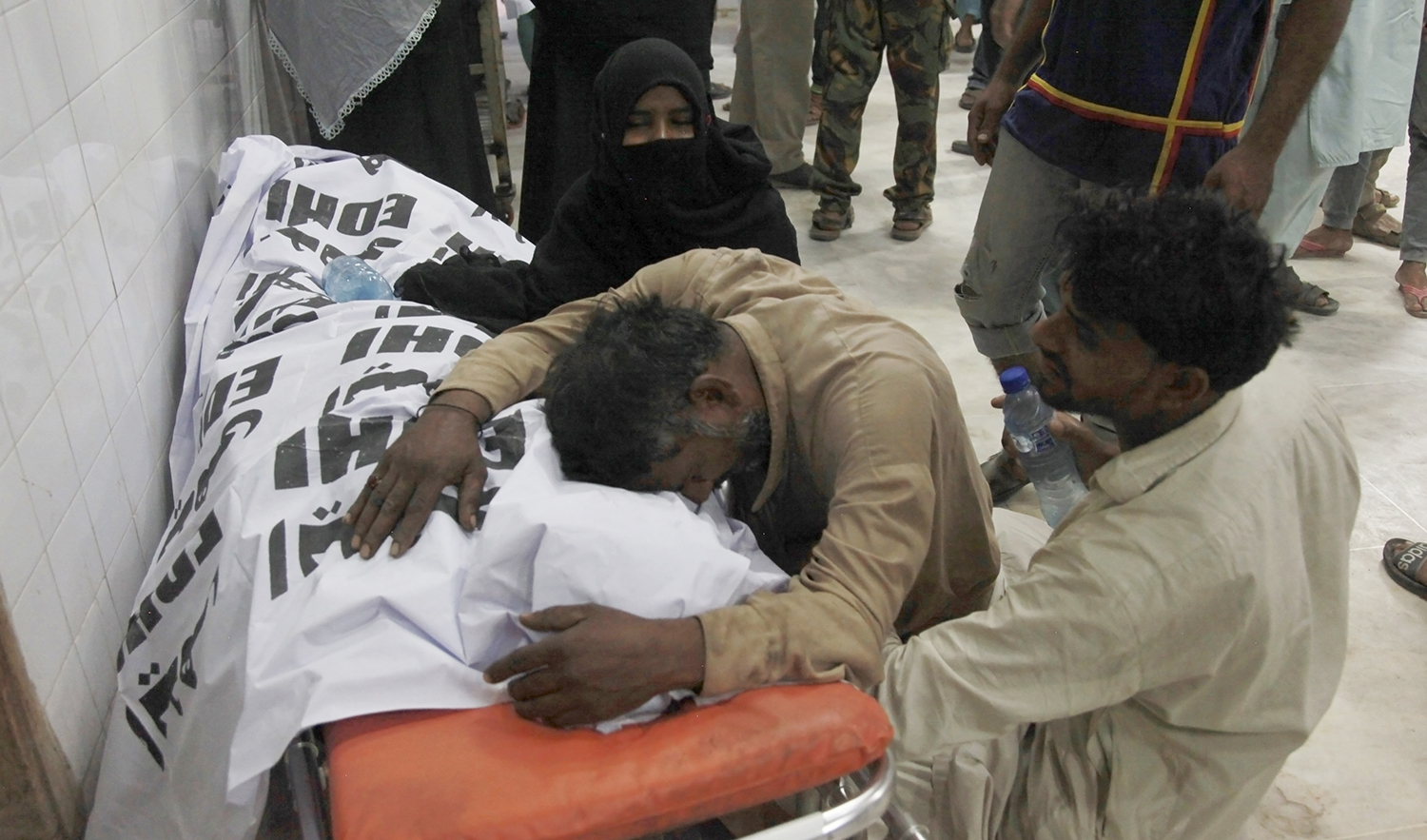
People mourn next to the body of their family member, who was died in the stampede, at a morgue, in Karachi, Pakistan, on March 31, 2023. (AP)
Meanwhile, the top leader of the province’s ruling Pakistan Peoples Party, Bilawal Bhutto-Zardari, instructed Chief Minister Sindh Murad Ali Shah to probe the incident, said an official statement.
“The loss of precious lives in the factory incident is tragic,” Bhutto-Zardari was quoted as saying.
He also urged the authorities to ensure such incidents do not happen in the future.
In a statement, the chief minister regretted the deaths and said that people should inform the administration about ration distribution and other welfare activities to avert such incidents.
About seven people lost their lives in the last couple of weeks as families struggling with soaring costs of basic necessities thronged at free ration distribution sites in Punjab and Khyber Pakhtunkhwa provinces.
Pakistan is currently facing a massive economic crisis that has led to spiraling inflation in the country, resulting in an increase in the cost of basic food items.


