



KABUL: Sofia logs in to class on a laptop in Kabul for an online English course run by one of a growing number of educational institutes trying to reach Afghanistan's girls and women digitally in their homes.
But when the teacher calls on Sofia to read a passage her computer screen freezes.
"Can you hear me?" she asks repeatedly, checking her connection.
After a while, her computer stutters back to life.
"As usual," a fellow student equally frustrated with the poor communications sighs as the class gets going again.
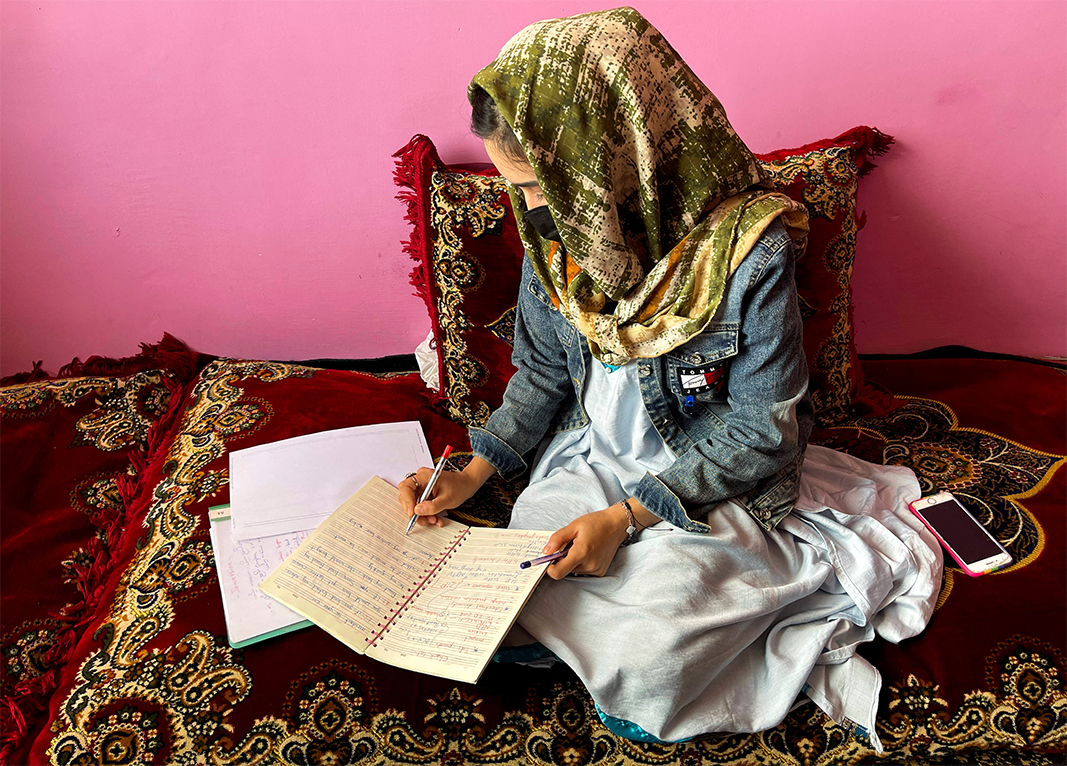
Sofia, an Afghan student, takes notes during an online class, at her house in Kabul, Afghanistan, on March 18, 2023. (REUTERS)
Sofia, 22, is one of a growing stream of Afghan girls and women going online as a last resort to get around the Taliban administration's restrictions on studying and working.
Taliban officials, citing what they call problems including issues related to Islamic dress, have closed girls' highschools, barred their access to universities and stopped most women from working at non-governmental organisations.
One of the most striking changes since the Taliban were first in power from 1996 to 2001, is the explosion of the internet.
Virtually no one had access to the internet when the Taliban were forced from power in the weeks after the Sept. 11, 2001, attacks on the United States.
After nearly two decades of Western-led intervention and engagement with the world, 18% of the population had internet access, according to the World Bank.
The Taliban administration has allowed girls to study individually at home and has not moved to ban the internet, which its officials use to make announcements via social media.
But girls and women face a host of problems from power cuts, to cripplingly slow internet speeds, let alone the cost of computers and wifi in a country where 97% of people live in poverty.
"For girls in Afghanistan, we have a bad, awful internet problem," Sofia said.
Her online school, Rumi Academy, saw its enrolment of mostly females rise from about 50 students to more than 500 after the Taliban took over in 2021.
It has had hundreds more applications but cannot enrol them for now because of a lack of funds for teachers and to pay for equipment and internet packages, a representative of the academy said.
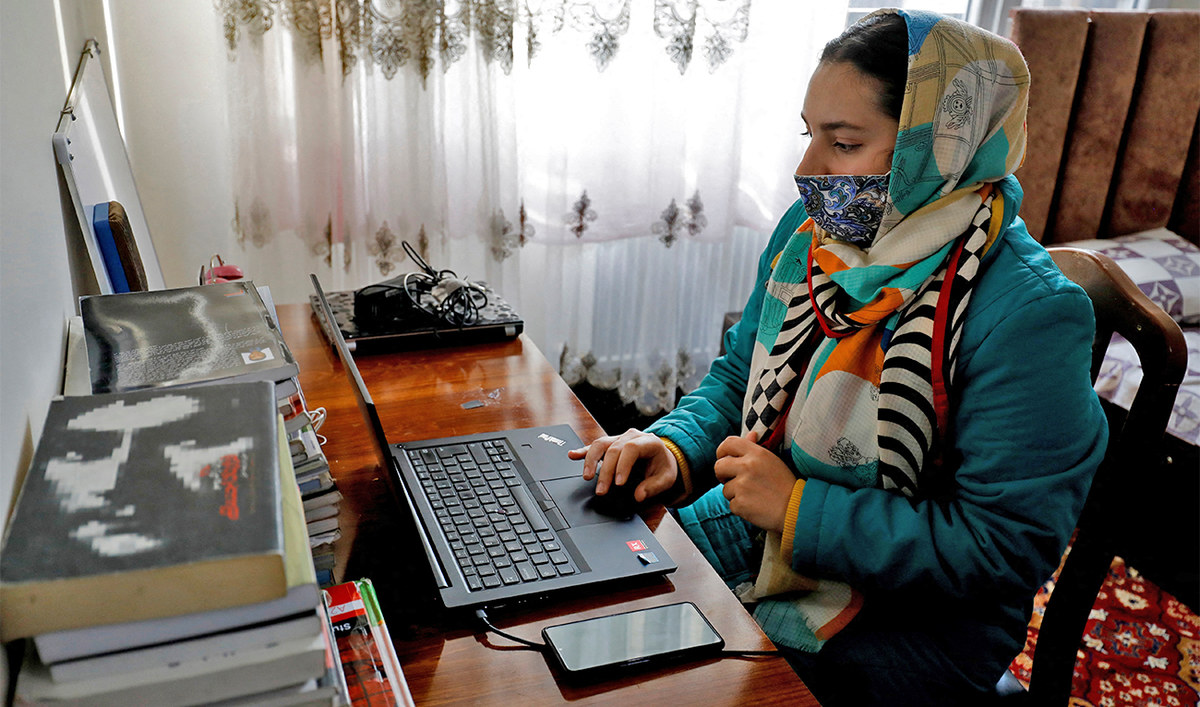
Sana, an Afghan teacher, teaches during an online class, at her house in Kabul, Afghanistan, on February 28, 2023. (REUTERS)
'Too hard'
Sakina Nazari tried a virtual language class at her home in the west of Kabul for a week after she was forced to leave her university in December. But she abandoned it in frustration after battling the problems.
"I couldn't continue," she said. "It's too hard to access internet in Afghanistan and sometimes we have half an hour of power in 24 hours."
Seattle-based Ookla, which compiles global internet speeds, put Afghanistan's mobile internet as the slowest of 137 countries and its fixed internet as the second slowest of 180 countries.
Some Afghans have started calling on SpaceX Chief Executive Elon Musk to introduce its satellite internet service Starlink to Afghanistan, as it has done in Ukraine and Iran, posting requests for help on Twitter, which he owns.
"We also call on Elon Musk to help us," Sofia said.
"If they would be able to (introduce) that in Afghanistan, it would be very, very impactful for women."
SpaceX spokespeople did not respond to requests for comment.
Online schools are trying their best to accommodate Afghanistan's pupils.
Daniel Kalmanson, spokesperson for online University of the People, which has had more than 15,000 applications from Afghan girls and women since the Taliban took over, said students could attend lectures at any time that conditions allowed them to, and professors granted extensions for assignments and exams when students faced connection problems.
The non-profit group Learn Afghanistan, which runs several community-based schools in which some teachers run classes remotely, makes its curriculum available for free in Afghanistan's main languages.
Executive director Pashtana Durrani said the group also ensured that lessons were available via radio, which is widely used in rural areas. She was working with international companies to find solutions to poor internet access but said she could not elaborate.
"Afghanistan needs to be a country where the internet is accessible, digital devices need to be pumped in," Durrani said.
Sofia said Afghan women had grown used to problems over years of war and they would persevere no matter what.
"We still have dreams and we will not give up, ever."


