



CAIRO: The Middle East and North Africa region witnessed staggering activity in the startup and venture capital space last week spearheaded by Saudi Arabia.
The region’s startup ecosystem experienced debt and equity financing with one mega round as well as cross-border investments.
For its part, Saudi Arabian startups managed to secure a large bulk of funding while UAE-based startups also participated with a fair share.
Tamara secures $150m in debt financing
Saudi-based fintech giant Tamara raised $150 million in debt financing from global investment banking company Goldman Sachs.
Founded in 2020, Tamara is one of the region’s leading buy now, pay later providers with over 15,000 partner merchants using their services.
“Providing excellent products and services to our customers across shopping, payments and banking is at the core of Tamara,” Abdulmajeed Alsukhan, co-founder and CEO of Tamara, said.

Abdulmajeed Alsukhan, co-founder and CEO of Tamara. (Supplied)
The funding will provide the company with support to finance the demand for its BNPL product and continue its growth across new verticals.
“The team has shown the ability to scale a complex B2B (business-to-business) and B2C (business-to-consumer) business model, and BNPL is just an initial offering. We see a much deeper demand that we can fulfill with the same technology and customer-first approach,” Alsukhan added.
Aumet raises $7m to expand AI capabilities
Saudi Arabia’s healthtech startup Aumet raised $7 million in a pre-series A funding round from Tokyo-based venture capital firm AAIC and Swiss private equity firm AIJ Holdings alongside other investors.
Established in 2016, Aumet is an artificial intelligence-enabled B2B platform that provides software solutions like an enterprise resource planning system and a marketplace for pharmacies.
The company also facilitates the exchange of data between healthcare providers, manufacturers and distributors to enable them to make the right decision.
The platform uses predictive analytics to forecast the procurement of products for pharmacies, resulting in cost savings and other efficiencies in the supply chain of pharmacies.
The company plans to utilize its funding to further expand its artificial intelligence capabilities, reach more pharmacies, and provide better access to affordable healthcare products.
Aumet serves more than 10,000 pharmacies across Saudi Arabia, Jordan and Egypt.
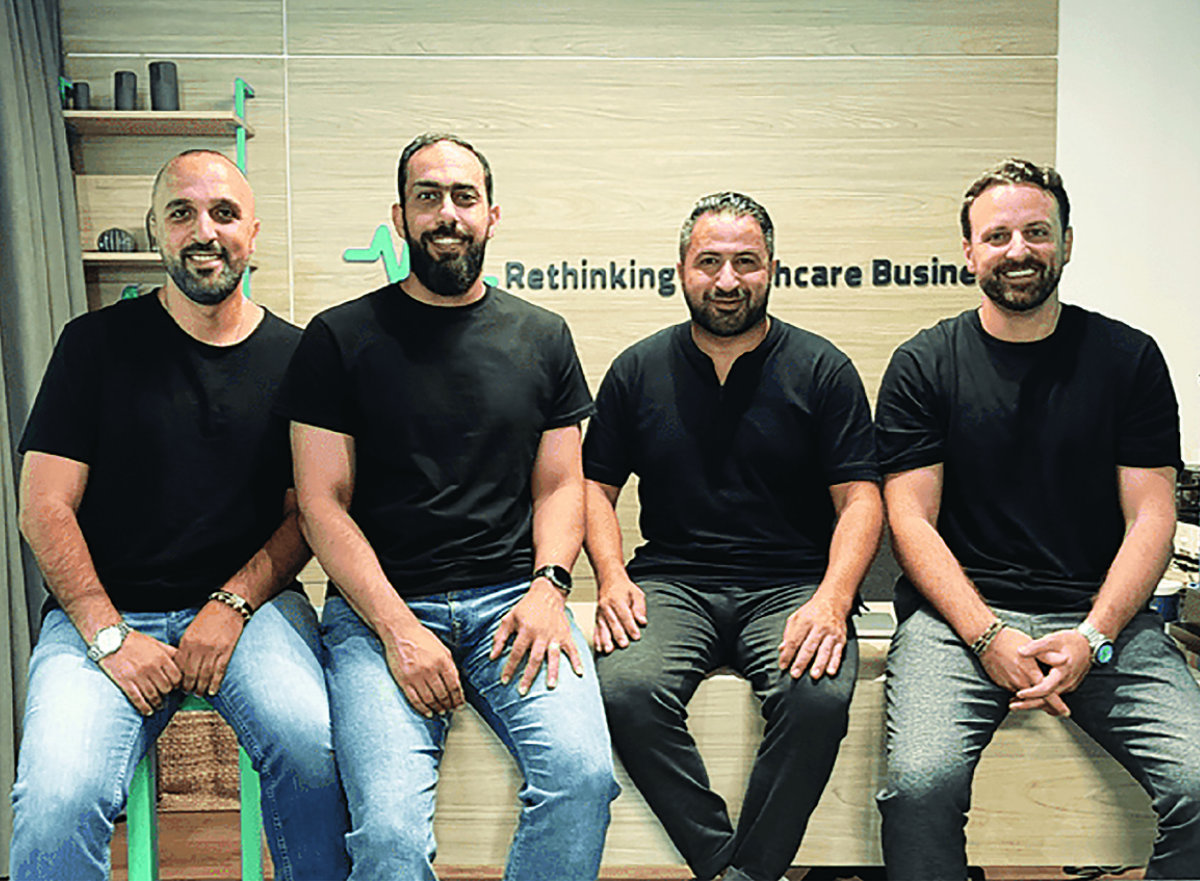
Aumet plans to utilize its funding to further expand its AI capabilities. (Supplied)
Saudi Venture Capital launches $80m fintech fund
The Kingdom’s booming fintech sector is set to get a boost, thanks to an $80 million investment fund launched by Saudi Venture Capital Co.
The ‘Investment in Fintech VC Fund’ was launched in partnership with Saudi Arabia’s Capital Market Authority and the Financial Sector Development Program to preserve the Kingdom’s fintech industry growth that attracted almost 25 percent of all Saudi venture capital funding last year.
SVC aims to stimulate and sustain financing for startups and small and medium enterprises from the early stage to initial public offering by backing venture capital and private equity firms all around the region.
The firm, which has always been keen to empower the startup landscape in the Kingdom, also signed a memorandum of understanding last month with the Saudi stock exchange Tadawul to support small and medium enterprises going public.
The company will strategically place the new fund to support Saudi Arabia’s fintech ecosystem which raised $239 million in funding in 2022, according to venture data firm MAGNiTT.
Saudi Arabia’s venture capital market has been one of the most attractive markets globally, capturing $987 million in funding last year, a 72 percent increase from the year before.
The Kingdom’s 2022 funding boom came as investment across the world decreased by 35 percent year-on-year, while the US venture market experienced a 37 percent drop, according to Crunchbase.
The UAE and Egypt, which are the region’s leading venture markets, also witnessed a decline in funding activity last year.
Founded in 2018, SVC is a government investment company under the SME Bank and has invested in 35 funds which financed 525 companies through 904 deals.
Spate of regional funding rounds
UAE-based fintech Credable raised $2.5 million in a seed funding round led by Ventures Platform and Egypt-based Acasia Ventures to roll out new products across Tanzania, Uganda and Kenya.
On the other hand, UAE-based payment solution Qlub raised $25 million in funding co-led by Cherry Ventures and Point Nine with participation from STV, Raed Ventures, Heartcore, Shorooq Partners, FinTech Collective and Al Dhabi Capital.
In addition, UAE-based edtech almentor raised $10 million in a pre-series C funding round led by e& Capital alongside other Egyptian investors to accelerate the company’s growth and expand into the Kingdom.
Furthermore, Saudi-based NFT marketplace Nuqtah raised an undisclosed seed funding round led by Animoca Brands with participation from Polygon to scale the business over the next 12 months.
Also, Bahrain-based proptech Estater raised $5 million in a series A funding round led by undisclosed investors from Saudi Arabia and Bahrain to accelerate product development and boost technology infrastructure.
Iraq Islamic Bank partnered with MSA Novo to launch a new fund targeting Iraqi startups and lead the digital transformation in the country.
Abu Dhabi investment firm Group 42 went on to acquire a $100 million stake in TikTok’s owner company ByteDance.


