NEOM Airlines set for take-off by end of 2024, CEO reveals

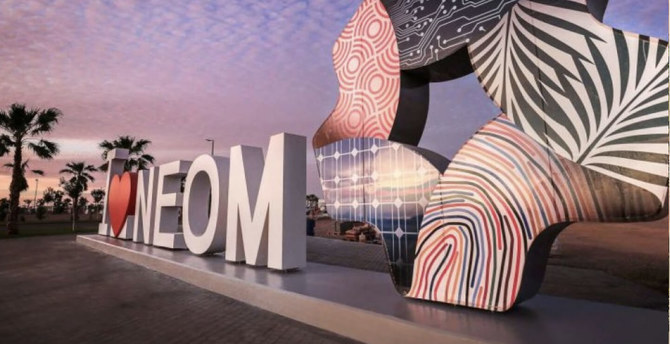
The $500 billion NEOM megaproject is set to transform the Kingdom’s northwest Red Sea coast to a high-tech hub (NEOM)
Short Url
Updated 24 March 2023
Follow

NEOM Airlines set for take-off by end of 2024, CEO reveals

RIYADH: A dedicated airline for Saudi Arabia’s futuristic city NEOM will take to the skies by the end of 2024, the carrier’s CEO has revealed.

Writing in a blog post, Klaus Goersch set out an ambitious vision for NEOM Airlines, promising that passengers will receive “a completely different travel experience”.

Goersch, who has previously served as chief operating officer of British Airways and Air Canada, argued the new service will be “futuristic and efficient”, adding: “I can honestly say the opportunity here is way beyond anything else out there.”

The development of the airline comes as Saudi Arabia seeks to boost its aviation sector, with Crown Prince Mohammed bin Salman earlier this month announcing a new carrier, Riyadh Air, which will benefit from a $37 billion aircraft deal with US firm Boeing.

In his blog post, Goersch painted his vision for NEOM Airlines as he set out the “new future” for air travel.

He said: “Just imagine if your bags were collected from your home or office and delivered to the hotel or residence you were going to. 

“Imagine if biometrics were advanced enough to recognize you via facial recognition as soon as you walked in a building, security clearing you for travel without the need for even going through a gate – let alone having to bother with a visa. 

“And just imagine the time of your meeting changed by a few hours and you were able to change your flight to a later one, without hassle or cost. 

“Better still, imagine you are collecting loyalty points at the airport – where the whole place is lounge-style service – as well as while flying and when using the facilities in your destination, because everything is owned by the same company.”

Goersch went on to say the airline will initially retrofit existing aircraft in order to get the carrier up and running, before shifting to new planes. 

“Come 2026 onwards, there will be new innovative aircraft – whether it be electric, hydrogen-powered or supersonic – and next-generation interiors coming online from us. We are already in discussions with plane, interior and seat manufacturers,” he wrote.

In keeping with NEOM’s pledge to be environmentally-friendly Goersch said the airline’s ambition is for every flight to have “ some sustainable fuel onboard” originating from mixing facilities at NEOM. 

He added: “Sustainability will even stretch into the catering, with foods sourced locally from here and delivered via on-demand dining at a time when you actually feel like eating. 

“We will look at every single component right down to the carpets and single-use plastics. 

“Little things like this will accumulate and add up to more than the sum of their parts.”

The $500 billion NEOM megaproject is set to transform the Kingdom’s northwest Red Sea coast to a high-tech hub.


How KAUST is transforming waste into wealth

Updated 09 January 2026
Follow

How KAUST is transforming waste into wealth

  • Researchers target $275m market with waste-to-value algae innovation

RIYADH: Turning food waste into a valuable industrial product may sound improbable, but scientists at King Abdullah University of Science and Technology are proving it is possible — using algae that has existed for millions of years. 

Last month, researchers at the university unveiled a sustainable method that harnesses an ancient red microalga to reduce food waste in the Kingdom while producing a high-demand natural pigment.

The study was led by bioengineering student Mauricio Masson, with support from Michael Fox, assistant professor of marine science, alongside researchers from KAUST and the Arizona Center for Algae Technology and Innovation. The international team included Kyle Lauersen, KAUST associate professor and lead author of the study.

Scientists at King Abdullah University of Science and Technology (KAUST) developed a sustainable method to use an ancient type of algae while reducing food waste in the kingdom. (Supplied)

The research highlights a “sustainable bioprocessing” approach, demonstrating how an aquatic plant can convert chocolate factory waste into C-phycocyanin — a blue pigment with a global market expected to reach $275 million over the next four years.

“Our research focused on an extremophilic red alga that can thrive in harsh conditions and efficiently consume sugars and nutrients found in food waste streams,” said Lauersen.

Lauersen is an associate professor and chair of the bioscience and bioengineering programs in the Biological and Environmental Sciences and Engineering Division at KAUST. He explained that a key objective of the study was to show that food waste — often discarded or sent to landfills — can be repurposed as a feedstock for producing high-value compounds, including natural pigments and proteins, through algae-based bioprocesses.

“Our main goal was to develop an environmentally friendly approach to turn waste into useful products that have the potential to be scaled,” Lauersen told Arab News.

FASTFACT

Did you know?

• By 2030, the global market for C-phycocyanin is projected to exceed $275 million, reflecting growing demand across food, health, and industrial sectors.

• C-phycocyanin has demonstrated potential benefits in antioxidation, inflammation, cancer research, antimicrobial activity, neurodegeneration, diabetes management, and wound healing.

• As a natural pigment, C-phycocyanin offers a healthier alternative to synthetic food colorants and is approved by the US FDA for use in food products.

He added: “Algae are especially well suited for this because they grow quickly, require relatively few resources, and can metabolize a wide range of organic compounds.”

The red microalga Galdieria yellowstonensis feeds on chocolate waste rich in residual sugars, producing a protein-dense biomass that contains C-phycocyanin, according to KAUST. The pigment is widely used as a natural food coloring — found in products such as ice cream and blue-colored beverages — as well as in cosmetics and pharmaceuticals.

Beyond the study’s original goals, researchers also discovered that elevated levels of carbon dioxide significantly enhance algae growth, even though CO₂ is typically considered a byproduct of microbial sugar consumption.

Another major outcome of the research is its potential to reduce land pollution by transforming food waste into a nutrient source for algae, offering a sustainable alternative to disposal. 

Galdieria yellowstonensis feeds on chocolate waste containing residual sugar, producing a protein-packed biomass that includes C-phycocyanin. (Supplied)

KAUST believes the findings could positively impact Saudi Arabia’s economy by helping food manufacturers lower production costs while addressing environmental concerns.

“The species we studied can grow on waste streams that are unsuitable for conventional crops or microorganisms,” said Lauersen.

“This makes algae an attractive platform for circular economy solutions, where waste is transformed directly into valuable materials rather than being treated as a disposal problem.”

The research effort is ongoing. Scientists at KAUST are currently collecting chocolate waste locally and plan to scale up the process using other industrial waste streams available across the Kingdom. The initiative aims to support companies in transitioning toward a circular carbon economy while contributing to Saudi Arabia’s green agenda.

“Food waste is a major global challenge, contributing to greenhouse gas emissions, resource inefficiency, and environmental degradation,” said Lauersen.

“By recycling waste into useful products, we can reduce pressure on landfills, lower emissions, and make better use of existing resources.”

“These types of solutions are essential as industries worldwide face growing demands to become more sustainable and climate resilient, especially in the Middle East, which relies on heavily on imports.”