

SAMA and GCC banks follow Fed’s 25 bps interest rate hike 

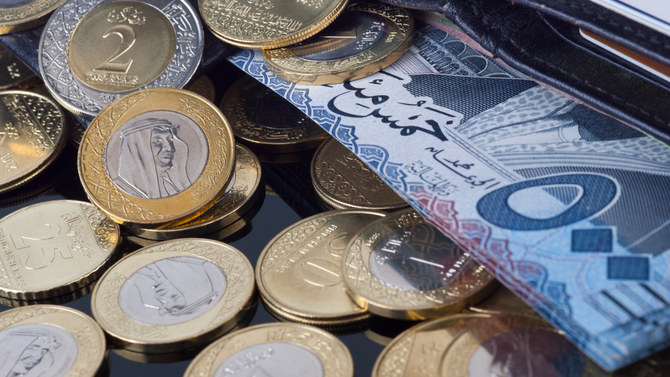
While inflation is still on the rise in the Kingdom, the annual rate eased to 3 percent in February, down from 3.4 percent the previous month (Shutterstock)
Short Url
Updated 23 March 2023
Follow

SAMA and GCC banks follow Fed’s 25 bps interest rate hike 

  • Annual inflation rate in Saudi Arabia eased to 3 percent in February, official data shows

RIYADH: The Saudi Central Bank has increased its interest rate by 25 basis points to 5.5 percent, echoing Wednesday’s move by the US Federal Reserve to curb inflation. 

A statement from the bank, also known as SAMA, noted its Reverse Repo rate has also increased to 5 percent.   

While inflation is still on the rise in the Kingdom, the annual rate eased to 3 percent in February, down from 3.4 percent the previous month.  

The Fed’s quarter-point interest rate hike follows months of larger increases, as it hiked 25 basis points in February, 50 basis points in December, and 75 basis points in November, September, July and June. 

HIGHLIGHTS

SAMA also increased its reverse repo rate to 5 percent.

The UAE’s central bank increased its base rate to 4.9 percent.

Bahrain also raised its main rate by 25 basis points.

Qatar increased its lending and deposit rates to 5.75 percent and 5.25 percent respectively.

While the US Central Bank’s decision was driven by its desire to lower high inflation, this played a part in driving the Gulf region’s monetary policy, as most of the region’s currencies are pegged to the dollar.  

Following the US Fed’s decision, regional central banks also swung into action to raise their interest rates.  

Furthermore, the UAE's central bank increased its base rate to 4.9 percent, effective on Thursday. 

Bahrain also raised its main rate by 25 basis points, with its one-week deposit facility rate rising to 5.75 percent, while the overnight deposit rate hit 5.5 percent.  

Qatar’s central bank, which had kept its rates unchanged last month, increased its lending and deposit rates to 5.75 percent and 5.25 percent respectively.  

Inflation in the GCC region is higher than it was in almost 10 years, but still lower than numerous western countries, ranging between 5 and 6 percent last year. 

Despite recent signs of a slow-down in the US economy, prices are running at their highest level since the early 1980s.  

Rising interest rates increase the cost of borrowing for consumers, leading to more expensive mortgage bills and loan repayments – something that can lead to reduced spending on other items as people try to reduce costs. 

However, savers benefit from the interest rates rise, with money stored away gaining a greater return. Yet, with inflation across the globe still running hot, any extra interest gained by savings is lower than the rising cost of goods and services.


Oman targets clean energy, EVs in China talks

Updated 5 sec ago
Follow

Oman targets clean energy, EVs in China talks

JEDDAH: Oman is intensifying efforts to attract investment into its industrial sector and advance toward high-value, technology-led activities through an official visit to China.
The delegation was headed by Saleh Said Masan, undersecretary for commerce and industry at the Ministry of Commerce, Industry and Investment Promotion, who visited a number of major Chinese manufacturing facilities, according to the Oman News Agency.
Industrial development is a central pillar of Oman Vision 2040 and the Industrial Strategy 2040, which target a tripling of manufacturing output, the attraction of approximately 40 billion Omani rials ($104 billion) in investment, and the expansion of advanced and green industries.
“These visits fall within ongoing efforts to strengthen investment in the industrial sector, in line with Oman’s strategy to develop integrated industrial clusters and shift toward high value-added industries driven by innovation and advanced technologies,” ONA reported.
As part of the visit, the delegation toured global solar energy firm JA Solar, where discussions with senior management focused on the latest smart solar cell and panel manufacturing technologies.
Both sides reviewed progress on the establishment of JA Solar’s facility in the Sohar Freezone, following a previously signed memorandum of understanding with the ministry to develop an integrated solar cell and module plant with an estimated investment of $564 million.
Officials confirmed that construction is proceeding according to plan, underscoring Oman’s goal of positioning itself as a regional hub for clean energy technologies and supporting its net-zero emissions target by 2050.
The delegation also visited the headquarters of BAIC Motor Corp., where recent advancements in electric and smart vehicles, along with next-generation transportation systems, were presented.
During the visit, Masan highlighted the incentives and support mechanisms offered by Oman to attract investment in the electromechanical and transport industries, reaffirming the ministry’s commitment to facilitating high-quality industrial projects.
“This direction aims to establish joint ventures in automotive assembly and manufacturing, helping diversify the industrial base and create specialized employment opportunities for Omani professionals in engineering and digital technologies, in line with Industrial Strategy 2040 objectives,” ONA stated.
Concluding the visit, the undersecretary said the engagements reflect the ministry’s focus on a qualitative shift toward capital-intensive and technology-driven industries.
He added that integrating renewable energy projects with JA Solar and localizing vehicle technologies with BAIC would enhance manufacturing’s contribution to gross domestic product and strengthen the competitiveness of national products under the Made in Oman brand.
Masan emphasized the ministry’s commitment to fostering an attractive investment climate that encourages foreign direct investment and supports the integration of small and medium-sized enterprises into the global supply chains of leading international companies.