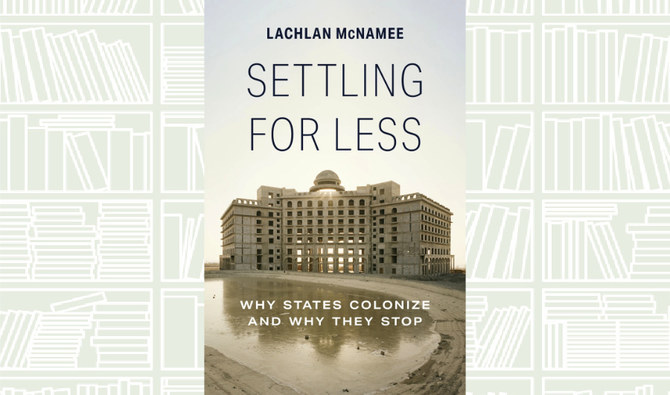
What We Are Reading Today: Settling for Less

Short Url
Updated 20 March 2023
Follow

What We Are Reading Today: Settling for Less

Author: Lachlan McNamee

Over the past few centuries, vast areas of the world have been violently colonized by settlers. But why did states like Australia and the United States stop settling frontier lands during the twentieth century? At the same time, why did states loudly committed to decolonization like Indonesia and China start settling the lands of such minorities as the West Papuans and Uyghurs?
Settling for Less traces this bewildering historical reversal, explaining when and why indigenous peoples suffer displacement at the hands of settlers.


What We Are Reading Today: ‘Rituals of War’

Photo/Supplied
Updated 29 December 2025
Follow

What We Are Reading Today: ‘Rituals of War’

  • Bahrani brings together and analyzes facets of war and sovereign power that fall under the categories of representation and display, the aesthetic, the ritualistic, and the supernatural

Author: Zainab Bahrani

“Rituals of War” is an investigation into the earliest historical records of violence and biopolitics. In Mesopotamia, ancient Iraq (ca. 3000–500 BC) rituals of war and images of violence constituted part of the magical technologies of warfare that formed the underlying irrational processes of war. In the book, three lines of inquiry are converged into one historical domain of violence, namely, war, the body, and representation.

Building on Foucault’s argument in “Discipline and Punish” that the art of punishing must rest on a whole technology of representation, Zainab Bahrani investigates the ancient Mesopotamian record to reveal how that culture relied on the portrayal of violence and control as part of the mechanics of warfare. Moreover she takes up the more recent arguments of Giorgio Agamben on sovereign power and biopolitic to focus on the relationship of power, the body and violence in Assyro-Babylonian texts and monuments of war.

Bahrani brings together and analyzes facets of war and sovereign power that fall under the categories of representation and display, the aesthetic, the ritualistic, and the supernatural.