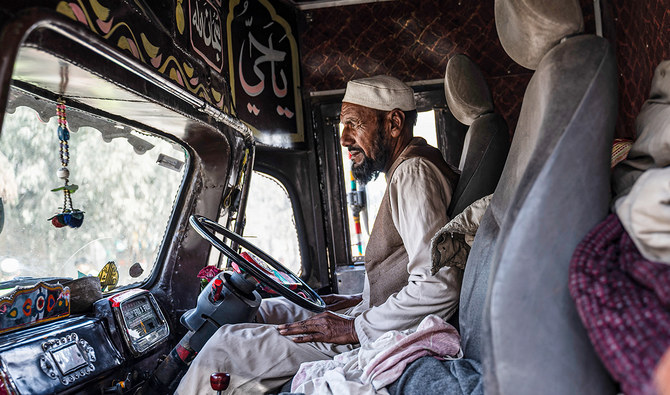

KARACHI: Glancing constantly in his rear view mirror, truck driver Nadeem Khan now journeys the highways between the northern and southern regions of Pakistan haunted by the memory of when he was kidnapped by a band of armed robbers last year and tortured for two and a half months before his family paid ransom for his release.
While Pakistan’s attention has for years been focussed on the Taliban and Al-Qaeda threat on the Afghan border in the remote northwest, militants and criminal gangs have expanded their influence and won recruits in the country’s heartland of Punjab and in the southern Sindh province.
These gangs operate along major highways connecting the two provinces, and the most dangerous roads are those along the banks of the Indus River, whose tributaries flow through the Punjab region in the east and end in a large delta in the southern Sindh province. For years, the gangs have hounded passengers traveling these routes on private cars and buses, robbing them of their money and valuables.
In recent months, however, the dacoits have a new target: truckers.
“We faced militants quite often in the past but were never terrorized so much,” Khan, 57, told Arab News, describing how he was beaten regularly and made to sleep on a cold floor on winter nights after his kidnapping last October.
“They insulted me and demanded that I make a phone call to my family and tell them to arrange the ransom amount … It was a horrible time. I had hardly any hope left of getting out alive.”
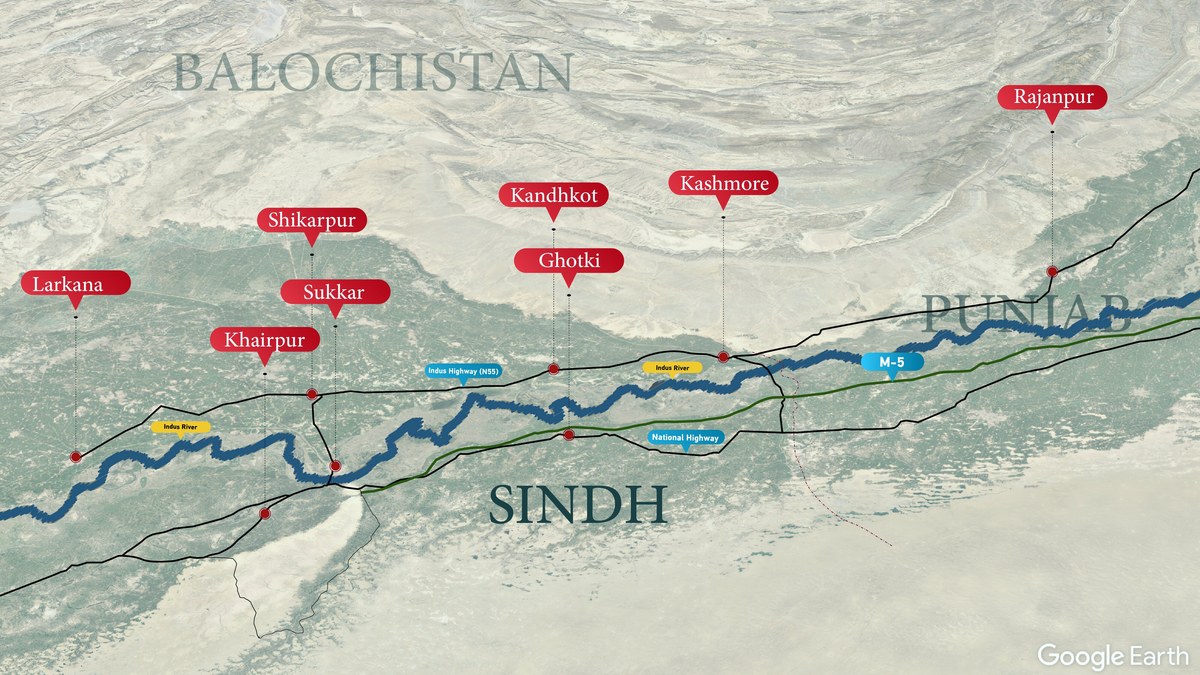
The map shows the route taken by truckers from Larkana to Kashmore. (AN Photo)
Khan was released in December after his family paid Rs600,000 ($2,138).
At a recent court hearing at the Sindh High Court, a judge said kidnappings for ransom had become an “industry” in Sindh.
Speaking to Arab News, Ghulam Muhammad Afridi, the general secretary of the Karachi Goods Carrier Association, said transporters were paying the cost of rising lawlessness in the province.
“Fifty drivers have been kidnapped for ransom since July last year,” he said.
One driver, Afridi said, was recently recovered by police after transporters threatened to shut down the Native Jetty bridge connecting the city with the Karachi port.
“The driver was recovered within 72 hours following our ultimatum,” he said. “This shows that the police have the capacity to deal with such kidnappings but face political pressure when they take action.”
Senior Superintendent of Sindh Police Tanveer Hussain Tunio in Ghotki dismissed the accusation of political influence in fighting crime, saying several important factors needed to be considered with regards the enduring problem of dacoity in the area.
“The police are only allowed to carry weapons of 7.62-millimeter caliber,” he said. “These include G3s, submachine guns, and pistols. On the other hand, the dacoits have 12.7- and 14.5-millimeter caliber weapons and anti-aircraft guns, which can even be used to shoot down commercial aircraft.”
However, Tunio said the government had approved Rs2 billion ($710 million) to procure sniper guns, night vision thermal scopes, and other equipment and weapons for police after five uniformed personnel were killed by dacoits in November.
“We should be able to clear the area within a few months with that kind of equipment,” he added.
Tunio said other than the huge disparity in weaponry, the geographical terrain also worked to the advantage of the armed groups.
“Almost 95 percent of the Katcha area [on banks of Indus River] consists of islands, posing a huge accessibility issue to law enforcement agencies,” he said. “The police have no boats, and there are no bridges.”
The official also highlighted the problem of training, saying police were trained mostly for operations in settled districts.
Another problem, the top cop said, was that criminal gangs were using new and innovative ways to trap truckers.
“We had brought the incidents of kidnapping on highways to almost zero since 2014,” Tunio said. “But the dacoits are now using social media to trap people before abducting them.”
Shahmim Zafar, a truck driver who was kidnapped last August, endorsed the claim, saying he was trapped after someone contacted him on a social media messaging app and called him to come see some trucks to buy.
“When I reached there, I didn’t see any trucks but chains and a horrible time that was waiting for me,” he told Arab News.
While in captivity, Zafar said he met “a hundred victims of dacoits,” and most had similar stories of having been honey trapped bu robbers.
Israr Ahmed Shinwari, a spokesperson for the All-Pakistan Oil Tanker Owners Association, said the situation was so bad it appeared there was a “parallel government by dacoits in the Katcha region.”
“Every week, a driver or two are abducted,” he said, urging federal and provincial authorities to protect transporters.
“We witnessed lawlessness on the western route in the past,” he said, referring to militants extorting truckers moving NATO supplies for international forces through northwestern Pakistan into neighboring Afghanistan before US and allied forces withdrew in August 2021.
“Our business is already hit by inflation and rising petroleum prices,” Shinwari said. “This new menace [kidnapping for ransom] will destroy it completely.”
* Names of truckers have been changed to protect their identities