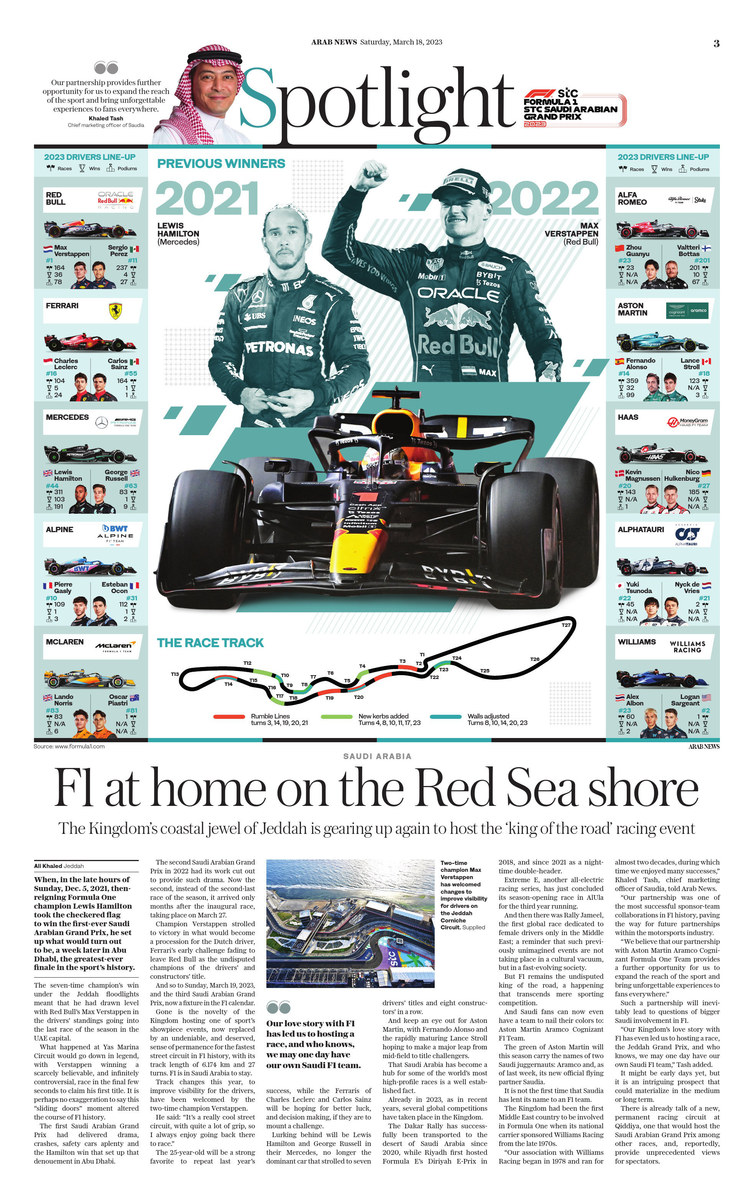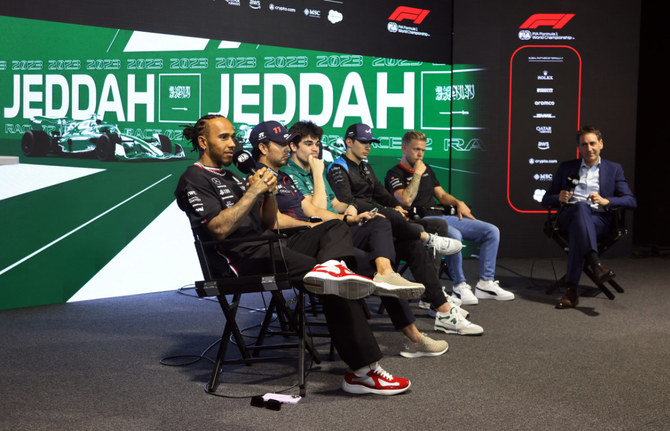


JEDDAH: When, in the late hours of Sunday, Dec. 5, 2021, then-reigning Formula One champion Lewis Hamilton took the checkered flag to win the first-ever Saudi Arabian Grand Prix, he set up what would turn out to be, a week later in Abu Dhabi, the greatest-ever finale in the sport’s history.
The seven-time champion’s win under the Jeddah floodlights meant that he had drawn level with Red Bull’s Max Verstappen in the drivers’ standings going into the last race of the season in the UAE capital.
What happened at Yas Marina Circuit would go down in legend, Verstappen winning a scarcely believable, and infinitely controversial, race in the final few seconds to claim his first title. It is perhaps no exaggeration to say that that “sliding doors” moment has altered the course of F1 history since.
The first Saudi Arabian Grand Prix had delivered drama, crashes, safety cars aplenty and the Hamilton win that set up that denouement in Abu Dhabi.
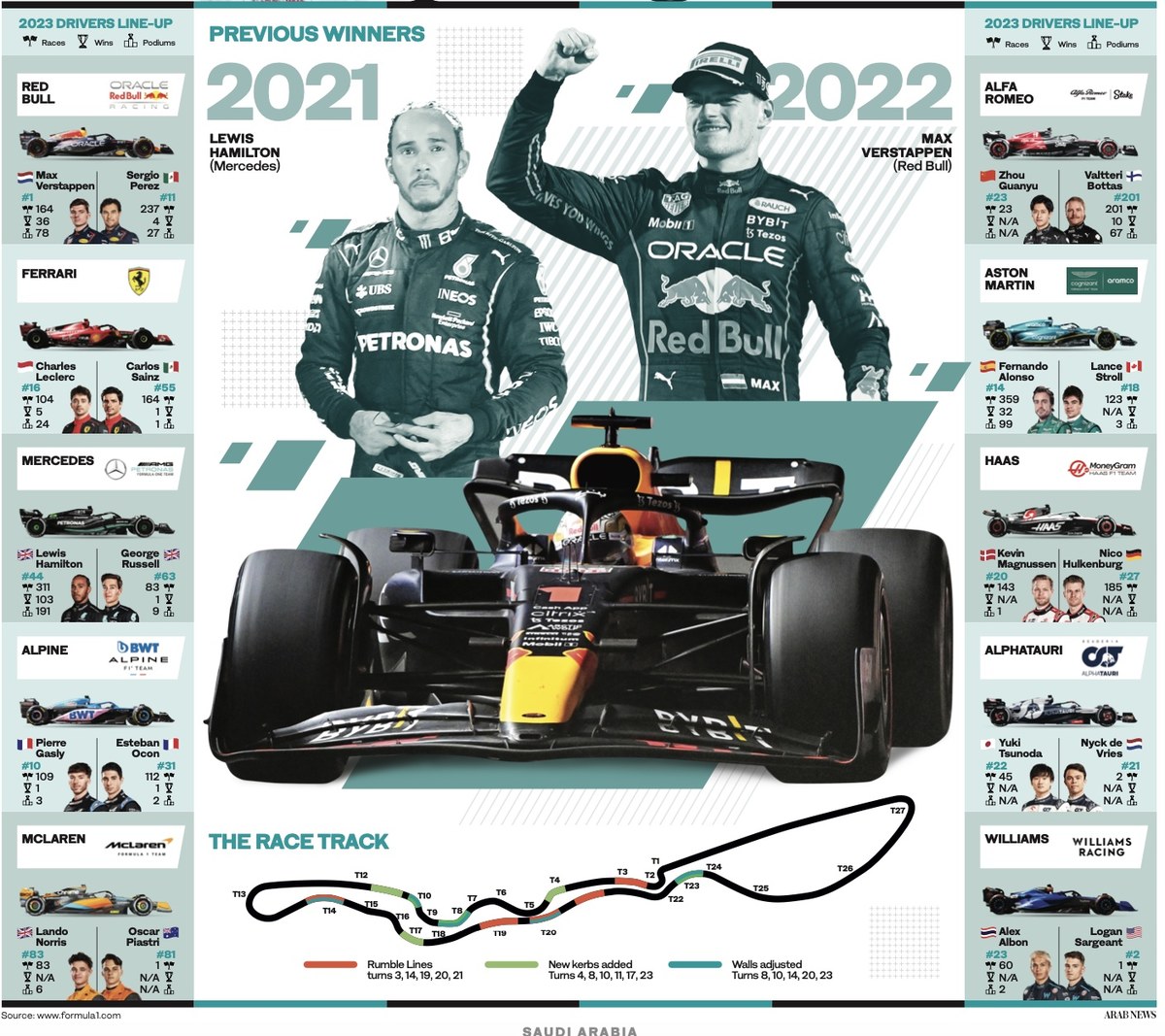
The second Saudi Arabian Grand Prix in 2022 had its work cut out to provide such drama. Now the second, instead of the second-last race of the season, it arrived only months after the inaugural race, taking place on March 27.
Champion Verstappen strolled to victory in what would become a procession for the Dutch driver, Ferrari’s early challenge fading to leave Red Bull as the undisputed champions of the drivers’ and constructors’ title.
And so to Sunday, March 19, 2023, and the third Saudi Arabian Grand Prix, now a fixture in the F1 calendar.
Gone is the novelty of the Kingdom hosting one of sport’s showpiece events, now replaced by an undeniable, and deserved, sense of permanence for the fastest street circuit in F1 history, with its track length of 6.174 km and 27 turns. F1 is in Saudi Arabia to stay.
Track changes this year, to improve visibility for the drivers, have been welcomed by the two-time champion Verstappen.
He said: “It’s a really cool street circuit, with quite a lot of grip, so I always enjoy going back there to race.”
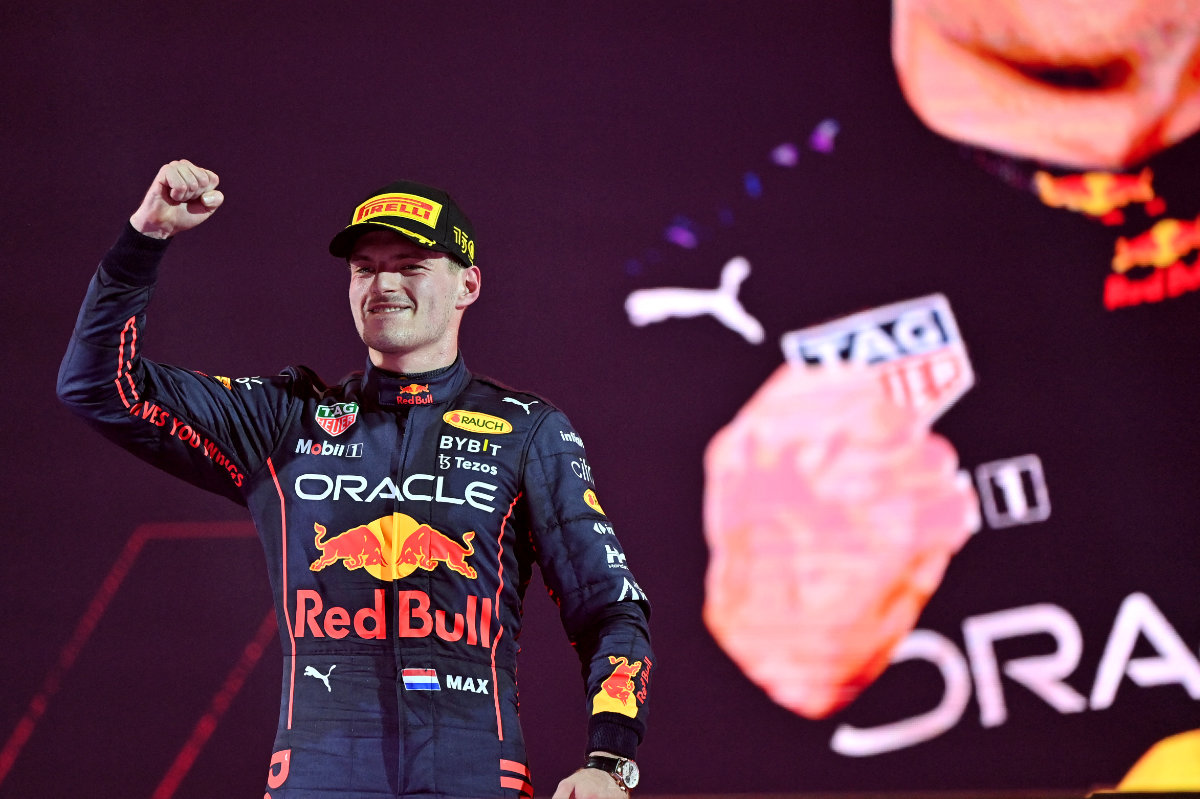
Red Bull’s Max Verstappen. (Supplied)
The 25-year-old will be a strong favorite to repeat last year’s success, while the Ferraris of Charles Leclerc and Carlos Sainz will be hoping for better luck, and decision making, if they are to mount a challenge.
Lurking behind will be Lewis Hamilton and George Russell in their Mercedes, no longer the dominant car that strolled to seven drivers’ titles, and eight constructors’, in a row.
And keep an eye out for Aston Martin, with the grinning, grizzled figure of Fernando Alonso and the rapidly maturing Lance Stroll hoping to make a major leap from mid-field to title challengers.
That Saudi Arabia has become a hub for some of the world’s most high-profile races is no longer news.
Already in 2023, as in recent years, we have seen several global competitions take place in the Kingdom.
The Dakar Rally has successfully been transported to the desert of Saudi Arabia since 2020, while Riyadh first hosted Formula E’s Diriyah E-Prix in 2018, and since 2021 as a nighttime double-header.
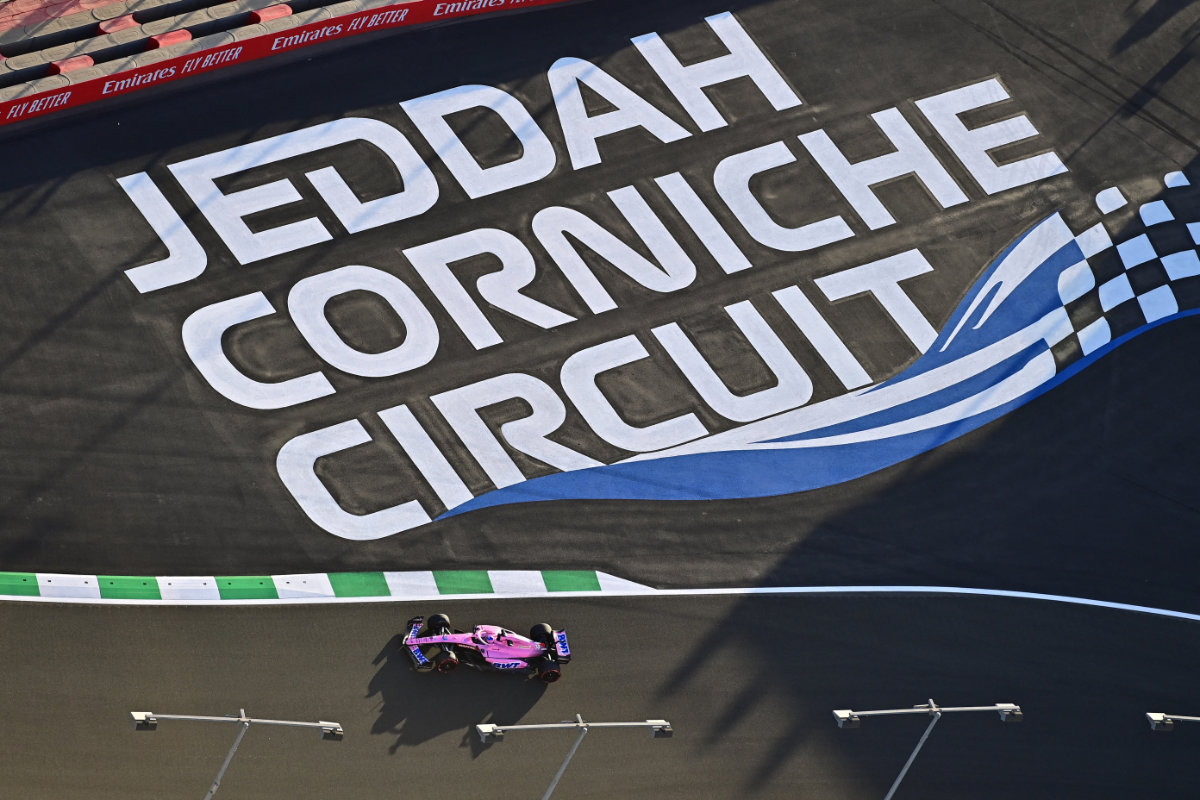
Jeddah Corniche Circuit. (Supplied)
Extreme E, another all-electric racing series, has just concluded its season-opening race in AlUla for the third year running.
And then there was Rally Jameel, the first global race dedicated to female drivers only in the Middle East; a reminder that such previously unimagined events are not taking place in a cultural vacuum, but in a fast-evolving society.
But F1 remains the undisputed king of the road, a happening that transcends mere sporting competition.
“Formula 1 has put motorsport on the map in Saudi,” said Reema Juffali, Saudi’s first female racing driver and founder of Theeba Motorsport. “Four years ago, I remember having to explain the difference between F1 and rallying, so it’s great to be sharing the sport I love with everyone at home.”
The middle of the last decade might have seen a waning of interest in the sport as Mercedes and Hamilton won race after race, championship after championship.

Mercedes' Lewis Hamilton before practice at the Jeddah Corniche Circuit on March 17, 2023. (REUTERS/Hamad I Mohammed)
But in recent years, F1 has seen an unprecedented resurgence in popularity thanks in huge part to the emergence of a crop of exciting young drivers like Verstappen, Leclerc, Lando Norris, Pierre Gasly and Esteban Ocon.
But perhaps the biggest, and most unexpected, factor in this new lease of life came from the Netflix series “Formula One: Drive to Survive,” now five seasons in, which has been nothing short of revolutionary in taking the sport to a new audience, especially the previously unconquered US demographic.
Hamilton, speaking to Arab News ahead of the first-ever Saudi Arabian Grand Prix in December 2021, said the show had “changed the sport for good.”
No longer are casual fans focusing on the one or two drivers that dominate each season. Today even viewers with the most cursory interest know the highs and lows of Yuki Tsunoda’s season, the sad departure of Daniel Ricciardo from McLaren and the return of Nico Hulkenburg to F1.
Behind the scenes, Netflix has introduced its viewers to the bitter rivalry between Mercedes and Red Bull team principals Toto Wolff and Christian Horner; the colorful figure of Haas boss Guenther Steiner; and the almost unbearable pressures on Mattia Binotto as he tried to lead an iconic name like Ferrari back to glory.
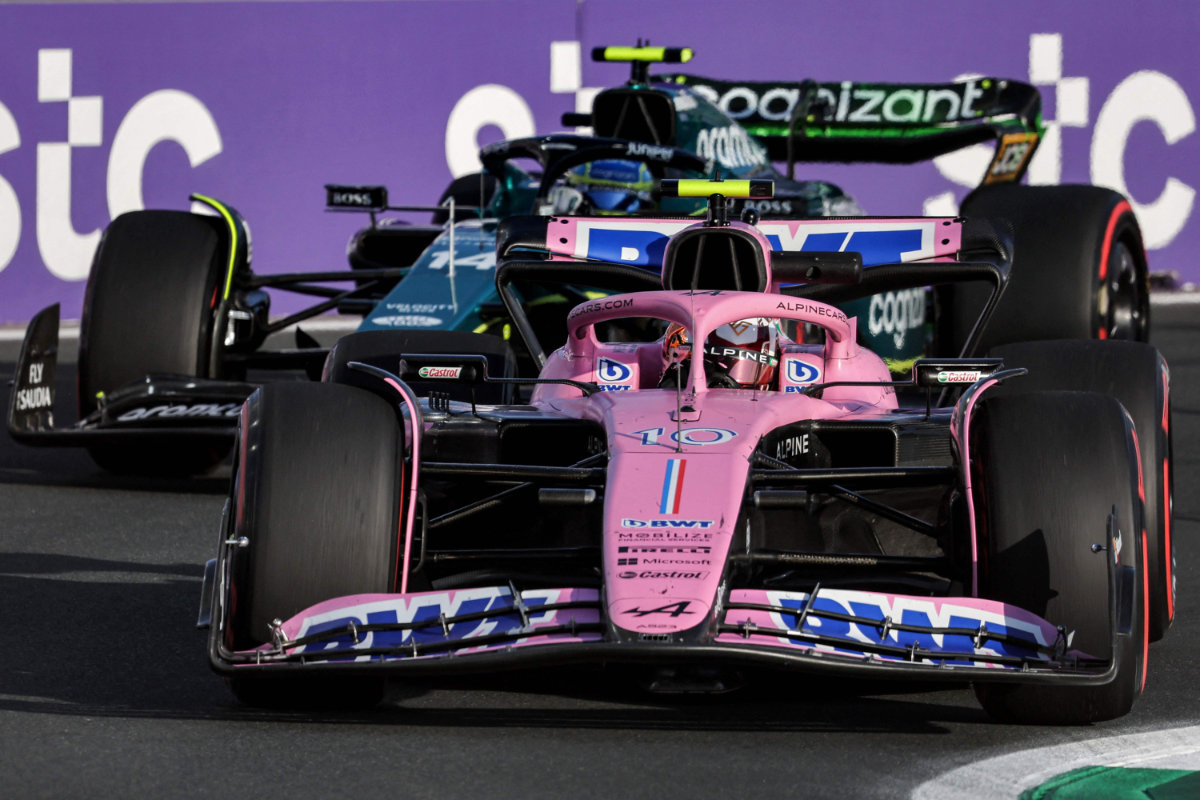
Alpine's French driver Pierre Gasly (foregound) drives ahead of Aston Martin's Spanish driver Fernando Alonso during the first practice session at the Jeddah Corniche Circuit on March 17, 2023, ahead of the 2023 Saudi Arabia Formula One Grand Prix. (AFP)
And Saudi fans can now even have a team to nail their colors to: Aston Martin Aramco Cognizant F1 Team.
The green of Aston Martin will this season carry the names of two Saudi juggernauts: Aramco and, as of last week, its new official flying partner Saudia.
It is not the first time that Saudia has lent its name to an F1 team.
The Kingdom had been the first Middle East country to be involved in Formula One when its national carrier sponsored Williams Racing from the late 1970s.
“Our association with Williams Racing began in 1978 and ran for almost two decades, during which time we enjoyed many successes,” Khaled Tash, chief marketing officer of Saudia, told Arab News.
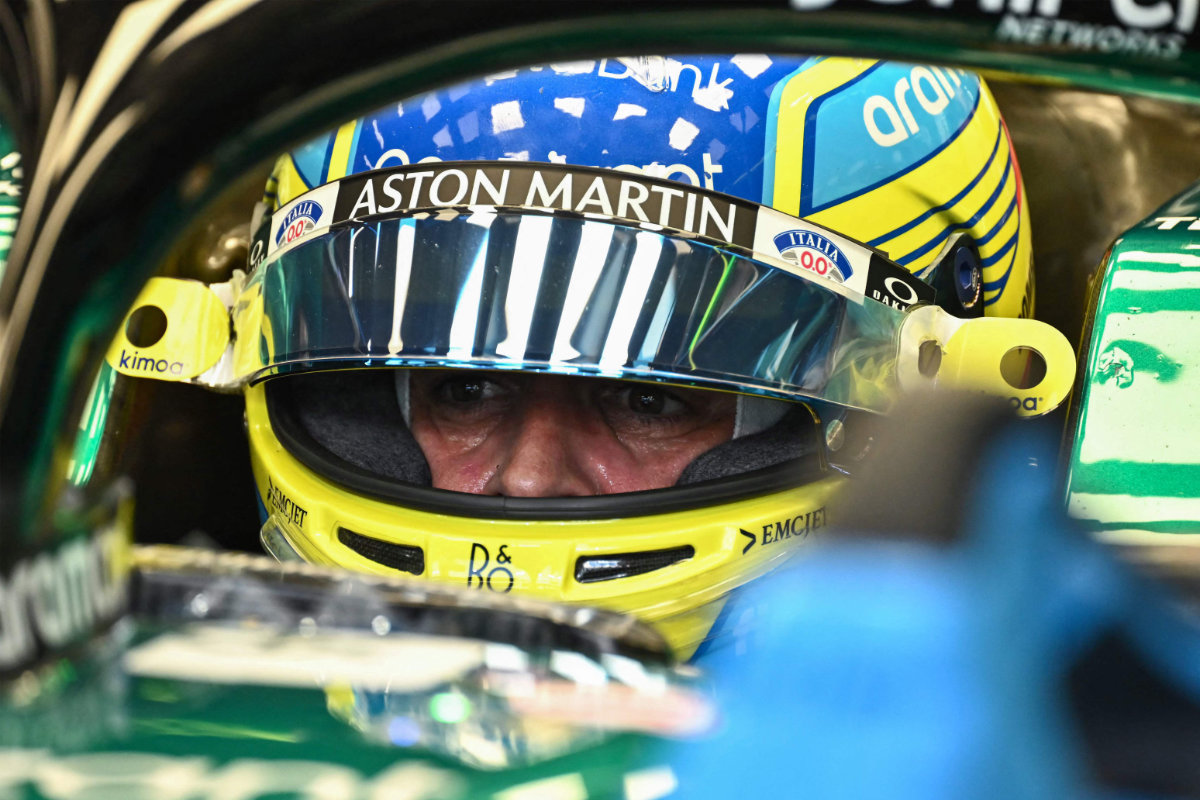
Aston Martin's Spanish driver Fernando Alonso sits in his car in the garage during the first practice session at the Jeddah Corniche Circuit on March 17, 2023. (AFP)
“Formula One fans will remember that the Williams Racing team dominated the competition and won nine Constructors' Championships thanks to worldwide talent like Alan Jones, Keke Rosberg, Nigel Mansell, Alain Prost, Damon Hill and Jacques Villeneuve.
“Saudia played a vital role in Williams Racing’s victories and our partnership was one of the most successful sponsor-team collaborations in F1 history, paving the way for future partnerships within the motorsports industry.
“We believe that our partnership with Aston Martin Aramco Cognizant Formula One Team provides a further opportunity for us to expand the reach of the sport and bring unforgettable experiences to fans everywhere.”
Such a partnership will inevitably lead to questions of bigger Saudi involvement in F1.
“Our Kingdom’s love story with F1 has even led us to hosting a race, the Jeddah Grand Prix, and who knows, we may one day have our own Saudi F1 team,” Tash added.
It might be early days yet, but it is an intriguing prospect that could materialize in the medium or long term.
“Today, after successfully hosting two races in the previous two years, we have some genuine F1 fans and many who are interested in breaking into the sport,” said Juffali, who herself has competed in F4 and now races in the International GT Open. “One of the most common questions I get asked is: ‘How can I be an F1 driver?’”
There is already talk of a new, permanent racing circuit at Qiddiya, one that would host the Saudi Arabian Grand Prix among other races, and, reportedly, provide unprecedented views for spectators.
With motorsport’s popularity on the rise, the next big target will be to nurture local talent, be it male or female, and produce drivers that can take to the track alongside the world’s best.
“I believe it’s only the beginning for us and, with all the level of investment going into motorsport, it’s only a matter of time before we see a Saudi driver climbing the junior formula ranks,” said Juffali.
Saudi fans of F1, too, will hope it is a matter of when, not if.