

Pakistani woman athlete who died in Italy boat wreck laid to rest in hometown 

A photo of Pakistani athlete Shahida Raza is placed next to her mortal remains at her funeral prayer in Quetta, Pakistan on March 17, 2023. (AN Photo)
Short Url
Updated 17 March 2023
Follow

Pakistani woman athlete who died in Italy boat wreck laid to rest in hometown 

  • Shahid Raza represented Pakistan in various national and international hockey and football games 
  • The single mother attempted to illegally travel to Europe in search of a better life for herself and son 

QUETTA: Government officials, colleagues and relatives attended funeral prayers of a Pakistani woman athlete, who died in a boat wreck off the coast of Italy last month, and later laid her to rest in the southwestern Pakistani city of Quetta Friday morning, relatives and officials said. 

The boat carrying the athlete, Shahid Raza, and more than 150 others from Pakistan, Iran and Afghanistan had crashed into the rocks trying to reach the shores in Crotone, Italy on February 26. 

At least 67 were killed as the boat broke into pieces and sank in rough seas, according to Italian authorities. Pakistan’s foreign office said that 17 Pakistanis had been rescued after the incident, two had been missing and two, including Raza, were dead. 

Mortal remains of the late athlete were flown to the southern Pakistani city of Karachi from Rome on Thursday, according to officials and Raza’s family. From there, they were transported to Quetta via road. 

“The Ministry of Overseas Pakistanis shifted Shahida’s body from Rome to Karachi but due to bad weather conditions we transported the body to Quetta in an ambulance at around 2am on Friday,” Raza Warsi, a deputy director at the ministry, told Arab News in Quetta. 
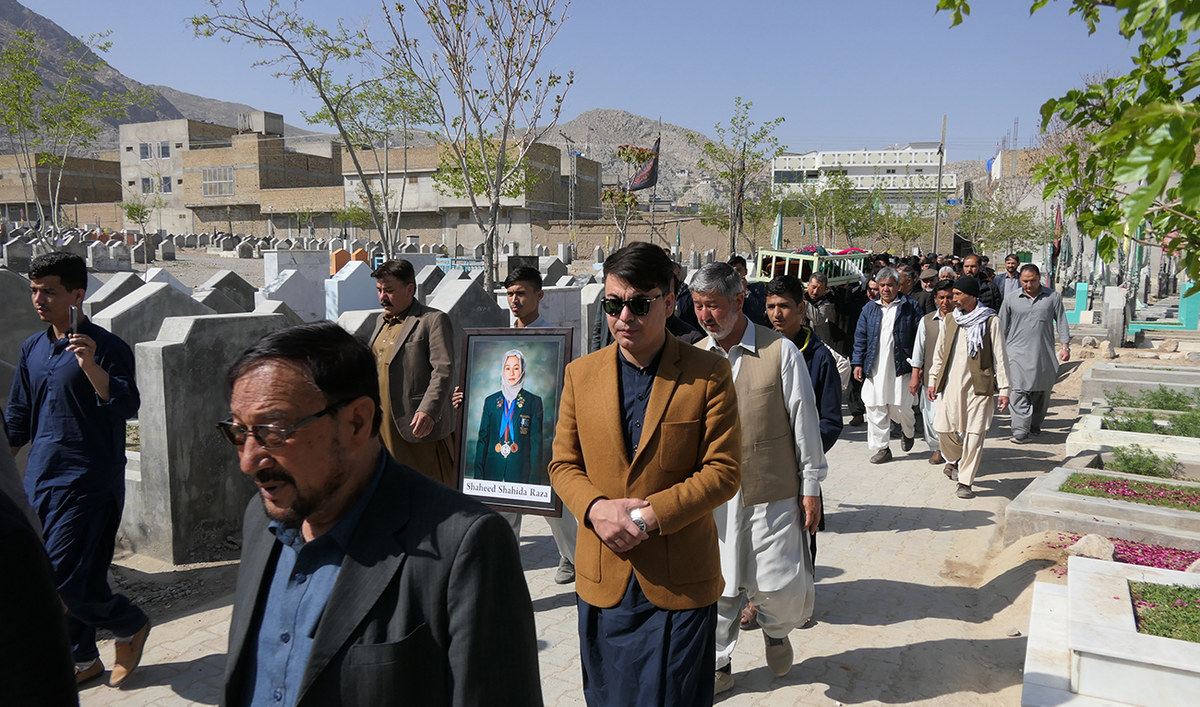


A relative of Pakistani athlete Shahida Raza is holding her photo while walking with her mortal remains at her funeral in Quetta, Pakistan on March 17, 2023. (AN Photo)

Raza, a member of Pakistan’s ethnic Hazara community, had represented Pakistan in various national and international hockey and football events that took her to China, Malaysia, Iran, Qatar, and Sri Lanka as part of Pakistan’s national squads. 

One of the reasons for her to leave Pakistan was that after two decades of playing for her country, the single mother with a mentally disabled son was unable to find a job, according to her family. 

In search of a better life in Europe, Raza first boarded a flight to Turkiye from Pakistan in October last year. After staying in Turkiye for three months, the woman athlete along with others like her got on a wooden boat from Izmir in western Turkiye on February 22 and reached close to the Italian shores after almost four days. 

Each of the migrants on the boat had paid the traffickers around 8,000 euros ($8,540) for the perilous sea journey, according to the Italian police. 

“We are thankful to the Pakistani government for helping us bring back Shahida’s remains to Pakistan,” Raza’s sister, Sadia, told reporters in Quetta. 

Raza was laid to rest in a Quetta graveyard, with mourners paying their last respects to the late Pakistani athlete. 

“The national and provincial departments should own their players and set a job quota for them that would help them in their economic woes,” Balochistan Sports Minister Abdul Khaliq Hazara told Arab News. 

The provincial sports department had acted on Raza’s application and approved remuneration for the athlete that was received by her sister as Raza had been in Turkiye, he added. 


Pakistan’s Mahnoor Omer named among TIME’s ‘Women of the Year’ for 2026

Updated 01 March 2026
Follow

Pakistan’s Mahnoor Omer named among TIME’s ‘Women of the Year’ for 2026

  • Omer moved a Pakistani court against the so-called ‘period tax’ in Sept. 2025 which has since sparked a national debate
  • Taxes on sanitary pads in Pakistan can add up to 40 percent to retail price, UNICEF says only around 12 percent women use such products

ISLAMABAD: Pakistani women’s rights activist Mahnoor Omer, who fought against taxes on menstrual products, has been named among the TIME magazine’s ‘Women of the Year’ for 2026.

Omer’s efforts have been recognized alongside 16 activists, artists, athletes and businesswomen in the TIME’s Women of the Year 2026 list, including Olympic gold medalist Sydney McLaughlin-Levrone and Oscar-nominated filmmaker Chloe Zhao.

Dissatisfied with the efforts to educate Pakistani girls about sexual violence, Omer founded the Noor Foundation at the age of 14 and held her own workshops with village girls about everything from climate change to menstruation, according to the TIME magazine.

Two years later, a conversation with a domestic worker about the price of pads made her realize that not everyone could afford these essentials. She moved a court against the so-called “period tax” in Sept. 2025 and the case has sparked a national debate on the subject, considered a taboo by many in Pakistan, since its first hearing late last year.

“A decade and one law degree after her interest in activism was sparked, Omer, now 25, is putting her passion and expertise to work in the name of gender equity,” TIME wrote about Omer on its website.

Taxes imposed on sanitary products in Pakistan can add up to 40 percent to the retail price. UNICEF estimates just 12 percent of women in the country use commercially produced pads or tampons. The alternative, using cloth, risks health impacts including rashes and infections, and can make it impossible for girls to attend school while menstruating.

Omer’s suit, which awaits the government response, has sparked a national discussion. She says she spoke about menstruation to her father and male cousins, who thanked her for standing up for their daughters.
The 25-year-old, who is currently enrolled in a master’s degree in gender, peace, and security at the London School of Economics, sees this case as just the first of many.

“I’m not free until every woman is free,” she was quoted as saying by TIME. “I want to leave no stones unturned in terms of what I can do with the next few decades, as a lawyer for the women in my country and gender minorities in general.”