




WASHINGTON: From an empowered Iran and eroded US influence to the cost of keeping US troops in Iraq and Syria to combat Islamic State fighters, the United States still contends with the consequences of invading Iraq 20 years ago, current and former officials say.
Then-US President George W. Bush’s 2003 decision to oust Saddam Hussein by force, the way limited US troop numbers enabled ethnic strife and the eventual 2011 US pullout have all greatly complicated US policy in the Middle East, they said.
The end of Saddam’s minority Sunni rule and replacement with a Shiite majority government in Iraq freed Iran to deepen its influence across the Levant, especially in Syria, where Iranian forces and Shiite militias helped Bashar Assad crush a Sunni uprising and stay in power.
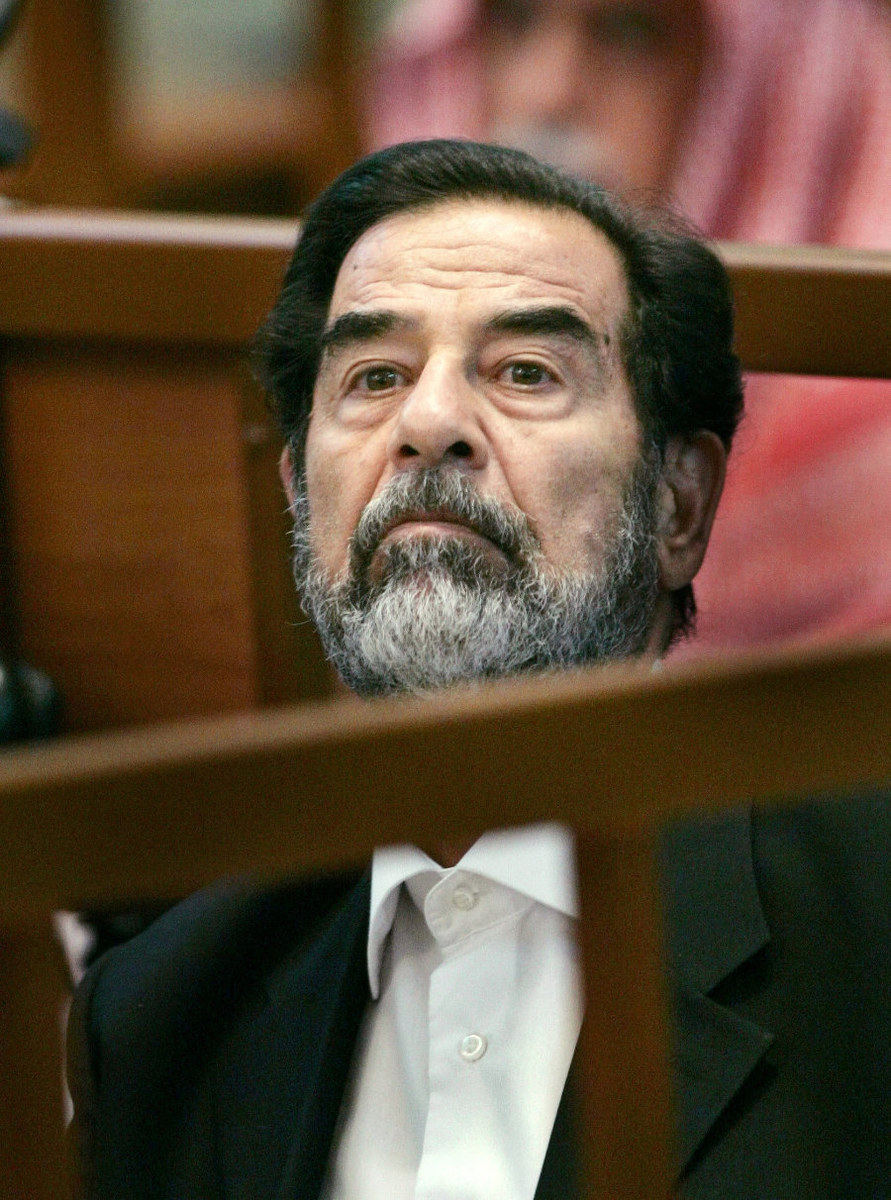
Saddam Hussein listens as the prosecution makes its closing arguments at the trial of the former Iraqi dictator and seven members of his regime in Baghdad on June 19, 2006. (Reuters)
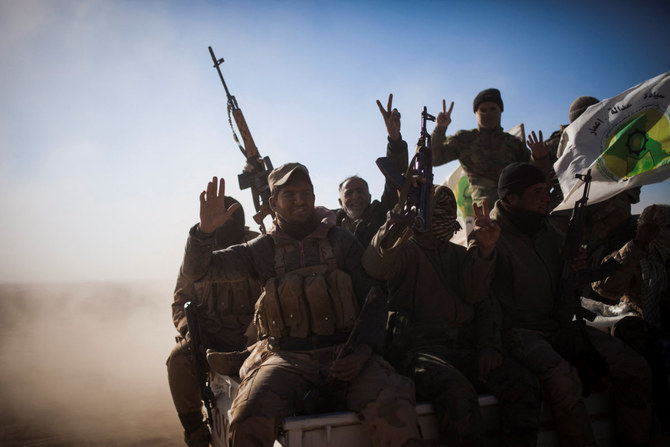
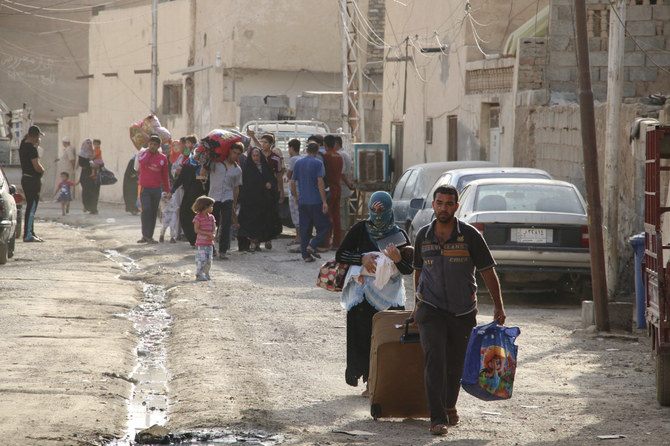
The 2011 withdrawal of the US troops from Iraq left a vacuum that Daesh (ISIS) militants filled, seizing roughly a third of Iraq and Syria and fanning fears among Gulf Arab states that they could not rely on the United States.
Having withdrawn, former US President Barack Obama in 2014 sent troops back to Iraq, where about 2,500 remain, and in 2015 he deployed to Syria, where about 900 troops are on the ground. US forces in both countries combat Daesh militants, who are also active from North Africa to Afghanistan.
“Our inability, unwillingness, to put the hammer down in terms of security in the country allowed chaos to ensue, which gave rise to Daesh,” said former deputy secretary of state Richard Armitage, faulting the US failure to secure Iraq.
Armitage, who served under Republican Bush when the United States invaded Iraq, said the US invasion “might be as big a strategic error” as Hitler’s invasion of the Soviet Union in 1941, which helped bring about Germany’s World War Two defeat.
Massive costs
The costs of US involvement in Iraq and Syria are massive.
According to estimates published this week by the “Costs of War” project at Brown University, the US price tag to date for the wars in Iraq and Syria comes to $1.79 trillion, including Pentagon and State Department spending, veterans’ care and the interest on debt financing the conflicts. Including projected veterans’ care through 2050, this rises to $2.89 trillion.
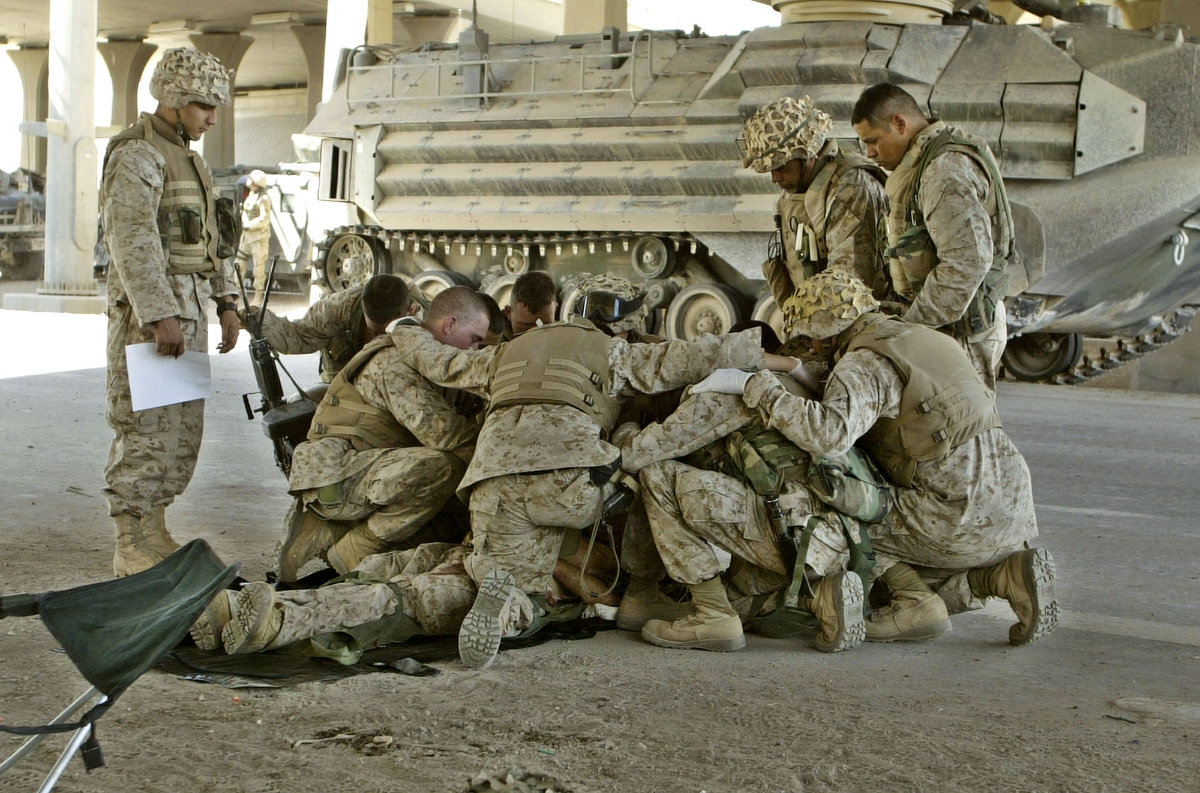
US Marines pray over a fallen comrade at a first aid point after he died from wounds suffered in fighting in Fallujah, Iraq, on April 8, 2004. (AP file)
The project puts US military deaths in Iraq and Syria over the past 20 years at 4,599 and estimates total deaths, including Iraqi and Syrian civilians, military, police, opposition fighters, media and others at 550,000 to 584,000. This includes only those killed as a direct result of war but not estimated indirect deaths from disease, displacement or starvation.
US credibility also suffered from Bush’s decision to invade based on bogus, exaggerated and ultimately erroneous intelligence about Iraqi weapons of mass destruction (WMD).
John Bolton, a war advocate who served under Bush, said even though Washington made mistakes — by failing to deploy enough troops and administering Iraq instead of quickly handing over to Iraqis — he believed removing Saddam justified the costs.
HIGHLIGHTS
Invasion led to diminished US influence in Mideast
Toppling of Saddam emboldened Iran, unnerved Gulf Arabs
Limit on US troop numbers enabled communal strife
Daesh (ISIS) filled vacuum left by 2011 US pullout
’Strategic error’ akin to Hitler’s Russia invasion — Armitage
US price tag for wars in Iraq, Syria $1.79 trillion
550,000-584,000 deaths in both countries, including 4,599 US military
“It was worth it because the decision was not simply: ‘Does Saddam pose a WMD threat in 2003?’” he said. “Another question was: ‘Would he pose a WMD threat five years later?’ To which I think the answer clearly was ‘yes.’“
“The worst mistake made after the overthrow of Saddam ... was withdrawing in 2011,” he added, saying he believed Obama wanted to pull out and used the inability to get guarantees of immunity for US forces from Iraq’s parliament “as an excuse.”
’Alarm bells ringing ... in the Gulf’
Ryan Crocker, who served as US ambassador in Iraq, said the 2003 invasion did not immediately undermine US influence in the Gulf but the 2011 withdrawal helped push Arab states to start hedging their bets.
In the latest example of waning US influence, Iran and Saudi Arabia agreed on Friday to re-establish relations after years of hostility in a deal brokered by China.
“We just decided we didn’t want to do this stuff anymore,” Crocker said, referring to the US unwillingness to keep spending blood and treasure securing Iraq. “That began ... with President Obama declaring ... he was going to pull all forces out.”
“These were US decisions not forced by a collapsing economy, not forced by demonstrators in the street,” he said. “Our leadership just decided we didn’t want to do it any more. And that started the alarm bells ringing ... in the Gulf.”
Jim Steinberg, a deputy secretary of state under Obama, said the war raised deep questions about Washington’s willingness to act unilaterally and its steadfastness as a partner.
“The net result ... has been bad for US leverage, bad for US influence, bad for our ability to partner with countries in the region,” he said.
A debate still rages among former officials over Obama’s decision to withdraw, tracking a timeline laid out by the Bush administration and reflecting a US inability to secure immunities for US troops backed by the Iraqi parliament.
Bolton’s belief that removing Saddam was worth the eventual cost is not held by many current and former officials.
Asked the first word that came to mind about the invasion and its aftermath, Armitage replied “FUBAR,” a military acronym which, politely, stands for “Fouled up beyond all recognition.”
“Disaster,” said Larry Wilkerson, former Secretary of State Colin Powell’s chief of staff.
“Unnecessary,” said Steinberg.


