DUBAI: Technological advancements are transforming the way young people in the Middle East are taught as traditional educational systems adapt to new tools, techniques and teaching arrangements.
Remote and hybrid forms of learning became commonplace during the COVID-19 pandemic to help maintain uninterrupted schooling. Now, such arrangements are considered the future of education.
In fact, many schools have taken digital learning beyond the combined physical and online teaching model by introducing classes through artificial intelligence.
Private tutoring and online tutor banks are likewise adopting the latest technologies in AI, augmented reality, virtual reality, robotics and blockchain.

Foreign student Shayma, attending the French International Lycée in Riyadh, studies at home on March 23, 2020 as schools are closed during the COVID-19 pandemic. (AFP)
“School students have started using AI. Its usage is a certainty and its capability to tackle complex numerical problems in physics, chemistry and math is appreciable,” Imbesat Ahmad, CEO and co-founder of Filo, an instant-tutoring app, told Arab News.
While AI adoption in schools in the Middle East is still in its infancy, Ahmad believes the technology has significant advantages when used as an assistive tool.
According to a recent report, titled “Middle East and Africa EdTech and Smart Classroom Market Forecast to 2027,” published by ReportLinker, the market for these tools in the MEA region is expected to grow from about $3.5 billion in 2019 to more than $7.6 billion by 2027.
In Saudi Arabia alone, the e-learning market reached $1.6 billion in 2021, with forecasts suggesting it will more than double in size by 2027.
Another report, “Saudi Arabia E-Learning Market: Industry Trends, Share, Size, Growth, Opportunity and Forecast 2022-2027,” compiled by IMARC Group, says the sector will grow at a compound annual growth rate of 16.05 percent during the same period.
“Traditional classrooms in many ways have undergone a sea change,” said Ahmad. “They are no longer bound by a whiteboard and 2D figures and teachers are using videos to explain certain topics better.”
Indicative of this trend is the launch this year of KITMEK, the Middle East’s first interactive digital school taught by an AI teacher. Operating exclusively in a game-based metaverse, it offers students a global curriculum from kindergarten to grade 5 for just $1 a month.
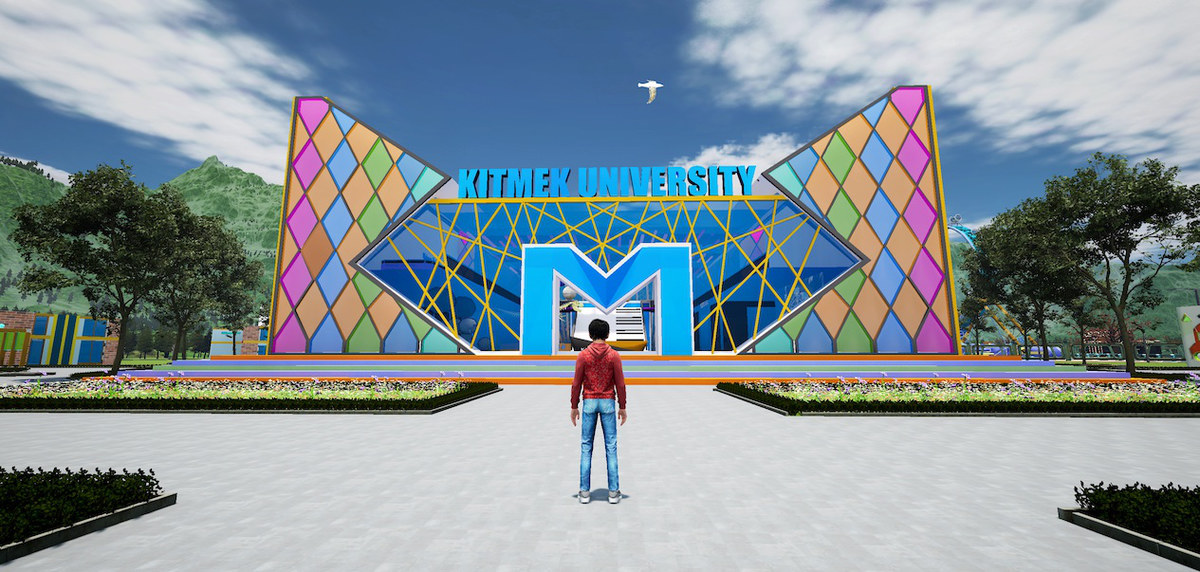
KITMEK offers underprivileged children free education through its sponsorship program. (Supplied)
“The future is digital schooling and AI teachers as they can deliver the highest quality education, customized to the child’s learning capabilities,” Anand Kadian, CEO of KITMEK, told Arab News.
“All sectors have had a digital revolution and now it’s time for the education system to evolve.”
In addition to covering core curriculum subjects, the online school gives students the option of taking additional classes on phonics, life skills, communication skills and financial literacy.
Students can earn coins during their classes by answering questions correctly, which they can later use to play games on the platform.
“Children can learn and relearn at their own pace as well as easily access lower grades to revise any topic they want,” said Kadian.

Anand Kadian, CEO of KITMEK. (Supplied)
The curriculum includes four exams per grade and is based on a growing multilingual system. Accessible on a basic phone with no Internet connection, the platform also offers underprivileged children free education through its sponsorship program.
Up to 70 percent of children in lower- and middle-income countries are deemed to be in “learning poverty,” meaning they lack a basic age-10 literacy, according to UNESCO, UNICEF and World Bank research.
“Children going to school can use this platform for tuition and for ones who cannot afford to go to school, this becomes a home school,” said Kadian.
However, despite recent advancements in AI technologies in the sector, educators remain hesitant about scrapping classroom teaching altogether.

Saudi students sit for their final high school exams in the Red Sea port city of Jeddah. (AFP)
“While AI learning is certainly a growing trend in education, it should not be viewed as a replacement for traditional teaching methods,” Manal Hakim, co-founder and CEO of Geek Express, a MENA-based online coding school, told Arab News.
A proponent of using AI technology only as an assistive tool, she said “it can enhance the learning experience and provide personalized learning opportunities, but it cannot fully replace human teachers.”
At Geek Express, students can learn to develop video games, websites, apps and AI models by attending coding courses and programming camps across Dubai, Abu Dhabi and Sharjah.
The online tech school, which holds a K-12 accredited curriculum, offers live and interactive courses where students are able to join Microsoft-certified trainers on Zoom to develop their own projects in a student-centered, gamified learning journey.
As the market for these tools continues to grow in the Middle East and Africa, Hakim thinks it is highly probable that online learning will become an established component of the education system.
“The integration of online learning and classes into educational curriculums will require collaboration between educational institutions, edtech companies and policymakers to ensure that the technology and content are effective and meet the needs of students,” she said.

Manal Hakim, co-founder and CEO of Geek Express. (Supplied)
To facilitate a swift transition from traditional to digital teaching models, Hakim says educational institutions could incorporate online learning platforms and tools into their existing curriculums to offer blended learning options for students.
This would involve a combination of traditional face-to-face classes and online learning activities, such as virtual classrooms, discussion forums and video lectures.
Hakim also says schools could offer the option of online courses to students who prefer remote study. This could be achieved through collaborations with edtech companies and online learning platforms by licensing the technology and developing customized solutions.
“These courses and programs can be designed to meet the same learning objectives and outcomes as traditional in-person courses,” she said.
FASTFACTS
- The edtech market in the Middle East and Africa is expected to grow from about $3.5 billion in 2019 to more than $7.6 billion by 2027.
- In Saudi Arabia alone, the e-learning market reached $1.6 billion in 2021, with forecasts suggesting it will more than double by 2027.
Despite the lifting of pandemic restrictions, many students continue to rely on private online tutoring lessons, practice exams and on-demand learning to help improve their grades and meet their educational goals.
“The trend of students opting for private classes outside of school is likely to persist in the coming years due to the increasing competitiveness of academic environments and the desire for students to gain an advantage over their peers,” said Hakim.
Filo made its entry into the education space during the pandemic by providing access to one-on-one personalized learning in real time.
“In a period where traditional learning was at a standstill, the platform provided student access not only to an ‘academic expert’ but also to a ‘domain expert’ that strategically planned their courses for uninterrupted study as well as an ‘academic counselor’ that continually monitored a student’s progress and provided real-time feedback in areas where they needed to improve,” said Ahmad, the Filo CEO.
He said as the edtech landscape evolved over the past three years, synchronous learning emerged as the go-to mode of education for students — an approach supported by parents.
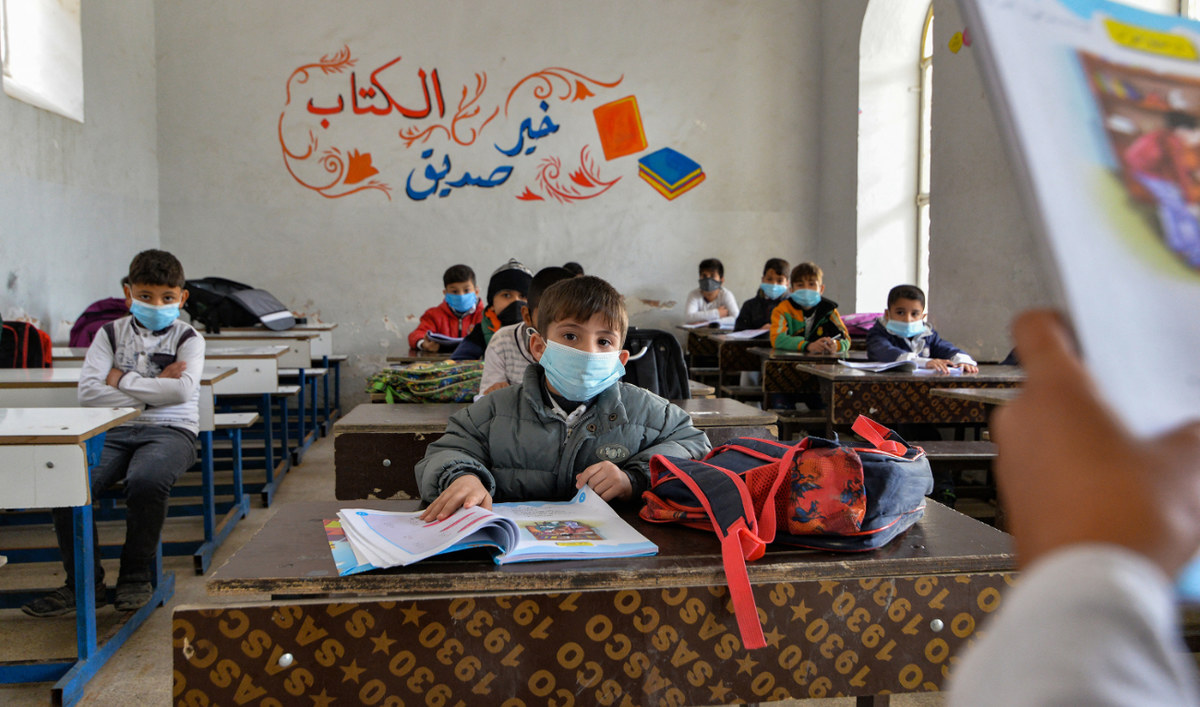
Iraqi pupils wearing protective masks attend class on the first day of the new academic year the northern city of Mosul, on November 29, 2020, amid the COVID-19 pandemic. (AFP)
Offering students access to the largest tutor community worldwide, composed of more than 60,000 teachers, Filo claims to be serving about 3.5 million students globally and conducting more than 70,000 classes daily.
“The platform connects students to a live tutor within 60 seconds, allowing them to overcome academic hurdles in real time, 24/7, throughout the week and even on Sundays,” said Ahmad.
Since the platform’s launch in 2020, several educational trends have become evident, according to him. “Student behavior has evolved from asking specific questions or numerical problems to also requesting the tutors to explain the entire concept,” he said.
“They are going as far as to say, let us explain it to the tutor to fully know whether we have understood the concept thoroughly,” demonstrating the advantage of one-to-one tutoring, which is often unavailable in traditional classrooms.
Referring to a learning format that allows students to complete courses in a shorter period of time compared with a traditional semester, Ahmad said: “I believe accelerated learning will be adapted by teachers soon. We can expect it to become a trend.”