



ISLAMABAD: Woman students from Arab countries on Tuesday showcased their culinary skills through the diverse and unique taste of Arabic cuisine at the International Islamic University Islamabad’s (IIUI) annual spring festival, where their stalls were the center of attraction and attendees flocked to them to savor the delicious food.
Established in 1980, the IIUI is a prestigious higher education institution in Pakistan and currently enrolls around 1,000 women students from 40 countries, according to Dr. Sumayah Chughtai, a student adviser at the varsity.
The university’s women campus celebrated the annual spring festival from March 4 till March 14, with students from over 20 countries, including Saudi Arabia, Palestine, Somalia, China, Thailand, Indonesia, Jordan and Turkiye, participating in it.
This year’s festival was themed around “women in business” and aimed at encouraging entrepreneurship among students and inspiring them to start their own businesses in the future.
The 10-day event also featured inter-university co-curricular activities and competitions in debate, drama, writing, arts and architecture and sports.
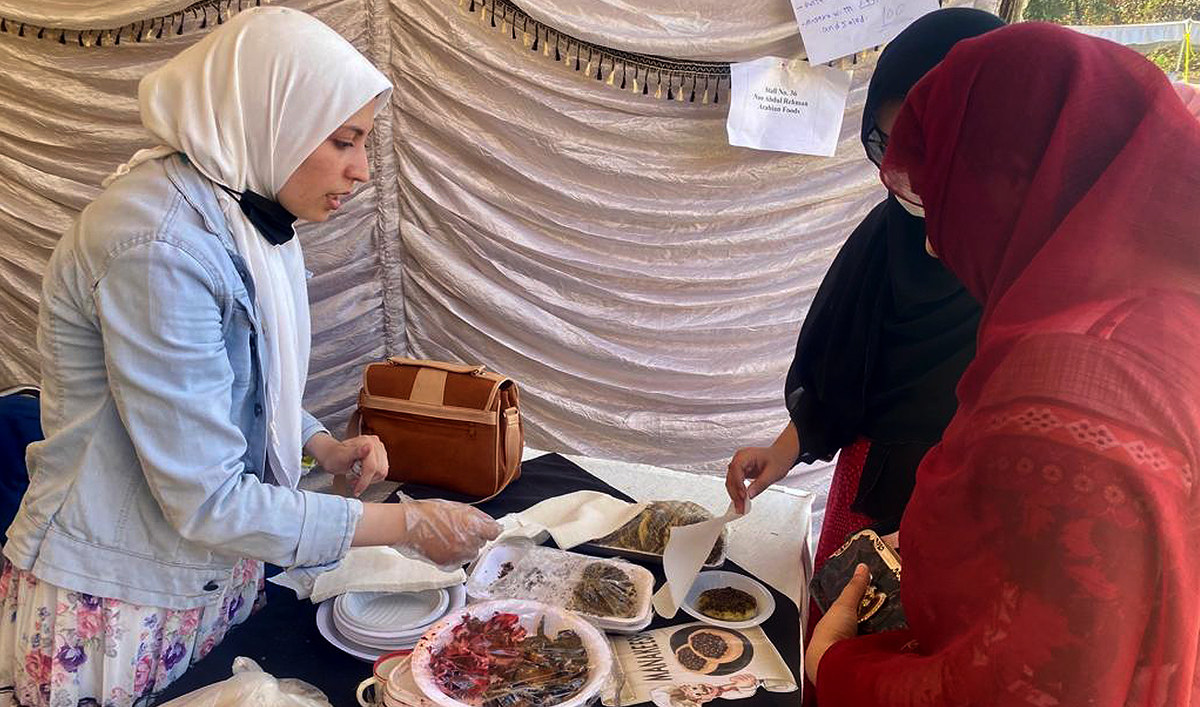
Participants present Arabic food to students at the International Islamic University's annual festival in Islamabad, Pakistan on March 14, 2023. (AN Photo)
“We are happy to present our traditional food to our fellow Pakistani students who had little information about diversity and taste of pure Arabic food,” Hanaa Shaheen, a Palestinian student, told Arab News.
“We are presenting the traditional Palestinian food here like ‘Manakish’ and it is a very unique and new taste for the Pakistani people and the students loved it so much that they even bought it for their families.”
Jawaher Muhammad, a Saudi student, said she had enjoyed presenting Arabic food at the festival and was amazed by the response from Pakistani students.
“We put on our stall ‘Maqluba,’ ‘Bechamel’ and Arabic coffee, and the response was amazing,” she told Arab News. “They liked it very much.”
Though the Pakistani people like spicier food, their response to Arabic cuisine was great, according to woman Arab students at the IIUI.
Fatima Abdul Kareem, another student from Saudi Arabia, said they prepared ‘Mojito,’ Arabic ‘qahwa’ (coffee) and donuts, which attracted a lot of students to their stall.
“The Pakistani people, especially our university fellows, are very cooperative and friendly toward us,” Kareem told Arab News.
Shimaa Ashraf, an Egyptian student, said their Pakistani fellows liked Arabic food so much that many of them had it parceled for their families.
“I presented ‘Koshary,’ a famous and traditional Egyptian dish cooked with rice, milk and cream, and it was finished in one hour,” she said, adding that she also made Pasta with Arabic shawarma, which remained a major attraction for visitors.
Sarah Ali, a Pakistani student, said she tried Arabic food for the first time ever at the festival and “loved it.” Food was a universal language that brought people together and helped them understand and appreciate their differences, she added.
“As soon as I took the first bite, I knew I had discovered something special and the flavors were so different from anything I had ever tasted before, and I loved it,” Ali told Arab News.
“I am grateful to the university for [providing us] the opportunity to meet people from different cultures and try new foods.”
She said stalls set up by students from Saudi Arabia, Palestine and Egypt offered some of the most amazing food she had ever tried.
Dr. Chughtai, the student adviser, said the festival provided a platform for foreign students to showcase their talent and participate in various activities.
“Arab student’s participation remained very prominent and as the student adviser, it is encouraging to see such diverse participation and enthusiasm from our students,” she told Arab News.
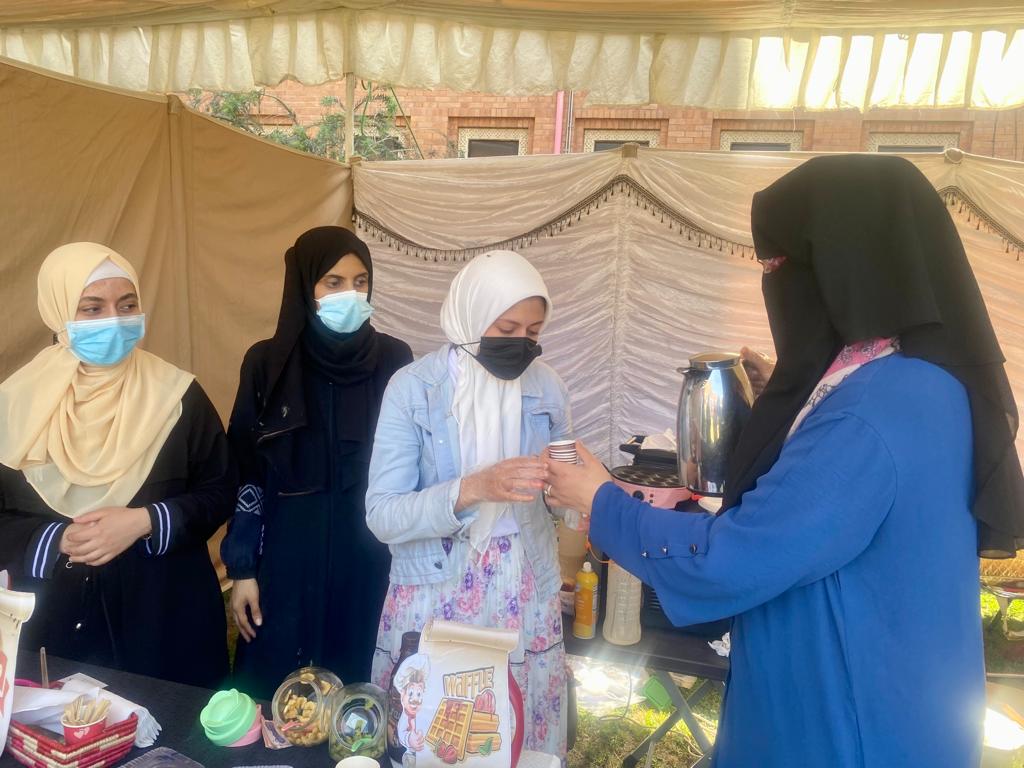
Participants serve coffee to students at the Palestinian stall at the International Islamic University's spring festival in Islamabad, Pakistan on March 14, 2023. (AN Photo)
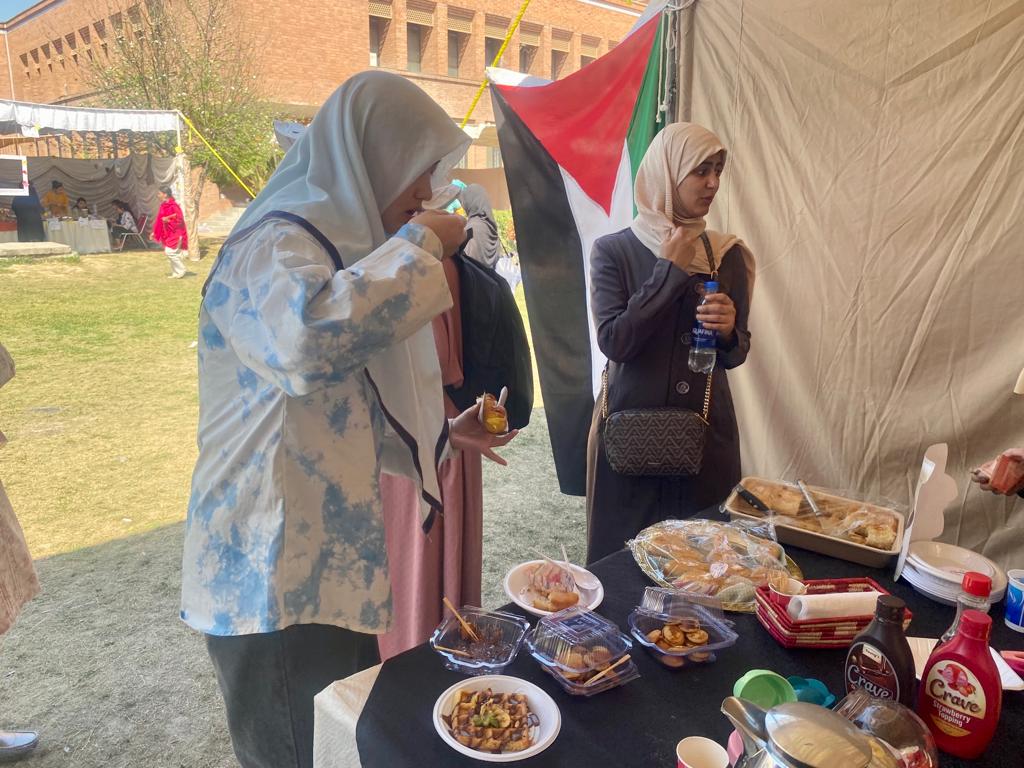
Students gesture near the Palestinian stall at the International Islamic University's spring festival in Islamabad, Pakistan on March 14, 2023. (AN Photo)


