

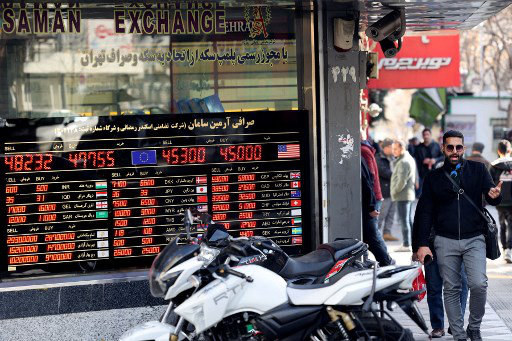

WASHINGTON: The United States on Thursday imposed sanctions on 39 entities, including many based in the United Arab Emirates and Hong Kong, that Washington said facilitate Iran’s access to the global financial system, describing them as a “shadow banking” network that moves billions of dollars.
The US Treasury Department in a statement said those targeted had granted companies previously slapped with Iran-related sanctions, such as Persian Gulf Petrochemical Industry Commercial Co. (PGPICC) and Triliance Petrochemical Co. Ltd, access to the international financial system and helped them hide their trade with foreign customers.
The latest US move against Iran comes as efforts to revive the 2015 nuclear deal have stalled, while ties between the mullah-ruled country and the West have become increasingly strained as Iranians keep up anti-government protests.
Washington has targeted Chinese companies over the export of Iran’s petrochemicals as the prospects of reviving the nuclear pact have dimmed.
“Iran cultivates complex sanctions evasion networks where foreign buyers, exchange houses, and dozens of front companies cooperatively help sanctioned Iranian companies to continue to trade,” said Deputy Treasury Secretary Wally Adeyemo.
He said the new measures showed the US commitment to enforcing sanctions and its “ability to disrupt Iran’s foreign financial networks, which it uses to launder funds.”
Liu Pengyu, spokesman for China’s embassy in Washington said the US actions had no basis in international law and were “typical unilateral sanctions and illegal ‘long-arm jurisdiction’” that were detrimental to Chinese interests.
“We deplore and reject this move,” he said, adding China had “actively promoted peace talks and sought a political solution” in Ukraine, while the United States “has been fanning the flame and fueling the fight with more weaponry.”
Iran’s mission to the United Nations in New York did not immediately respond to a request for comment.
Thursday’s move freezes any US assets of those designated and generally bars Americans from dealing with them. Those that engage in certain transactions with them also risk being hit by sanctions.
Many of the entities designated on Thursday are based in the UAE and Hong Kong, according to the Treasury website. The Treasury accused companies operating out of Hong Kong — including Foraben Trading Limited, Hongkong Well International Trading Limited, and Salita Trade Limited — of transferring millions of dollars related to petrochemical sales to China.
The Treasury Department’s top sanctions official, Brian Nelson, traveled to the UAE earlier this year, where he planned to warn officials about “poor sanctions compliance,” a department spokesperson said at the time.
Nelson also visited Turkiye on the trip to warn that Washington will continue to aggressively enforce its sanctions.
Among those designated on Thursday were two Turkiye-based entities, as well as Iran-based Mehr Petrochemical Company.
Brian O’Toole, a former Treasury Department official, said Thursday’s action would put a dent in Iran’s ability to keep moving oil and get paid for it.
“This is a pretty big deal, because this kind of thing should have an impact on what Iran is able to sell,” O’Toole said.


