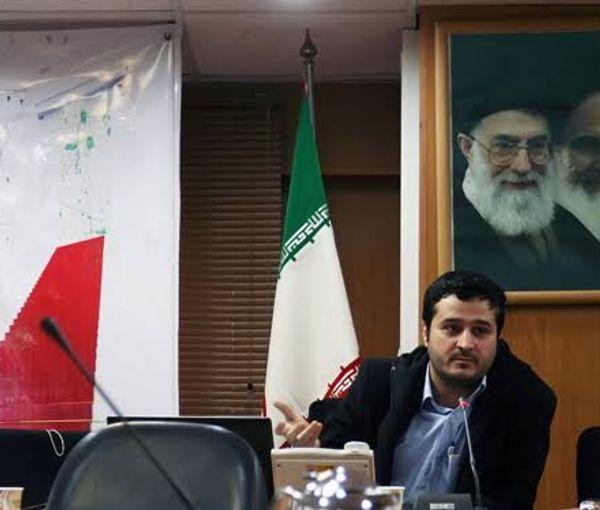
PARIS: Leading media rights group Reporters Without Borders (RSF) on Wednesday urged Iran to release a journalist arrested after closely covering a spate of mystery poisonings of schoolgirls, saying the detention appeared to be an attempt to silence him.
The spate of poisonings has affected over 5,000 pupils, mainly girls, since November, according to the authorities.
Rights groups based outside Iran have accused the authorities of failing to do enough to protect women's education and there were protests across Iran outside education authorities on Monday and Tuesday, according to monitors.
But supreme leader Ayatollah Ali Khamenei called Monday for the perpetrators of the "unforgivable crime" to be tracked down "without mercy".
Paris-based RSF said Ali Pour-Tabatabaie began covering the story for the Qom News website and on Twitter as soon as the first cases of poisoning were reported in the holy city of Qom at the end of November, and he was still covering the story when he was arrested on March 5.
It said he managed to phone his sister to tell her he had been arrested but it was not clear where he was being held.
Pour-Tabatabaie had criticized the lack of any reaction from the authorities in Qom to the first reported cases of poisoning, it added.
The mystery poisonings have intensified tensions in Iran almost six months into the protest movement sparked by the death of Mahsa Amini who had been arrested for allegedly violating the mandatory dress code for women.
Since the early days of the protest movement, Iran has held the two Iranian female journalists, Niloufar Hamedi and Elaheh Mohammadi, who helped expose the Amini story.
"As they already did with the journalists who revealed what happened to Mahsa Amini, the Iranian authorities are trying to silence those who dare to investigate and report other stories that are embarrassing for the government," said Jonathan Dagher, the head of RSF's Middle East desk.
He said some 30 journalists and media workers were currently held by Iran. Most were arrested in the crackdown on the protest movement.
"Ali Pour-Tabatabaei must be released unconditionally... The systematic persecution of journalists who still dare to do their job must end," he said.
The interior ministry said in a statement on Tuesday "a number of people" suspected of manufacturing hazardous substances had been arrested in six provinces, including a pupil's parent.
With public anger rising, protests took place this week over the authorities' response in several cities including Tehran, Mashhad and Shiraz, Norway-based NGO Iran Human Rights (IHR) said.
It said authorities fired on protesters and arrested teachers to disperse a protest in the city of Sanandaj in western Iran.


Iran urged to release reporter who covered mystery poisonings
https://arab.news/pxb7a
Iran urged to release reporter who covered mystery poisonings

- Pour-Tabatabaie covered the first poisoning incidents for Qom News and at the end of Nov. and was still reporting until his arrest in March
- At least 30 journalists and media workers are currently held by the Iranian authorities, said media watchdog RSF


Gems of Arabia magazine launched to spotlight talents shaping Saudi Arabia’s evolving cultural landscape
- The publication features established and emerging talents elevating the region across design, fashion, art, tech, music, architecture and media
- Saudi fashion designer Hatem Alakeel seeks to highlight the richness of the Kingdom, and wider modern Arab culture to global audiences
DUBAI: When Saudi fashion designer Hatem Alakeel interviewed Princess Reema bint Bandar Al-Saud before her appointment as Saudi ambassador to the US, the longtime advocate of women’s empowerment made a powerful prediction: “I look forward to the day that the Saudi woman is no longer the story but rather a phenomenal achievement.”
That moment would become the foundation for Gems of Arabia, an arts and culture audio-visual podcast that spotlights the creative talents shaping the landscape of Saudi Arabia and the broader region.
Over six years, Gems of Arabia has documented the sweeping transformation of the Kingdom’s art and culture scene, and is now evolving into a full-fledged magazine.

“It started off as a column I used to write, and from there, it turned into a podcast. Now it is growing into a magazine,” Dubai-based Alakeel, the magazine’s founder and editor-in-chief, told Arab News ahead of the launch of the digital publication on Thursday.
Besides spotlighting celebrated regional artists, Alakeel said Gems of Arabia is in search of the “hidden gems” elevating the region across design, fashion, art, tech, music, architecture and media.
The magazine serves as a platform for talented, authentic creatives and tech entrepreneurs unable to articulate their work “because they don’t have the public relations or capacity to promote themselves even through social media.”
Alakeel added: “Our job is to identify all these authentic people; you don’t have to be famous, you just have to be authentic, and have a great story to tell.”
The digital publication offers a dynamic blend of short-form podcasts, coverage of regional cultural events, in-depth features and editorials, long-form interviews and artist profiles — spotlighting both celebrated and emerging talents. This is complemented by social media vox pops and bite-sized coverage of art events across the region.
Alakeel, who also runs Authenticite, a consulting and creative production agency connecting creators and brands who want to understand Saudi culture, said the magazine content is “carefully curated” to feature topics and personalities that resonate in the region.
What differentiates Gems of Arabia, he said, is its story of continuity and substance amassed over the years that has captured the evolution of the wider regional landscape.
“The website represents an archive of nearly 150 articles compiled through years of podcasts and long-form conversations that show continuity and depth changes,” he said.
“So, it’s an evolution and it’s another home for all our content and our community.”
Growing up in France, Alakeel said his mission started early on when he felt the need to represent his Saudi culture “in a way where it can hold its own internationally.”
Through his first brand, Toby, he sought to bring the traditional thobe into modern designs and introduce it to the luxury fashion world. This mission was accomplished when his thobe designs were placed alongside global labels such as Harvey Nichols, Dolce & Gabbana and Prada.
What began as a personal design mission would soon expand into a broader platform to champion Saudi talent.
“I was articulating my culture through fashion and it just felt natural to do that through the incredible people that the region has,” Alakeel said, adding that the magazine aims to highlight the richness of the Kingdom, and wider modern Arab culture to global audiences.
“Art is such a great way of learning about a culture and a country,” he said.
On the ground in Saudi Arabia, the publication hosts GEMS Forum, a series of live cultural gatherings that bring together prominent artistic figures for in-depth conversations later transformed into podcast episodes recorded with a live audience.
Alakeel said the print edition of Gems of Arabia will debut in March, designed as a collectible coffee-table quarterly distributed across the Gulf.
He envisions the platform growing into a long-term cultural record.
“It's a Saudi-centric magazine, but the idea is to make it inclusive to the region and everyone authentic has a seat at the table,” said Alakeel.


