AL-MUKALLA: The Iran-backed Houthis have been blamed for a sharp rise in potentially deadly polio cases in Yemen.
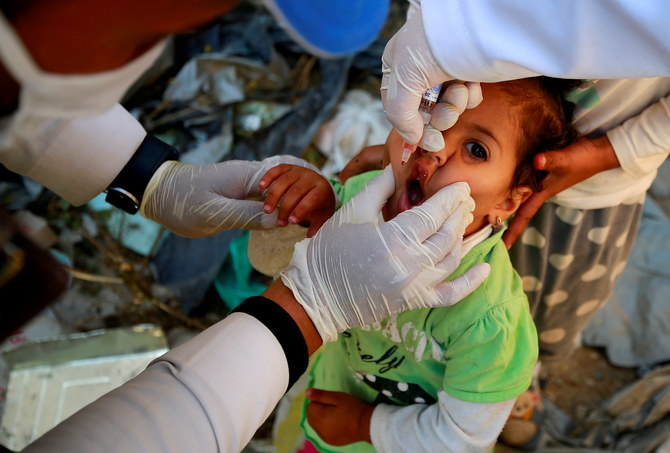
The country’s health ministry on Tuesday concluded a three-day campaign aimed at vaccinating more than 1 million children under the age of five against the disabling and life-threatening disease.
The initiative was prompted after officials reported at least 230 new cases of polio in Yemen over the last two years.
However, the majority were in heavily populated areas under Houthi control.
Houthi authorities have advised Yemenis against taking vaccinations or medication, claiming they are being used as part of a Zionist and American plot to kill them.
But Qasem Buhaibeh, Yemen’s health minister, claimed the militia group’s blocking of immunization programs in Sanaa and elsewhere had fueled a resurgence of polio and other illnesses.
In a tweet, he said: “After having been eliminated, polio has reappeared in Yemen due to the Houthis’ anti-vaccine and anti-mass-immunization initiatives.
“These anti-science and anti-knowledge measures will have serious repercussions for the health of all Yemenis.”
During the recent immunization drive, health workers went door to door in the provinces of Aden, Hadramout, Abyan, Shabwa, and other government-controlled areas administering vaccination drops to children.
A simultaneous polio vaccine booster awareness campaign was started on social media, and local television and radio stations, with posters also being displayed throughout major cities.
Yemeni health chiefs said 1,290,056 children in 120 districts throughout the country’s 12 provinces under government control had been targeted.
Yemen was certified polio-free in 2009, but Dr. Ishraq Al-Subaee, a health official in Aden, told Arab News that the ministry had documented more than 230 cases in the past two years, mostly in Houthi-controlled regions.
Yemeni health authorities, physicians, and local media reports have attributed a surge in polio and measles cases in areas such as Sanaa, Hajjah, Al-Mahweet, Hodeidah, and Saada, to Houthi opposition to vaccination programs.
Al-Subaee said the spread of diseases was “scaring” the Ministry of Health and other government agencies. “We conducted this preventive effort in the freed territories to prevent the recurrence of the illness.”
The doctor noted that three prior polio vaccination campaigns had resulted in government-controlled regions registering nearly zero cases of the illness over the last few months.
In Sanaa, the Houthis have organized seminars and lectures to warn people against taking vaccinations or drugs from outside the country, instead urging them to use honey and herbs, and take advice from Houthi leaders when ill.
Under the title “Vaccines’ Danger to Humanity,” Houthi health authorities sponsored a workshop attended by the Houthi prime minister and other officials to advise the public against vaccinating themselves or their children.
Abdulaziz Al-Dailami, a former vaccine official at the Houthi Ministry of Health in Sanaa, claimed his children had become healthier and more active since they stopped receiving vaccines.
During the workshop, he said: “We advise against immunizations. I apologize to the Yemeni people for being a sponsor or leader of the vaccines committee over extended periods of time. I beseech God to accept my contrition.”
Health workers in Houthi-controlled regions have reported that measles and polio have killed at least 10 children and infected scores of others since early last month.
In a Facebook post, Sanaa doctor Wahaj Al-Maghtari said: “Assaulting vaccinations and persuading people to forsake them is a serious social crime, and even a crime against future generations, since it reintroduces dangerous illnesses that we had previously eradicated.”
In a challenge to the Houthi narrative, several physicians in Sanaa posed for a picture before administering polio vaccinations to members of the public.


![]()
Iran-backed Houthis blamed for ‘serious’ rise in Yemen polio cases

Short Url
https://arab.news/ygnvv
Iran-backed Houthis blamed for ‘serious’ rise in Yemen polio cases
- The initiative was prompted after officials reported at least 230 new cases of polio in Yemen over the last two years
- Houthi authorities have advised Yemenis against taking vaccinations or medication


Latest updates


© 2026 SAUDI RESEARCH & PUBLISHING COMPANY, All Rights Reserved And subject to Terms of Use Agreement.