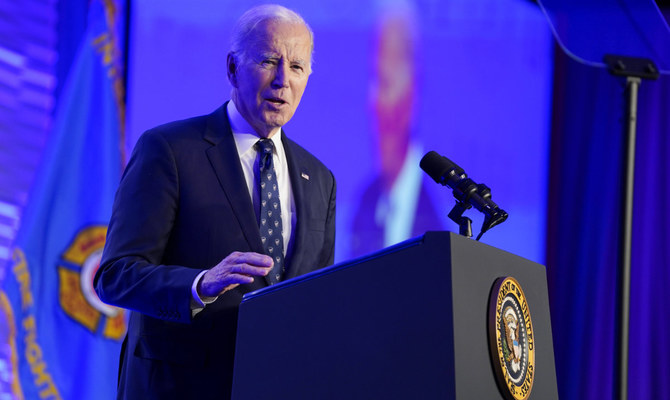
WASHINGTON: President Joe Biden on Tuesday proposed new taxes on the rich to help fund Medicare, saying the plan would help to extend the insurance program’s solvency by 25 years and provide a degree of middle-class stability to millions of older adults.
In his plan, Biden is overtly declaring that the wealthy ought to shoulder a heavier tax burden. His budget would draw a direct line between those new taxes and the popular health insurance program for people older than 65, essentially asking those who’ve fared best in the economy to subsidize the rest of the population.
Biden wants to increase the Medicare tax rate from 3.8 percent to 5 percent on income exceeding $400,000 per year, including salaries and capital gains. The White House did not provide specific cost-saving estimates with the proposal, but the move would likely increase tax revenues by more than $117 billion over 10 years, according to prior estimates in February by the Tax Policy Center.
“This modest increase in Medicare contributions from those with the highest incomes will help keep the Medicare program strong for decades to come,” Biden wrote in a Tuesday essay in The New York Times. He called Medicare a “rock-solid guarantee that Americans have counted on to be there for them when they retire.”
Senate Minority Leader Mitch McConnell, R-Kentucky, was quick to dismiss the plan, telling reporters on Tuesday that Biden’s budget agenda “will not see the light of day.”
More than 65 million people rely on Medicare at a cost to taxpayers of roughly $900 billion every year. The number of Medicare enrollees is expected to continue growing as the US population ages. But funding for the program is a problem with federal officials warning that, without cuts or tax increases, the Medicare fund might only be able to pay for 90 percent of benefits by 2028.
Biden’s suggested Medicare changes are part of a fuller budget proposal that he plans to release on Thursday in Philadelphia. Pushing the proposal through Congress will likely be difficult, with Republicans in control of the House and Democrats holding only a slim majority in the Senate.
The proposal is a direct challenge to GOP lawmakers, who argue that economic growth comes from tax cuts like those pushed through by former President Donald Trump in 2017. Those cuts disproportionately favored wealthier households and companies. They contributed to higher budget deficits, when growth failed to boom as Trump had promised and the economy was then derailed in 2020 by the coronavirus pandemic.
The conflicting worldviews on how taxes would impact the economy is part of a broader showdown. Biden and Congress need to reach a deal to raise the government’s borrowing authority at some point this summer, or else the government could default and plunge the US into a debilitating recession.
Grover Norquist, president of Americans for Tax Reform and an advocate for the kinds of tax cuts generally favored by Republicans, said that the US economy would suffer because of the president’s plan.
“The Biden tax hikes will raise the cost of goods and services for everyone, and make American workers and businesses less competitive internationally and vs. China,” Norquist said.
But Maya MacGuineas, president of the Committee for a Responsible Federal Budget, applauded the plan despite having some reservations about it.
“The president’s plan would generate hundreds of billions of dollars – perhaps even approaching a trillion dollars – to strengthen Medicare,” said MacGuineas, a fiscal watchdog focused on deficit reduction.
White House press secretary Karine Jean-Pierre declined to discuss the numbers behind the budget plan. She told reporters at Tuesday’s briefing that she would not “dive into the math,” but that Biden’s proposal on Thursday “will be very detailed and transparent.”
Ahead of an expected budget feud and the 2024 campaign season, Democrats have ramped up talk around Medicare, vowing to fend off any Republican attempts to cut the program, although so far the GOP has vowed to avoid any cuts. Still, Republican lawmakers have reached little consensus on how to fulfill their promise to put the government on a path toward balancing the federal budget in the next 10 years.
Last year, members of the House Republican Study Committee proposed raising the eligibility age for Medicare to 67, which would match Social Security. But that idea hasn’t moved forward in a split Congress.
Republicans have denied that they plan to cut the program. A proposal from Sen. Rick Scott, R-Fla., that would require Congress to reconsider all federal laws every five years, including Medicare, has gotten little traction.
Raising taxes on Americans who make more than $250,000 to pay for Medicare has broad support among older Americans, but raising the eligibility age for Medicare, is widely unpopular, said Mary Johnson, a policy analyst for the nonpartisan Senior Citizens League who has researched the issue.
Politicians who try that route might “lose supporters and it can backfire. You can wind up losing your office, too,” she said. “A very high percentage of seniors are voting in elections.”
Biden’s plan is also intended to close what the White House describes as loopholes that allow people to avoid Medicare taxes on some income. Besides the taxes, Biden wants to expand Medicare’s ability to negotiate drug costs, which began with the Inflation Reduction Act. He signed the sweeping legislation last year.
The White House said its budget plan would expand the pharmaceutical drug provisions of the Inflation Reduction Act. More drugs would be subject to price negotiations, other drugs would be brought into the negotiation process sooner and the scope of rebates would be expanded.
Taken together, Biden’s new proposals would help shore up a key trust fund that pays for Medicare, which provides health care for older adults. According to the White House, the changes would keep the fund solvent until the 2050s, about 25 years longer than currently expected.
Changes would also be made to Medicare benefits. Biden wants to limit cost sharing for some generic drugs to only $2. The idea would lower out-of-pocket costs for treating hypertension, high cholesterol and other ailments.


![]()

Joe Biden plans new taxes on the rich to help save Medicare
Short Url
https://arab.news/4rznz
Joe Biden plans new taxes on the rich to help save Medicare
- More than 65 million people rely on Medicare at a cost to taxpayers of roughly $900 billion every year

Latest updates




© 2026 SAUDI RESEARCH & PUBLISHING COMPANY, All Rights Reserved And subject to Terms of Use Agreement.