

‘Aurat Azadi Jalsa’ in Islamabad calls for rehabilitation, economic justice for women hit by last year's floods

Activists of "Aurat Azadi March" carry placards during a gathering in Islamabad, Pakistan, on March 5, 2023. (AN Photo)
Short Url
Updated 05 March 2023
Follow

‘Aurat Azadi Jalsa’ in Islamabad calls for rehabilitation, economic justice for women hit by last year's floods

  • Students, women, men, and civil society members gather at Islamabad's largest park to demand economic justice
  • Participants call for rehabilitation of flood-affected families, regularization of shanty houses to empower women

ISLAMABAD: Women activists demanded economic justice and rehabilitation for victims of last year's devastating floods at Islamabad's largest capital on Sunday, calling for an end to patriarchal violence and femicide in areas affected by militancy.

Cataclysmic floods last year, triggered by unusually heavy rains in the monsoon season, displaced over 33 million people in Pakistan and left over 1,700 dead. Millions of homes and critical infrastructure were destroyed, as Pakistan estimated damages to be over $30 billion.

In commemoration of the 113th International Working Women's Day, the socialist-feminist movement Women Democratic Front (WDF) and the Aurat Azadi March (AAM) organized a gathering titled "Aurat Azadi Jalsa" at the Fatima Jinnah Park in Islamabad.

The gathering was attended by women activists, domestic workers, students, trade unions, lawyers, and political organizations who identify with progressive ideologies. AAM [Women's Independence March] was established in Islamabad in 2018, and the WDF has been organizing it in all provinces for the past five years.

“Our theme for this year is restoring the economy, [rehabilitating] flood affectees, and peace which is also very important for the women as all these points directly impacted women's lives,” Ismat Raza Shahjahan, WDF president and one of the organizers, told Arab News.
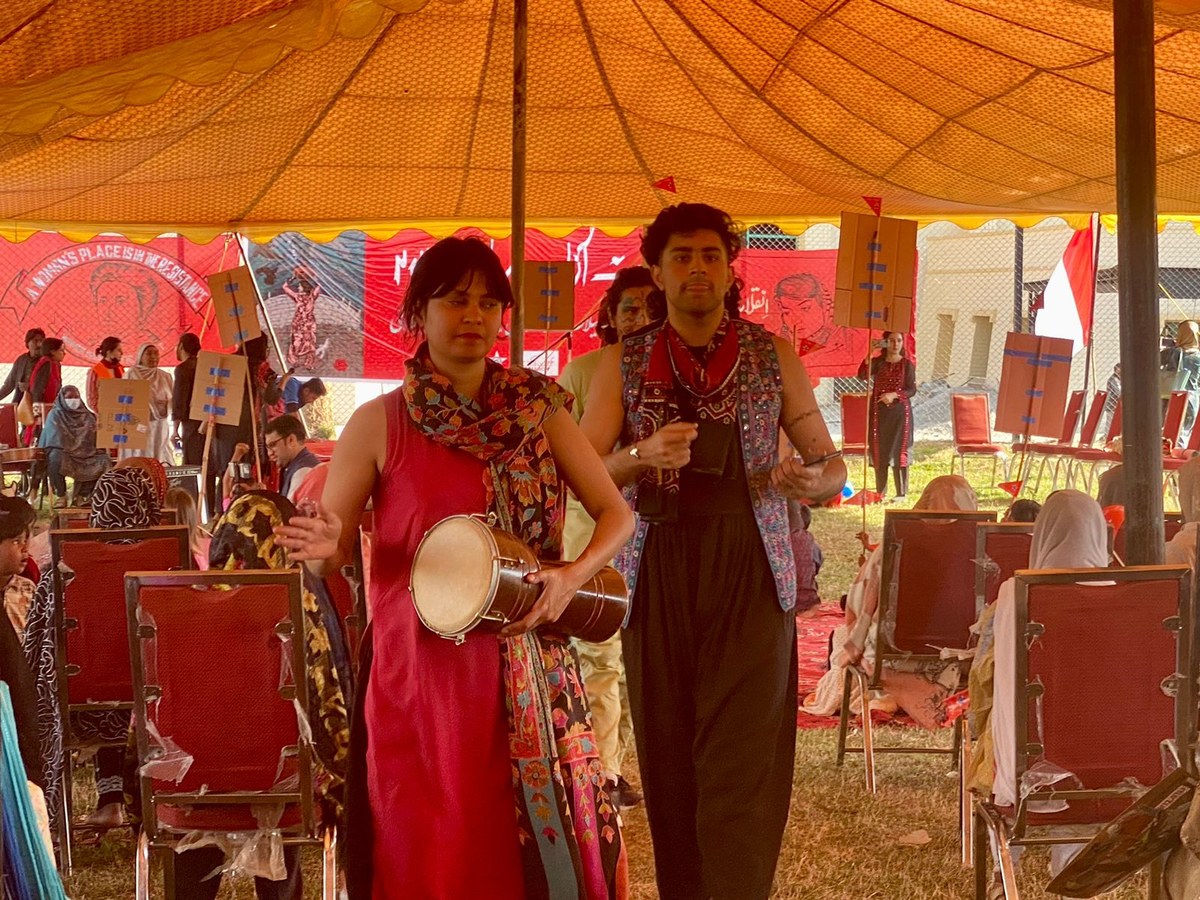


"Aurat Azadi March" member beats the drum during the event in Islamabad, Pakistan, on March 5, 2023. (AN Photo)

She said it was important to celebrate this day in Pakistan as many anti-feminist forces — without elaborating who — were active in Pakistan. Shahjahan said societies cannot progress without free education and healthcare for all, demanding an end to privatization and huge subsidies for the elite.

Many women held placards in their hands as they chanted slogans calling for economic justice and equality of the sexes.

Gulzar Begum, leader of the All Katchi Abadi Alliance, called for the regularization of all Kachi Abadis (shanty houses) and villages where people from war-torn areas, feudal heartlands, and poverty-stricken villages take refuge.

“Our kachi abadis are not only drowned in floods but also [in] the sea of inflation,” she said, demanding a decrease in the price of basic commodities. Begum also called for urban land reforms to create housing spaces for the working class.
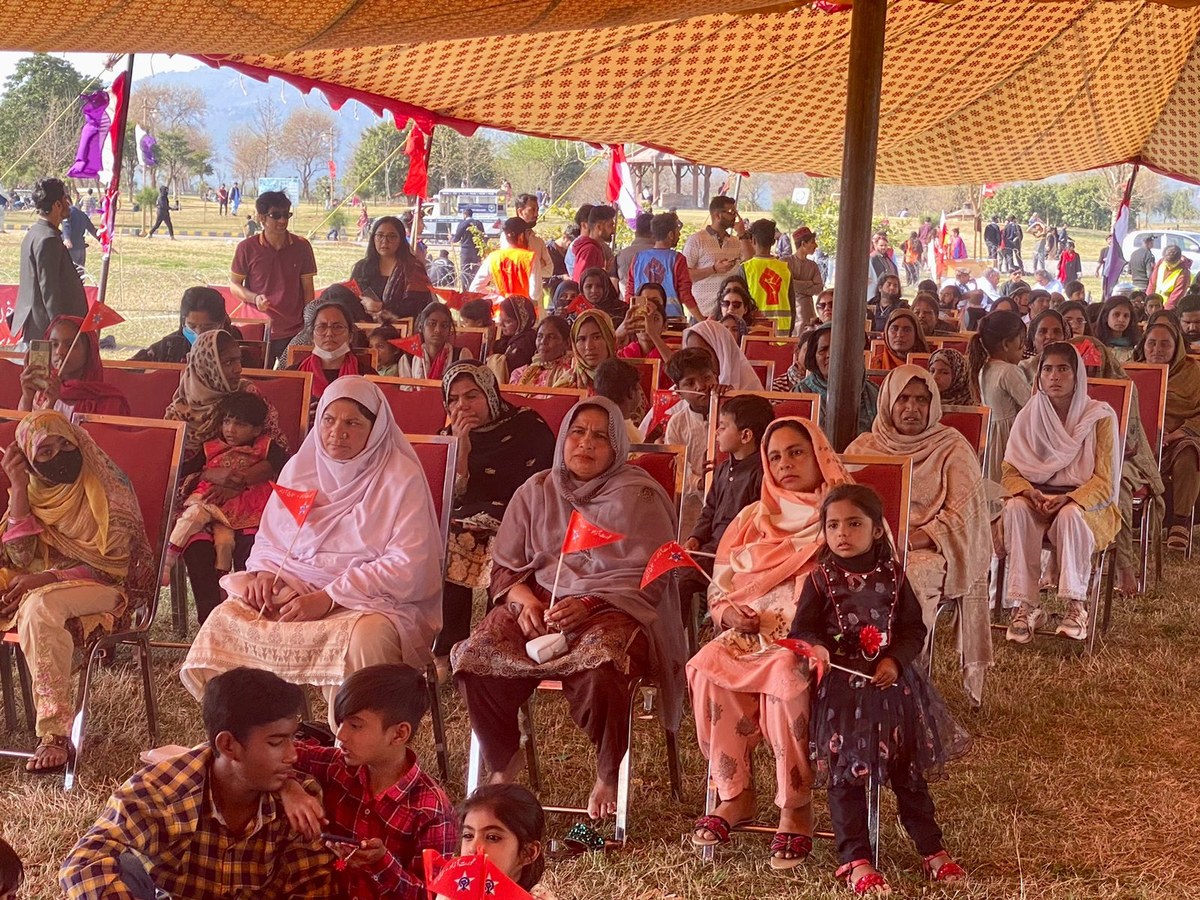


Women from kachi abadis (shanty houses or slums) participate in "Aurat Azadi March" gathering to demand regularisation of their colonies in Islamabad, Pakistan, on March 5, 2023. (AN Photo)

Fatima Shehzad, general secretary of the Progressive Student Federation, said women were especially affected by the deluges as they were now homeless which spiked the dangers of violence against women and sexual crimes.

“Our main demand is to rehabilitate such women and empower them by providing employment or resources to earn so that is why we came to support this theme in this gathering today,” she told Arab News.

Farman Ali, information secretary of the Awami Workers Party, said it was not only women’s responsibility to speak against injustices towards women, but rather men should also speak up.

“Women are our mothers, sisters, wives, and colleagues so I came here to support them and their right to get equal opportunities in society,” he told Arab News.

Working women had to work twice more, he said, adding that after coming home from a hard day's work, they had to do household chores and received little support from society and their in-laws.

“Therefore, sane voices in men also feel it and support them in this patriarchal society,” Ali added.
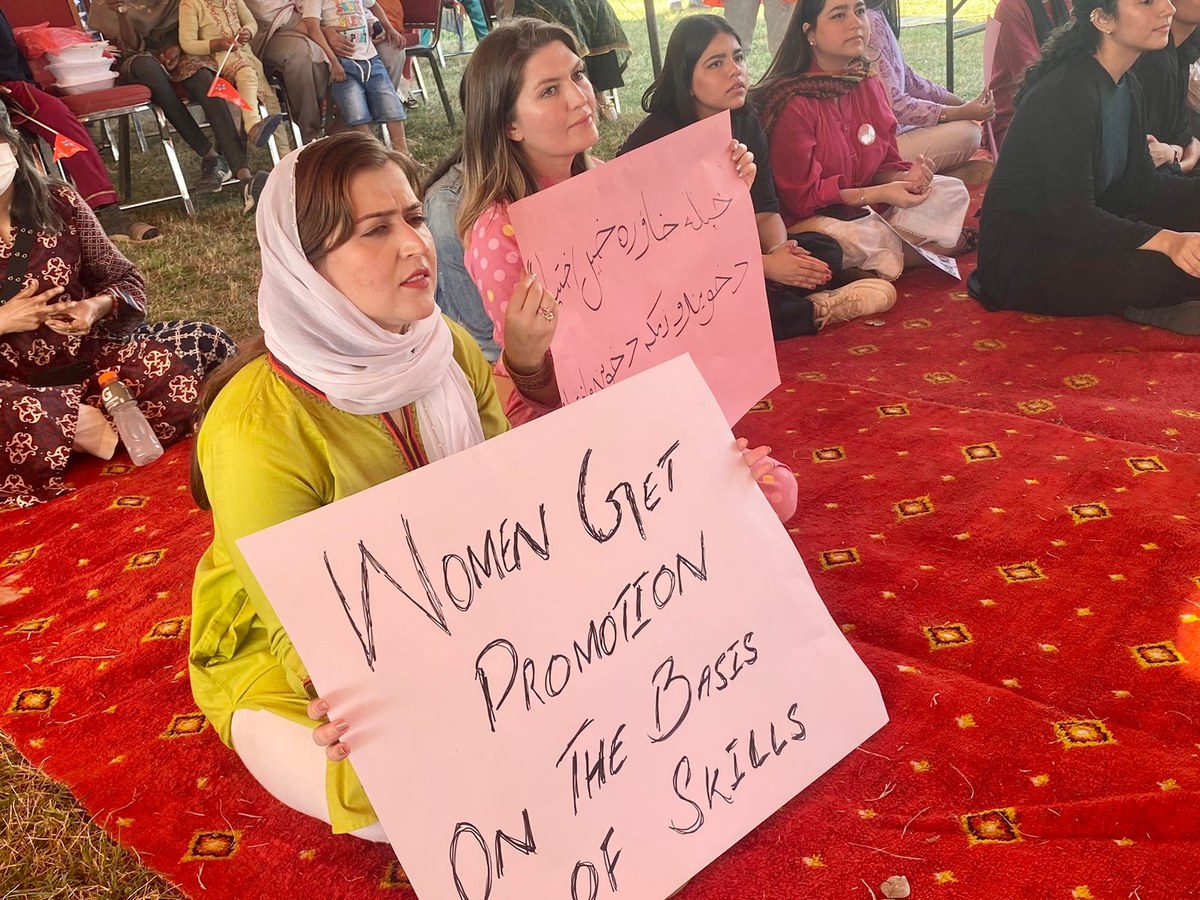


Activists of "Aurat Azadi March" carry placards during a gathering in Islamabad, Pakistan, on March 5, 2023. (AN Photo)
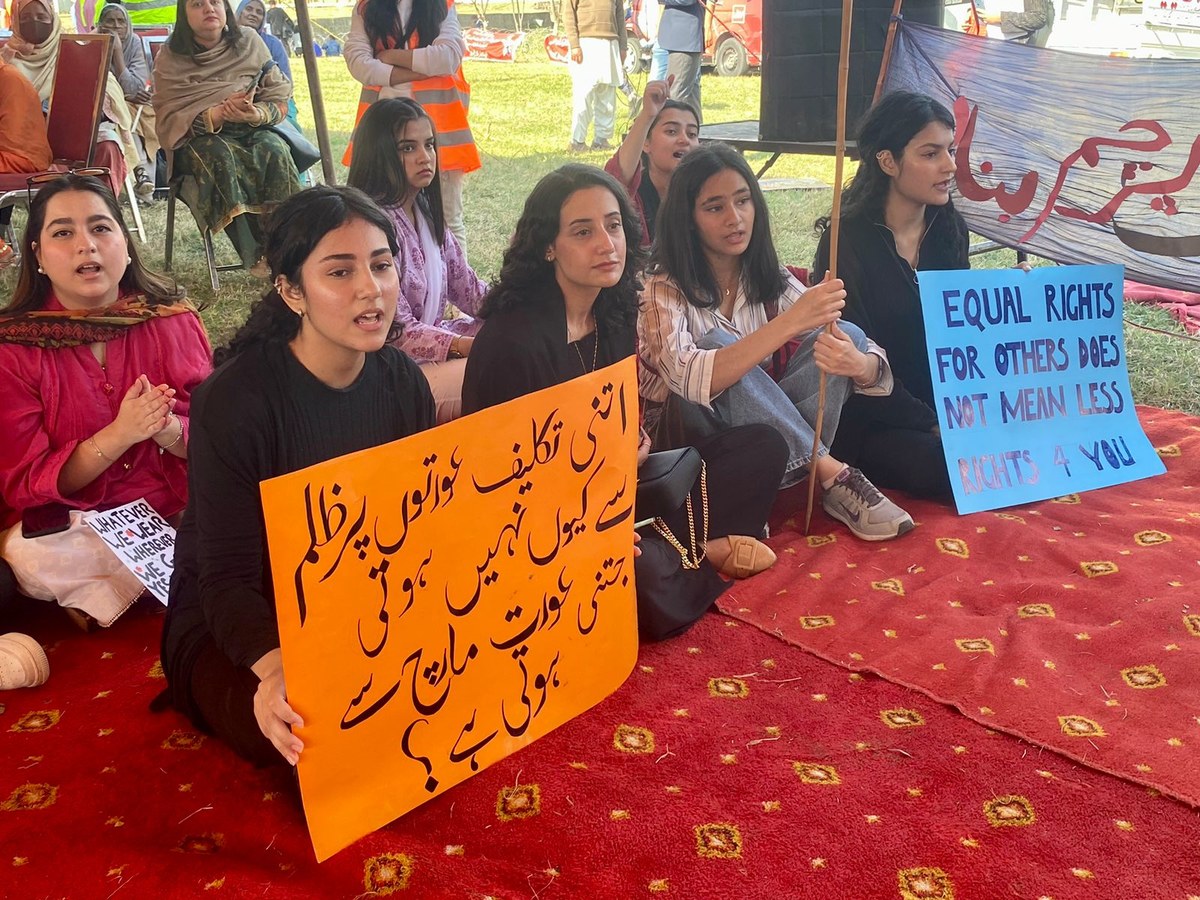


Activists of "Aurat Azadi March" carry placards during a gathering in Islamabad, Pakistan, on March 5, 2023. (AN Photo)


Pakistan’s Senate passes bill to regulate virtual assets, protect investors

Updated 5 sec ago
Follow

Pakistan’s Senate passes bill to regulate virtual assets, protect investors

  • PVARA chairman terms the approval of bill a ‘defining moment’ for Pakistan’s digital economy
  • Senator says Pakistan will soon be trading major crypto coins such as Bitcoin, Ethereum, XRP

ISLAMABAD: The Senate, the upper house of Pakistan parliament, has passed the Virtual Assets Bill 2026 that paves the way for regulation and supervision of the digital assets sector to protect investors, the Pakistan Virtual Assets Regulatory Authority (PVARA) said on Friday. 

Pakistan has in recent months stepped up efforts to draft rules for regulating the fast-expanding market for digital coins and tokens, requiring virtual asset service providers to secure government approval. Islamabad’s move to embrace digital currency marks a significant policy shift as it had banned cryptocurrency in 2018, citing financial risks.

PVARA will oversee the registration and licensing of virtual asset exchanges, custodians and other service providers, according to the bill. It will set conduct of business requirements, enforce customer protection safeguards and implement measures to combat money-laundering and financial crime.

“The passage of this bill through the Senate represents a defining moment for Pakistan’s digital economy,” PVARA quoted its Chairman Bilal bin Saqib as saying. “We are transforming years of unregulated activity into a transparent, secure, and investor-friendly ecosystem that positions Pakistan as a credible jurisdiction for virtual assets.”

The legislation introduces regulatory provisions, including mandatory licensing for virtual asset service providers, market surveillance mechanisms, anti-money laundering and counter-terrorism financing compliance, and coordination with Pakistani financial regulators, including the State Bank of Pakistan and the Securities and Exchange Commission of Pakistan.

The bill establishes a formal legal framework empowering PVARA to oversee virtual asset service providers and seeks to enhance market transparency by aligning the country’s digital asset regime with international standards. It will now be sent to the National Assembly, lower house of parliament, for approval before being submitted to President Asif Ali Zardari for its enactment into law.

Pakistan ranks among the world’s largest cryptocurrency markets by adoption, with millions of citizens actively engaged in virtual assets. PVARA said the Virtual Assets Bill 2026 provides a legal foundation to channel this organic growth into a regulated framework.

On Wednesday, Dr. Afnanullah Khan, a Pakistani senator from the ruling party, said major crypto coins such as Bitcoin, Ethereum and XRP will soon be traded in Pakistan through crypto exchanges.

Last week, Pakistan launched a crypto testing framework called the “regulatory sandbox” to regulate digital assets, allowing firms to trial new products and services under official supervision. The initiative creates a controlled environment where companies can test crypto-related services under the oversight of PVARA before full-scale approval.

In January, Pakistan signed a memorandum of understanding with a company affiliated with World Liberty Financial, a crypto-based finance platform launched in September 2024 and linked to US President Donald Trump’s family, to explore the use of a dollar-linked Stablecoin for cross-border payments. Stablecoins are cryptocurrencies pegged to a fiat currency to maintain a stable value.