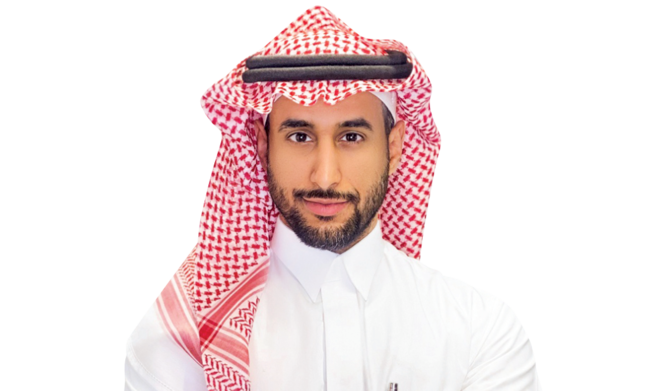

Abdullah Altamami is a founding partner, CEO and shareholder of Merak Capital, a licensed technology investment institution by the Capital Markets Authority of Saudi Arabia, focusing on private equity, venture capital and credit investments.
Altamami, who has over 13 years’ experience in technology and investments, is currently a board member of Qoyod, the leading Saudi software as a service accounting firm that transforms traditional accounting into an integrated technology platform to accelerate business operations for small and medium enterprises.
He is also chairman of Arib, a digital financing broker aggregating all financing institutions on one platform for individuals. Moreover, he is an independent board member of Enjaz, a Saudi Central Bank licensed payment services company spun off from Bank Albilad, one of the leading banks in the Kingdom.
In 2014, Altamami co-founded HyperPay, leading its business development and strategy operations to become the fastest-growing payment service provider in the Middle East and North Africa region. He served on the company’s board for seven years and led as HyperPay’s chairman from 2019 to 2022.
Furthermore, Altamami founded iNet Fund in 2014, a regional corporate venture capital fund focusing on e-commerce and fintech ventures. As the fund’s managing director, he invested in more than 12 startups across the MENA region, with a primary focus on Saudi Arabia, the UAE and Jordan.
Before iNet Fund, Altamami worked at Jadwa Investment in Riyadh, covering global economies, regional markets and investment research in public equities. He also worked in Miami for several years.
Altamami worked with Merrill Lynch Wealth Management on investment strategies, fund selection and long-term financial planning. Before that, he worked with Cisco Capital, underwriting credit for potential borrowers in South America.
Altamami is a graduate of the University of Miami with both a master’s degree in management of technology and a bachelor’s degree in computer science and mathematics. He holds the General Securities Qualification Examination, the International Certificate in Wealth and Investment Management and the Corporate Finance Technical Foundations certifications.