

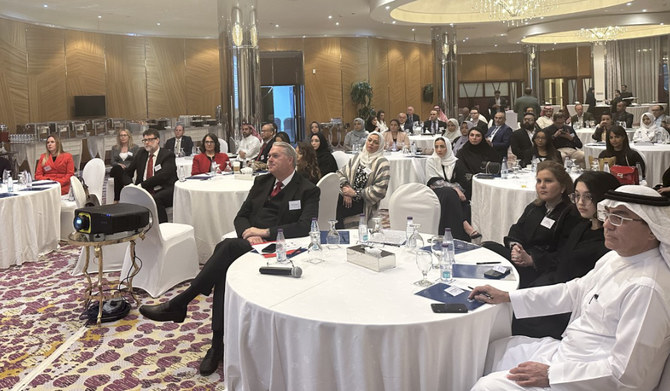


JEDDAH: Education is central to the task of creating a vibrant society and thriving economy in line with Saudi Vision 2030, experts have said in a discussion in Jeddah.
In the event hosted by the American Chamber of Commerce Saudi Arabia’s Jeddah Chapter, experts and stakeholders highlighted the effects of Vision 2030 on education and the ways it was achieving the requirements of the 21st century.
Dr. Maha Bawazir, CEO of Global Education Consultancy, said Vision 2030 had revamped the educational sector. “Within these five years, we have achieved tremendously. A lot of changes have taken place in the school's curriculum and programs,” she told the discussion at the Jeddah Hilton Hotel.
“I am really proud that we have adapted to these changes perfectly and that education in Saudi Arabia continues to gain global recognition.
“According to the Human Development Index, a report released by the UN Development Program, the Kingdom of Saudi Arabia has already moved from 40th place to 35th in just two years, which is amazing.
“This proves that we are on the right track and ready for the future.”
Dr. Abeer Bar, an educational consultant, said: “These kinds of events really show how Vision 2030 (promotes) expertise, knowledge and passion. People who work in different sectors can also be our educators. Passion is one of the main things that is required to develop and take the community further following the plans of Vision 2030.”
Dr. Munirah Alaboudi, education sector director of the Ministry of Investment of Saudi Arabia, spoke about education from an investment perspective.
“It is very exciting to see the momentum that’s happening across different levels in Saudi Arabia whether it is the public, private, or non-profit sector,” she said.
“Everyone is working together and buying into the goals of Vision 2030 in accelerating Saudi Arabia being a talent hub. Schools, public and private universities are all rethinking and recalibrating their offerings.
“Also, the public and private entities are finding ways to contribute even more to human capital development.”
She highlighted some of the upcoming projects, which include college preparation programs that prepare students and give them a better chance to excel before they start in higher education.
“Even beyond that, a lot of private schools are developing exciting programs to prep the students in a better way for a future career in a field that does not exist yet,” she said.
Dr. Lina Lewis, CAO at Riyadh Schools Platform (MISK) said: “We are preparing the students to meet and exceed Vision 2030 by preparing them to be lifelong learners, and to have a sense of Saudi cultural identity, where they know Arabic language and Islamic knowledge.
“We are giving them the competency and skills through an integrated curriculum that they need to survive as lifelong learners and face the ambiguity and changes in the fourth industrial revolution.
“This curriculum is revised constantly. We hope to create a graduate learner profile that is aligned with Vision 2030 and the human development capacity successfully.”
Other panel members discussed the role of expatriate educators, the international schools model and the school transformation in regards to science, technology and mathematics.
They discussed how to identify top educational talents who can work in the Kingdom, steps taken to help them blend high-quality education from other countries with the culture and vision of Saudi Arabia, and ways the youth in the Kingdom can be prepared before going abroad to study.
Zeina Alnouri, AmCham Saudi Arabia Jeddah Chapter Coordinator said: “Education allows the Kingdom to establish a society that ensures success. The sector’s key stakeholders and change makers discussed important topics that will surely impact students’ learning and their readiness for university and beyond. Additionally, the changes will help in creating efficient teachers with excellent leadership skills.”
Rola Osta, the director of the Jeddah Chapter, said that the panelists from various government institutions, the ministry of investment, the MISK foundation and international schools discussed the benefits of having a diverse educational system and shared interesting insights that made this event a success.


