


DADAAB, Kenya: When her three-month-old baby fell sick from malnutrition, Dool Abdirahman Ismael left her village in Somalia and walked for three days through swirling dust and scorching heat to the Dadaab Refugee Camp just across the border in Kenya.
Ismael, 26, said she had hoped Dadaab would be free of the hunger and sickness she fled in Somalia, where the worst drought in decades and surging food prices have left millions of people in need of aid.
Instead, the young mother found barren land, overcrowding and scant resources at Dadaab, one of the world’s largest refugee camps and home to 300,000 people.
In a ward for severely malnourished children, Ismael said her baby’s condition had not improved since arriving at Dadaab. Severe malnourishment had made the baby’s head swell with liquid — a common effect of malnutrition in children.
“There hasn’t been improvement,” Ismael said, cradling the infant.
After five consecutive failed rainy seasons, parts of Somalia are on the verge of famine and the rest of the country is faring little better. In the past two years, the drought has displaced one million Somalis and about 100,000 have fled to Kenya, according to the UN.
At Dadaab alone, at least 6,000 Somalis fleeing hunger have arrived at the camp since the start of the year, UN data shows, but aid workers say the number not yet registered in the UN system is up to five times that number.
Those who flee often find little relief in neighboring countries which have also been hit by the Horn of Africa’s worst drought in more than four decades and are groaning under the strain of an influx of new refugees.
“The new arrivals bring a scarcity to the already little resources that are available for the population here,” said Dr. Marvin Ngao, the top medical official for the International Rescue Committee, an aid group that runs health facilities in Dadaab.
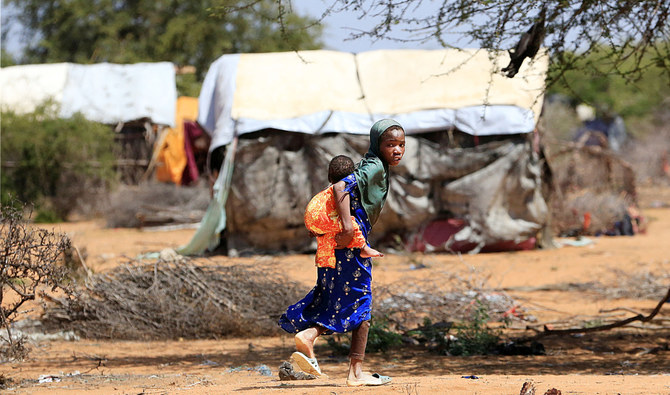
Dadaab is a vast, dusty expanse of shops, bustling streets and makeshift houses built from white United Nations tarps. Somalis started arriving here in 1991 when their country descended into civil war.
When refugees first arrive, many depend on extended family networks within the camp to share their limited rations since it can take weeks or months to start receiving their own.
This, combined with rising food prices and poor farming and herding conditions due to the drought, means long-term camp residents are also vulnerable to hunger. In the past year, 32 children have died of malnutrition in the section of the camp run by the IRC, Ngao said.
Aid agencies are struggling to keep up.
The UN refugee agency said it has received only about half of the $11.1 million it needs for its work in northern Kenya.
The overcrowding is also driving the spread of communicable diseases like cholera. There have been hundreds of cases since October, according to the IRC.
Nevertheless, hundreds of Somalis continue to arrive in Dadaab each day. The UN says there could be about 90,000 new arrivals by year-end.
Dahir Suleiman Ali, a 68-year-old farmer, had been resisting pressure from his extended family to leave Somalia for the past two years, but he had little choice when the local river dried up late last year.
“This was the worst drought I have ever seen,” he said.


