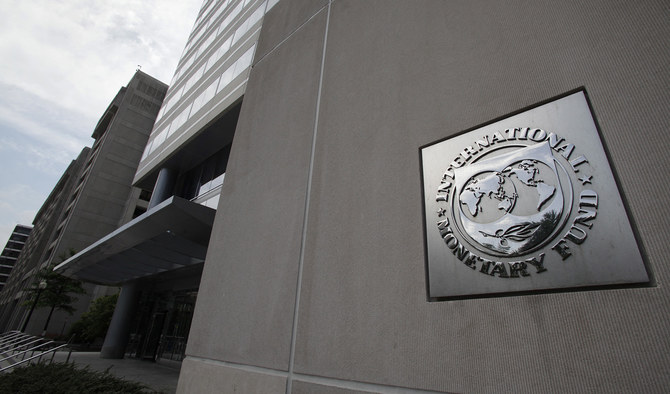
ISLAMABAD: Prime Minister Shehbaz Sharif on Friday said it would still take at least a “week to ten days” to finalize a staff-level agreement with the International Monetary Fund (IMF) for the revival of a stalled $7 billion bailout program.
Pakistan is desperately struggling to convince the IMF to release the next tranche of $1.1 billion after its forex reserves hit a critically low level which is barely enough to cover three weeks of controlled imports.
The country is also dealing with spiraling inflation and rapid depreciation of its national currency while trying to keep the economy afloat.
Pakistan signed the IMF deal in 2019, though it was stalled last year after the government tried to negotiate some of its conditions while trying to provide financial relief to people.
“The agreement with the IMF will be finalized, but it will still take a week or ten days,” the prime minister said while addressing the apex committee meeting in Islamabad.
Sharif also thanked “a very friendly nation,” without specifying its names, for providing generous financial assistance, saying: “We were all thinking that they would wait for the IMF agreement to finalize before playing their part [in helping Pakistan], but a few days ago, that allied nation conveyed to us that ‘we are giving you [this financial assistance] straight away.’ These things can never be forgotten.”
The PM added the said country had made “many such sincere contributions to Pakistan in the past as well.”
Pakistan has sought financial assistance from Saudi Arabia, the United Arab Emirates and China to avert a default. The country’s official foreign currency reserves have dwindled to $3.2 billion in the face of increasing debt repayments and a reduction in remittance inflows.
An IMF delegation visited Islamabad from January 31 to February 9 to discuss the revival of the program, but it departed the country without signing the staff-level-agreement.
Fulfilling some prior actions as required by the IMF, the country had to jack up the prices of electricity, natural gas and petroleum products, besides imposing additional taxes of Rs170 billion by introducing a finance bill.
“We were left with no option but to approve the tough [IMF] conditions because the state of Pakistan comes first,” the prime minister said while admitting the country was facing major economic challenges.


Pakistan PM says IMF pact may still take a ‘week to ten days’
https://arab.news/nv94q
Pakistan PM says IMF pact may still take a ‘week to ten days’

- The PM thanks a ‘friendly nation’ for providing financial assistance before completion of the IMF deal
- Pakistan is striving for the revival of a $7 billion IMF bailout package to avert a looming debt default

US freezes visa processing for 75 countries, media reports Pakistan included
- State Department announces indefinite pause on immigrant visas starting Jan 21
- Move underscores Trump’s hard-line immigration push despite close Pakistan-US ties
ISLAMABAD: The United States will pause immigrant visa processing for applicants from 75 countries starting Jan. 21, the State Department said on Wednesday, with Fox News and other media outlets reporting that Pakistan is among the countries affected by the indefinite suspension.
The move comes as the Trump administration presses ahead with a broad immigration crackdown, with Pakistan included among the affected countries despite strong ongoing diplomatic engagement between Islamabad and Washington on economic cooperation, regional diplomacy and security matters.
Fox News, citing an internal State Department memo, said US embassies had been instructed to refuse immigrant visas under existing law while Washington reassesses screening and vetting procedures. The report said the pause would apply indefinitely and covers countries across Asia, Africa, the Middle East, Europe and Latin America.
“The State Department will pause immigrant visa processing from 75 countries whose migrants take welfare from the American people at unacceptable rates. The freeze will remain active until the US can ensure that new immigrants will not extract wealth from the American people,” the Department of State said in a post on X.
According to Fox News and Pakistan news outlets like Dawn, the list of affected countries includes Pakistan, Afghanistan, Bangladesh, Iran, Iraq, Egypt, Nigeria, Russia, Somalia, Brazil and Thailand, among others.
“The suspension could delay travel, study, and work plans for thousands of Pakistanis who annually seek US visas. Pakistani consulates in the US are expected to provide guidance to affected applicants in the coming days,” Dawn reported.
A State Department spokesman declined comment when Arab News reached out via email to confirm if Pakistan was on the list.
The Department has not publicly released the full list of countries or clarified which visa categories would be affected, nor has it provided a timeline for when processing could resume.
Trump has made immigration enforcement a central pillar of his agenda since returning to office last year, reviving and expanding the use of the “public charge” provision of US immigration law to restrict entry by migrants deemed likely to rely on public benefits.
During his previous term as president, Trump imposed sweeping travel restrictions on several Muslim-majority countries, a policy widely referred to as a “Muslim ban,” which was challenged in US courts before a revised version was upheld by the Supreme Court. That policy was later rescinded under the President Joe Biden administration.
The latest visa freeze marks a renewed hardening of US immigration policy, raising uncertainty for migrants from affected countries as Washington reassesses its screening and vetting procedures.
The freeze on visas comes amid an intensifying crackdown on immigration enforcement by the Trump administration. In Minneapolis last week, a US Immigration and Customs Enforcement (ICE) agent shot and killed 37-year-old Renee Good, a US citizen, during a federal operation, an incident that has drawn nationwide protests and scrutiny of ICE tactics. Family members and local officials have challenged the federal account of the shooting, even as Department of Homeland Security officials defended the agent’s actions. The case has prompted resignations by federal prosecutors and heightened debate over the conduct of immigration enforcement under the current administration.


