

Egypt to sell stakes in state-owned hotels once assessment process is complete: Minister

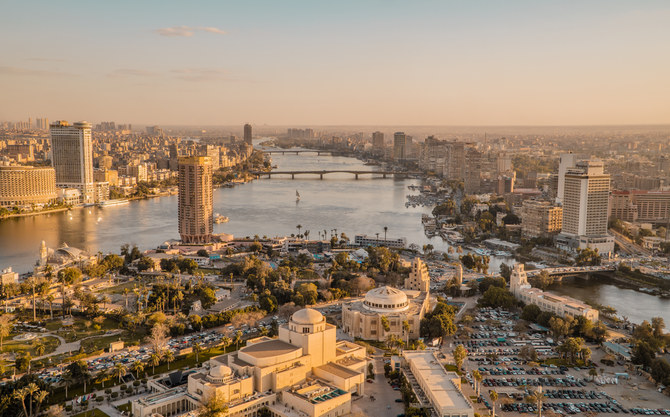
Panorama view of the Nile with Cairo Opera, hotels, and Cairo skyline in the background at sundown (Shutterstock)
Short Url
Updated 22 February 2023
Follow

Egypt to sell stakes in state-owned hotels once assessment process is complete: Minister

RIYADH: International companies are determining the value of Egypt’s state-owned hotels before the government sells stakes in these properties to strategic investors, according to the country’s public enterprise sector minister.

The sale of state assets gained new urgency after the war in Ukraine triggered heavy foreign investment outflows from Egyptian financial markets.

“A private company was established, with the holding companies of the tourism and hotels sector, along with the Egyptian General Company for Tourism and Hotels, having a large share in it. This move aims to transfer the government hotels to the newly established company,” Mahmoud Esmat said in an interview with Asharq.

He added: “The Sovereign Fund of Egypt is working on marketing the government hotels. It has also offered 20 percent of these assets to strategic investors, along with stakes in the stock market.”

Esmat said that the new company was established with a capital of 10 million Egyptian pounds ($326,700), explaining that “the capital will increase once the government hotels assessment process is done and the fair value is determined.” 

According to a report in Zawya, the state-run hotels that are up for sale are Cairo Marriott Hotel, Sofitel Legend Old Cataract in Aswan, Marriott Mena House, Sofitel Winter Palace Luxor, Steigenberger Cecil Alexandria, Mövenpick Aswan, and “Elephantine” Aswan.

This is a new step that confirms what Prime Minister Mostafa Madbouly announced in June 2022 that “a number of hotels will be merged in preparation to be listed on the stock exchange, in order to expand the governance of government institutions.”

The sale of these hotels forms part of Egypt’s effort to enhance the participation of the private sector to accelerate the pace of economic growth and attract foreign investments at a time when the country is suffering from a lack of hard currency.


Kuwait to boost Islamic finance with sukuk regulation

Updated 05 February 2026
Follow

Kuwait to boost Islamic finance with sukuk regulation

  • The move supports sustainable financing and is part of Kuwait’s efforts to diversify its oil-dependent economy

RIYADH: Kuwait is planning to introduce legislation to regulate the issuance of sukuk, or Islamic bonds, both domestically and internationally, as part of efforts to support more sustainable financing for the oil-rich Gulf nation, Prime Minister Sheikh Ahmad Abdullah Al-Ahmad Al-Sabah said on Wednesday.

Speaking at the World Governments Summit in Dubai, Al-Sabah highlighted that Kuwait is exploring a variety of debt instruments to diversify its economy. The country has been implementing fiscal reforms aimed at stimulating growth and controlling its budget deficit amid persistently low oil prices. Hydrocarbons continue to dominate Kuwait’s revenue stream, accounting for nearly 90 percent of government income in 2024.

The Gulf Cooperation Council’s debt capital market is projected to exceed $1.25 trillion by 2026, driven by project funding and government initiatives, representing a 13.6 percent expansion, according to Fitch Ratings.

The region is expected to remain one of the largest sources of US dollar-denominated debt and sukuk issuance among emerging markets. Fitch also noted that cross-sector economic diversification, refinancing needs, and deficit funding are key factors behind this growth.

“We are about to approve the first legislation regulating issuance of government sukuk locally and internationally, in accordance with Islamic laws,” Al-Sabah said.

“This enables us to deal with financial challenges flexibly and responsibly, and to plan for medium and long-term finances.”

Kuwait returned to global debt markets last year with strong results, raising $11.25 billion through a three-part bond sale — the country’s first US dollar issuance since 2017 — drawing substantial investor demand. In March, a new public debt law raised the borrowing ceiling to 30 billion dinars ($98 billion) from 10 billion dinars, enabling longer-term borrowing.

The Gulf’s debt capital markets, which totaled $1.1 trillion at the end of the third quarter of 2025, have evolved from primarily sovereign funding tools into increasingly sophisticated instruments serving governments, banks, and corporates alike. As diversification efforts accelerate and refinancing cycles intensify, regional issuers have become regular participants in global debt markets, reinforcing the GCC’s role in emerging-market capital flows.

In 2025, GCC countries accounted for 35 percent of all emerging-market US dollar debt issuance, excluding China, with growth in US dollar sukuk issuance notably outpacing conventional bonds. The region’s total outstanding debt capital markets grew more than 14 percent year on year, reaching $1.1 trillion.