


RIYADH: When people reflect on the Kingdom’s timeline, many tend to overlook the importance of the Ghasibah district and its position as the center of the ruling Al-Saud family for around 300 years.
This was even before the UNESCO World Heritage site of At-Turaif in Diriyah was established as the governing seat in 1766 AD.
“The district is one of the oldest places, witnessing the Saudi families’ assumption of power 600 years ago, following the establishment of the First Saudi State,” Dr. Badran Al-Honaihen, associate director of historical research and studies at the Diriyah Gate Development Authority, told Arab News.
Ghasibah was the seat of government between the era of Prince Mani' Al-Muraydi and the early days of Imam Mohammed bin Saud’s reign
Diriyah had five districts: Ghasibah, At-Tarafiyyah, Al-Murayih, Al-Qusairen and At-Turaif.
Ghasibah was located in the northeastern region of Diriyah, on top of a plateau surrounded by Wadi Hanifa.
“Ghasibah became the core of Diriyah and the center of government, and it played a prominent role in protecting convoys of pilgrimage and trade passing through its areas,” Badran said.
Ghasibah was the first seat of government; once Diriyah established the First Saudi State the city became a hub for education, agriculture and an overall better livelihood.
“When Diriyah became the capital of the First Saudi State, the number of immigrants increased, and this greatly affected the composition of modern society, which required moving the center of power from Ghasibah to At-Tarafiyyah in a short time to At-Turaif district,” Badran said.
The 18th century saw a flood of new migrants to the Ghasibah and bordering areas, leading to the move from Ghasibah to At-Tarafiyyah and eventually At-Turaif.
“As a result of overpopulation, the state moved to At-Tarafiyyah, which is one of the finest neighborhoods of Diriyah,” the historian said.
The transition from Ghasibah to At-Tarafiyyah was an important segment in the Kingdom’s timeline as it highlighted how successful Diriyah was.
“Many new residential neighborhoods emerged after Ghasibah became overcrowded, such as At-Tarafiyyah, which holds evidence suggesting the greatness of Imam Muhammad bin Saud’s reign,” Badran said.
After Diriyah flourished and its population increased, the district of Ghasibah filled up with people. Imam Mohammad bin Saud moved from Ghasibah to At-Tarafiyyah, a part of Samhan, located on the eastern bank of Wadi Hanifa, south of Ghasibah.
“In the early days of the First Saudi State, the (royal) family moved from Ghasibah to At-Tarafiyyah. Imam Mohammed bin Saud resided in At-Tarafiyyah until the end of his reign, which consisted of nearly 40 years of reform and educational, social, cultural and political successes,” Badran said.
“Ghasibah's strategic location made it one of the most prominent fortified places that contributed to the defense of Diriyah,” he said.
“Ghasibah had its own stories, around the end of the First Saudi State, the period of resilience and the defense of Diriyah, the palace of Prince Saud bin Abdullah bin Saud bin Abdulaziz, the grandson of Imam Saud. He had a historical palace and was famous for his courage and resilience, along with a number of Bani Hanifa members in Ghasibah.”
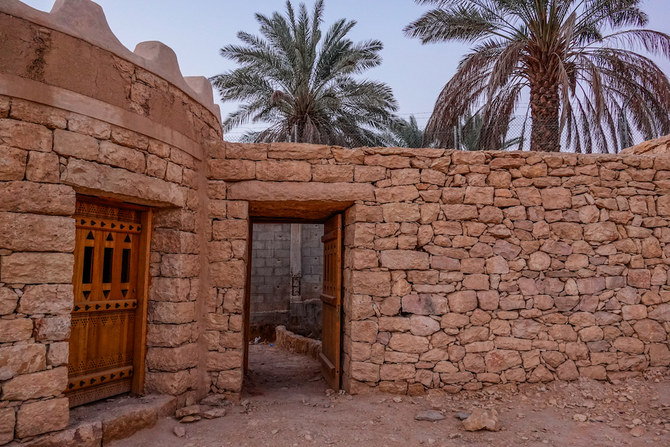
Some of the most prominent stories about Ghasibah concern its doors.
“Najd’s palaces are known to have Diriyah-style doors. Such doors were made out of tamarisk wood and had many architectural details. But the door of Prince Saud bin Abdullah’s palace was made out of iron. It astonished both locals and armies invading Diriyah, and specifically Ghasibah.”
According to the Diriyah historian, Imam Mohammed bin Saud’s grandson, Imam Saud bin Abdulaziz (the great), wanted to confirm the Saudi state’s connection with Ghasibah.
“He (Imam Saud bin Abdulaziz) built a great palace in Ghasibah to be another home for him if he wanted to leave At-Turaif and change the place. He made an iron gate for the palace, and it was one of the greatest forts in the region,” Badran said.
The name “Ghasibah” was mentioned for the first time in historical sources following the settlement of Prince Mani' Al-Muraydi and his Murada clan from Drou' in Diriyah in the year 1446
“Perhaps the reason for naming it ‘Ghasibah’ is taken from the meaning of the name itself, which indicates the quality of a thing that is taken by force or compulsion, or is a sign of the neighborhood’s invulnerability and immunity,” Badran said.
“Prince Saad, son of Imam Abdullah bin Saud, barricaded himself in it with the residents of the neighborhood and defended it with a heroic defense. Ibrahim Pasha could not storm it until after he launched a violent attack on it, forcing Prince Saad to surrender,” he said.
Ibrahim Pasha, the commander of the invading forces, then took the wounded and injured to the palace in Ghasibah because of its forts, capacity and abundance of rooms.
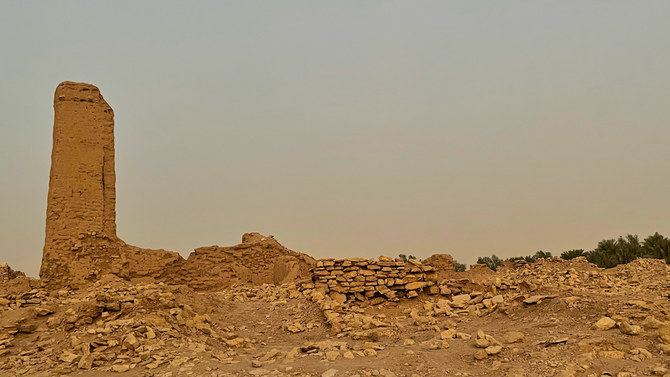
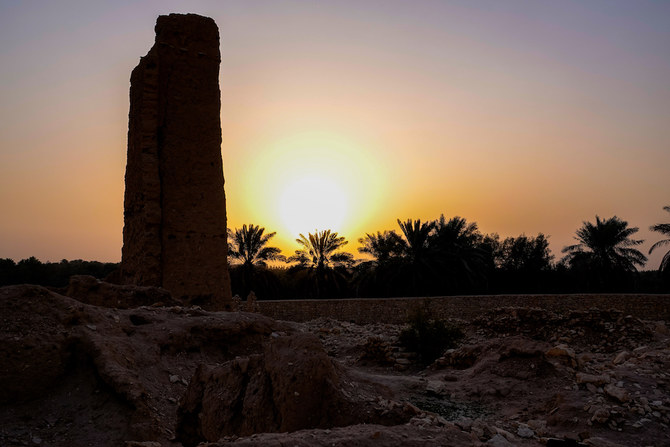
Today, there are merely structural remains left in Ghasibah. These highlight the strength of its walls and the role they played in the Kingdom’s history.




