

RIYADH: The King Salman Humanitarian Aid and Relief Center has signed a raft of cooperation agreements on the sidelines of the third Riyadh International Humanitarian Forum, which addresses current humanitarian challenges and seeks innovative solutions in line with Sustainable Development Goals.
Among the agreements signed by KSrelief is a joint cooperation program with the UN Office for Project Services. The program was signed by Abdullah Al-Rabeeah, KSrelief supervisor general, and Jens Wandel, UNOPS acting executive director.
The agreement aims to strengthen cooperation between the two sides in capacity building and exchange of knowledge, and to support the building of sustainable infrastructure. It will also improves service in healthcare, education, water and sanitation, solid waste management, energy and communications.

Martin Griffiths, UN undersecretary-general for humanitarian affairs and emergency relief coordinator. (SPA)
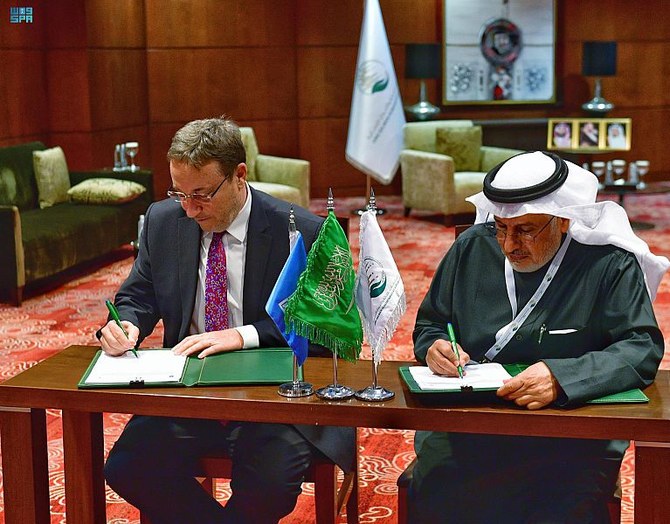
KSrelief also signed a joint implementation program with the UN Development Programme on the sidelines of the forum. Al-Rabeeah and Achim Steiner, the administrator of UNDP, signed the new agreement to provide development responses to humanitarian crises across the Arab region and beyond.
A joint cooperation program was signed with the UN Office for the Coordination of Humanitarian Affairs for cooperation in areas of common humanitarian interest, exchanging knowledge, experiences, field expertise, research studies, as well as statistics on topics of common interest in accordance with the regulations and rules set by the two parties. It was signed by Al-Rabeeah and Martin Griffiths, UN undersecretary-general for humanitarian affairs and emergency relief coordinator.
Al-Rabeeah also signed an agreement for the second Saudi Volunteer Medical Program for Cardiac Diseases and Surgeries for Yemen worth SR30 million ($8 million) that is estimated to help 4,900 beneficiaries.
KSrelief also implemented seven new projects for those affected by the earthquakes in Syria and Turkiye, along with the approval to allocate funds with a value exceeding SR183 million. The aid projects for Syria and Turkiye include the construction of 3,000 housing units to shelter those displaced by the disaster, sponsorship of orphans, the implementation of Saudi Volunteer Life for the benefit of victims, the implementation of life-saving water and sanitation interventions, the provision of basic nutrition supplies, and urgent medical response for victims of the earthquakes.
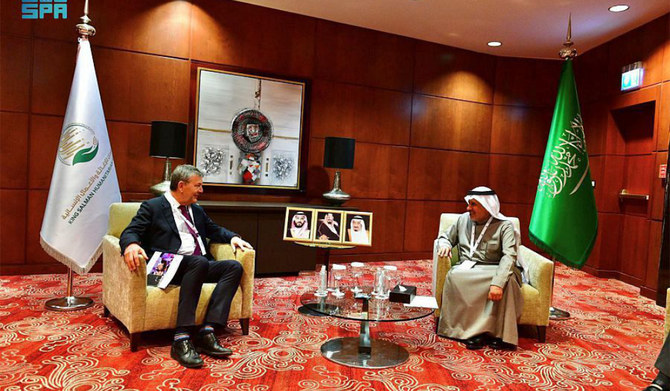
On the sidelines of the humanitarian forum, Al-Rabeeah also met Philippe Lazzarini, the commissioner general of the UN Relief and Works Agency, and discussed several issues of common concern in the humanitarian and relief field, as well as means of enhancing cooperation and coordination.
Lazzarini praised Saudi Arabia’s keenness to stand with the Palestinian people and help alleviate their suffering, and the support provided through KSrelief, which has contributed to improving the humanitarian conditions of Palestinian refugees, highlighting the close partnership between the agency and the center.
Along with the informative sessions, the forum also organized an exhibition in which partner organizations presented their projects in the humanitarian field.