

Pakistan says its past ‘mixed’ messaging responsible for Kabul’s inaction against TTP militants

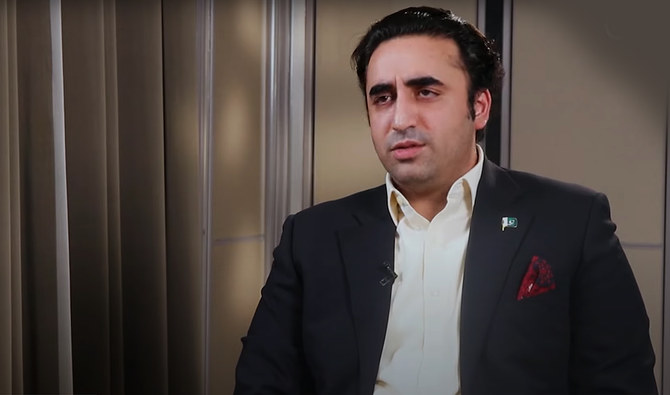
In this screengrab taken from a video on February 21, 2023, Pakistan's Foreign Minister Bilawal Bhutto-Zardar speaks during an interview with DW Urdu in Munich. (Photo courtesy: YouTube/DWUrdu)
Short Url
Updated 21 February 2023
Follow

Pakistan says its past ‘mixed’ messaging responsible for Kabul’s inaction against TTP militants

  • Any country that “continues its friendship with TTP” cannot be friends with Pakistan, says FM Bhutto-Zardari
  • Pakistan’s foreign minister says Afghan forces also lack capability, counter-terrorism forces to battle militants

ISLAMABAD: Pakistan’s Foreign Minister Bilawal Bhutto-Zardari said on Monday that “mixed messages” from the previous Pakistani government were partly responsible for Kabul’s inaction against the TTP or the Pakistani Taliban.

The TTP has been involved in an insurgency against Pakistan for the last 15 years and has carried out some of the deadliest attacks in the country. The Pakistani Taliban seek to impose a strict version of the Shariah law in Pakistan and though they show allegiance to the Afghan Taliban, are not officially part of the group.

Ever since a fragile truce between the state and the TTP— brokered by the Afghan Taliban— broke down last year, the banned outfit has mounted attacks against Pakistan’s security forces. Pakistan has asked Afghanistan to take action against the militant outfit, accusing it of using Afghan soil to launch attacks in Pakistan.

Islamabad has even threatened to carry out cross-border action if Kabul fails to act.

“There are two things, first, our own mixed messages,” Bhutto-Zardari told DW Urdu, when asked why Kabul was not taking action against the TTP despite Pakistan’s repeated demands to do so. “The previous government was telling [Kabul] to facilitate peace with them [TTP], to free [TTP prisoners] and allow them to come here, to resettle in Pakistan,” he added.

Bhutto-Zardari said every “terrorist” involved in militant activities was a “red line” for the people of Pakistan. “Any country that continues its friendship with the TTP, cannot be friends with us,” he said.

He reiterated that it was not in Pakistan’s interest or in the interests of its people to negotiate with militants who did not accept the country and its constitution.

The minister hoped Kabul would take action against militants, saying that they were threatening peace in Afghanistan as well. He, however, added that Afghan forces were unable to take decisive action against the TTP due to a “genuine issue” as well.

“Even if they want to, how can they battle all these outfits when NATO and the entire world couldn’t,” he asked.

“Neither do they [Afghanistan] have a standing army, nor a counter-terrorism force or the counter-terrorism technology [to fight militants],” he said, adding that Afghanistan didn’t even have enough forces to man its borders with Pakistan and Iran.


Pakistan assembly speaker warns opposition against anti-state remarks in parliament

Updated 6 sec ago
Follow

Pakistan assembly speaker warns opposition against anti-state remarks in parliament

  • Ayaz Sadiq says criticism of judiciary and armed forces will not be allowed on assembly floor
  • He calls violence during protests unacceptable, vows neutrality as National Assembly speaker

ISLAMABAD: Pakistan’s National Assembly Speaker Sardar Ayaz Sadiq said on Saturday that opposition lawmakers would not be allowed to speak against Pakistan, the judiciary or the armed forces on the floor of parliament, calling such remarks unacceptable.

Speaking to reporters during a visit to the eastern city of Lahore, Sadiq said parliamentary debate must remain within constitutional and legal limits, while reiterating his commitment to act impartially as speaker.

“No one will be allowed to speak against Pakistan, the judiciary or the armed forces on the floor of the National Assembly,” Sadiq said. “Negative or controversial remarks about judges or the armed forces are unacceptable.”

His comments come amid heightened political tensions after opposition groups held protests in the past, criticizing state institutions and targeting government and military properties.

The speaker said peaceful protest was a democratic right but drew a sharp line at violence and vandalism.

“Protest is the right of every citizen in a democratic society, but it must remain peaceful and within the bounds of the constitution and the law,” he continued, adding that arson, damage to property and the use of sticks or weapons in the name of protest were “unacceptable” and posed a threat to the rule of law.

“No opposition lawmaker will be allowed to speak on the National Assembly floor if they speak against Pakistan,” Sadiq said.

The speaker also noted the country’s economic indicators were gradually improving, citing an increase in foreign exchange reserves, and said Pakistan had further strengthened relations with countries including the United States, China, Russia, Türkiye and Saudi Arabia.