

Pakistan says its past ‘mixed’ messaging responsible for Kabul’s inaction against TTP militants

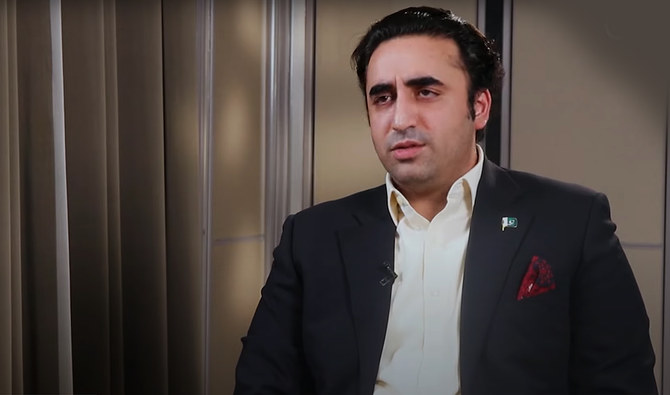
In this screengrab taken from a video on February 21, 2023, Pakistan's Foreign Minister Bilawal Bhutto-Zardar speaks during an interview with DW Urdu in Munich. (Photo courtesy: YouTube/DWUrdu)
Short Url
Updated 21 February 2023
Follow

Pakistan says its past ‘mixed’ messaging responsible for Kabul’s inaction against TTP militants

  • Any country that “continues its friendship with TTP” cannot be friends with Pakistan, says FM Bhutto-Zardari
  • Pakistan’s foreign minister says Afghan forces also lack capability, counter-terrorism forces to battle militants

ISLAMABAD: Pakistan’s Foreign Minister Bilawal Bhutto-Zardari said on Monday that “mixed messages” from the previous Pakistani government were partly responsible for Kabul’s inaction against the TTP or the Pakistani Taliban.

The TTP has been involved in an insurgency against Pakistan for the last 15 years and has carried out some of the deadliest attacks in the country. The Pakistani Taliban seek to impose a strict version of the Shariah law in Pakistan and though they show allegiance to the Afghan Taliban, are not officially part of the group.

Ever since a fragile truce between the state and the TTP— brokered by the Afghan Taliban— broke down last year, the banned outfit has mounted attacks against Pakistan’s security forces. Pakistan has asked Afghanistan to take action against the militant outfit, accusing it of using Afghan soil to launch attacks in Pakistan.

Islamabad has even threatened to carry out cross-border action if Kabul fails to act.

“There are two things, first, our own mixed messages,” Bhutto-Zardari told DW Urdu, when asked why Kabul was not taking action against the TTP despite Pakistan’s repeated demands to do so. “The previous government was telling [Kabul] to facilitate peace with them [TTP], to free [TTP prisoners] and allow them to come here, to resettle in Pakistan,” he added.

Bhutto-Zardari said every “terrorist” involved in militant activities was a “red line” for the people of Pakistan. “Any country that continues its friendship with the TTP, cannot be friends with us,” he said.

He reiterated that it was not in Pakistan’s interest or in the interests of its people to negotiate with militants who did not accept the country and its constitution.

The minister hoped Kabul would take action against militants, saying that they were threatening peace in Afghanistan as well. He, however, added that Afghan forces were unable to take decisive action against the TTP due to a “genuine issue” as well.

“Even if they want to, how can they battle all these outfits when NATO and the entire world couldn’t,” he asked.

“Neither do they [Afghanistan] have a standing army, nor a counter-terrorism force or the counter-terrorism technology [to fight militants],” he said, adding that Afghanistan didn’t even have enough forces to man its borders with Pakistan and Iran.


Pakistan, Oman navies discuss maritime security, ink agreement to share shipping data

Updated 24 December 2025
Follow

Pakistan, Oman navies discuss maritime security, ink agreement to share shipping data

  • Visiting Oman royal navy commander calls on Pakistan Naval Chief Admiral Naveed Ashraf in Islamabad
  • White shipping agreement refers to exchange of prior information on movement of commercial ships

ISLAMABAD: The naval commanders of Pakistan and Oman discussed regional maritime security on Wednesday and signed an agreement to share shipping information with each other, the Pakistan Navy said in a statement.

The press release followed a meeting between Pakistan Naval Chief Admiral Naveed Ashraf and the visiting Oman Royal Navy Commander Rear Admiral Saif Bin Nasser Bin Mohsin Al Rahbi at Naval Headquarters in Islamabad.

Both navies maintain close professional relations, reflected in expert-level staff talks, joint training, bilateral exercises, and participation in multilateral exercises between the Pakistan Navy and the Royal Navy of Oman.

“During the meeting, matters of mutual interest, regional maritime security and bilateral naval cooperation were discussed,” the Pakistan Navy said.

The MoU was signed by both sides at a ceremony at the Naval Headquarters, the navy’s media wing confirmed. 

“The MoU is aimed at establishing of guidelines and procedures for information sharing in order to enhance mutual awareness of white shipping,” the Pakistan Navy said in a statement. 

White shipping agreement refers to the exchange of prior information on the movement and identity of commercial non-military merchant vessels.

Information regarding the identity of vessels helps countries tackle potential threats from sea routes. This particularly helps in the development of a proper regional maritime domain awareness

The statement said Al Rahbi lauded Pakistan Navy’s professionalism and acknowledged its ongoing contributions to maritime security and regional stability.

Pakistan and Oman share geographical proximity and common maritime boundaries. Bilateral relations between the two brotherly countries span a wide range of areas, including economic cooperation, people-to-people contacts and strong defense ties.

In December, a Royal Navy flotilla from Oman visited Karachi to take part in the annual bilateral Thamar Al Tayyib (TAT) 2025 exercise. 

Pakistan Navy and the Royal Navy of Oman have been conducting the TAT series of exercises regularly since 1980.