- Seeking to force Pakistan to hold an early national election, ex-PM Khan dissolved two provincial governments in January
- PTI senior leaders say coalition government of PM Sharif wants to delay elections, not hold them within 90-day deadline
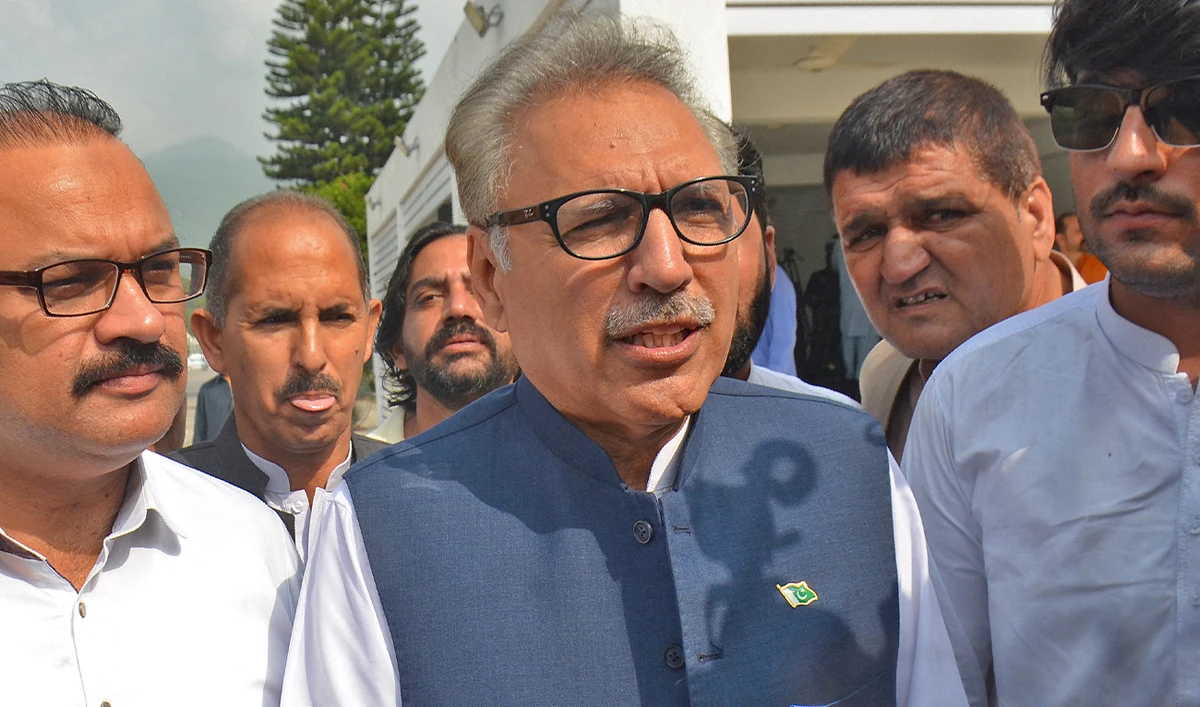
ISLAMABAD: Pakistani President Dr. Arif Alvi has announced general elections on April 9 for the provincial assemblies of the Punjab and Khyber Pakhtunkhwa provinces, a statement from his office said on Monday.
Seeking to force Pakistan to hold an early national election, the opposition party led by former prime minister Imran Khan dissolved the provincial government in Khyber Pakhtunkhwa in January, just days after doing the same in Punjab province.
Pakistan has four provinces and Khyber Pakhtunkhwa in the northwest and Punjab in the east account for more than half of the country’s 220 million population.
Under Pakistani law, fresh polls for the two provincial assemblies should be held within 90 days, and Khan’s Pakistan Tehreek-e-Insaf (PTI) party is gambling on the national government being unable to afford to hold the provincial elections separately from a national election, which is otherwise due by October.
In recent weeks, PTI senior leaders have variously said the current coalition government of Prime Minister Shehbaz Sharif would delay elections in the two provinces and not hold them within the 90-day deadline.
On Monday, while announcing that elections in both provinces be held on April 9, Alvi, a close Khan ally, directed the Election Commission of Pakistan (ECP) to issue an election program in accordance with Section 57 (2) of the Elections Act, 2017.
“In his letter to the Chief Election Commissioner of Pakistan (CEC), the President said that he was under oath to preserve, protect and defend the Constitution of the Islamic Republic of Pakistan under Article 42 read with third Schedule of the Constitution,” the presidency said in a statement.
“There being no restraining order from any of the judicial fora, there was no impediment in [the president] invoking the power and authority vested in him under Section 57 (1) of Elections Act, 2017, empowering him to ‘announce the date or dates of the general elections after consultation with the Commission’.”
“Therefore, he added, he had felt it necessary to perform his constitutional and statutory duty to announce the date of elections to avoid the infringement and breach of the Constitution and law i.e., holding of elections not later than ninety days.”
Alvi said the acting governors of Punjab and Khyber Pakhtunkhwa “were not performing their constitutional duties for appointing a date, not later than ninety days from the date of dissolution.” He also accused the Election Commission of “not fulfilling its constitutional obligation” to hold the polls on time.
Earlier this month, the acting governors of Punjab and Khyber Pakhtunkhwa declined to give dates for general elections for the two provincial assemblies, advising the electoral watchdog to hold consultations with relevant authorities and consider the country’s security and economic crisis before deciding on an election date.
Militant attacks have been on a steady rise in Pakistan in recent weeks while in less than a month, the cash strapped nation’s currency has lost more than a quarter of its value against the US dollar after the removal of artificial caps. Fuel prices have risen by more than a fifth as the government implemented fiscal measures required to unlocking funds from an International Monetary Fund (IMF) bailout.
Inflation in January spiked to 27 percent year-on-year, the highest in more than a decade, and the government only has enough foreign reserves to pay for just over three weeks of imports.
Pakistan is due to hold general elections later this year, but Khan has been calling for elections since he was ousted in April after losing a parliamentary vote of confidence.
Local elections in Punjab and KP provinces, in addition to general elections later this year, would be an expensive and logistically complicated exercise for a government heavily dependent on foreign aid after devastating floods last year.
Political analysts say this pressure plays into Khan’s demands for snap general elections, although any local assembly elections do not constitutionally trigger a national election.