

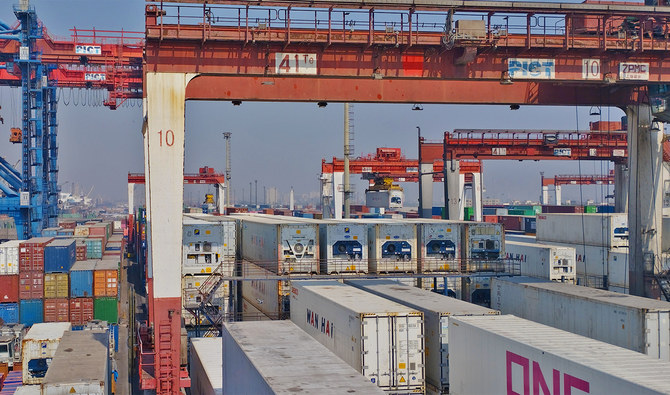

KARACHI: With the storage space running out amid delayed clearance of containers at Pakistan’s Karachi port, terminal operators have said the current economic meltdown is hurting their revenue generation and operations.
Pakistan, which is only left with $2.9 billion worth of foreign exchange reserves, has restricted imports to stop the outflow of dollars. Banks have delayed or denied opening of Letters of Credit (LCs) for imports of goods, including industrial raw materials, which has also led to a huge backlog of containers at the country’s ports.
Last year in May, Pakistan’s commerce ministry banned the import of 38 items to control a ballooning import bill and bolster the country’s national currency. The government rescinded the decision in July, though the clearance process remained slow at the ports.
“On normal days, the containers’ clearance from the port takes eight days, but it is now taking about 15 days,” Khurram Aziz Khan, the CEO of Pakistan International Terminal (PICT), a private container terminal in Karachi, said while speaking to a group of journalists on Wednesday. “Even some of the containers that arrived in May 2022 are still stuck, waiting for the completion of documentation process.”
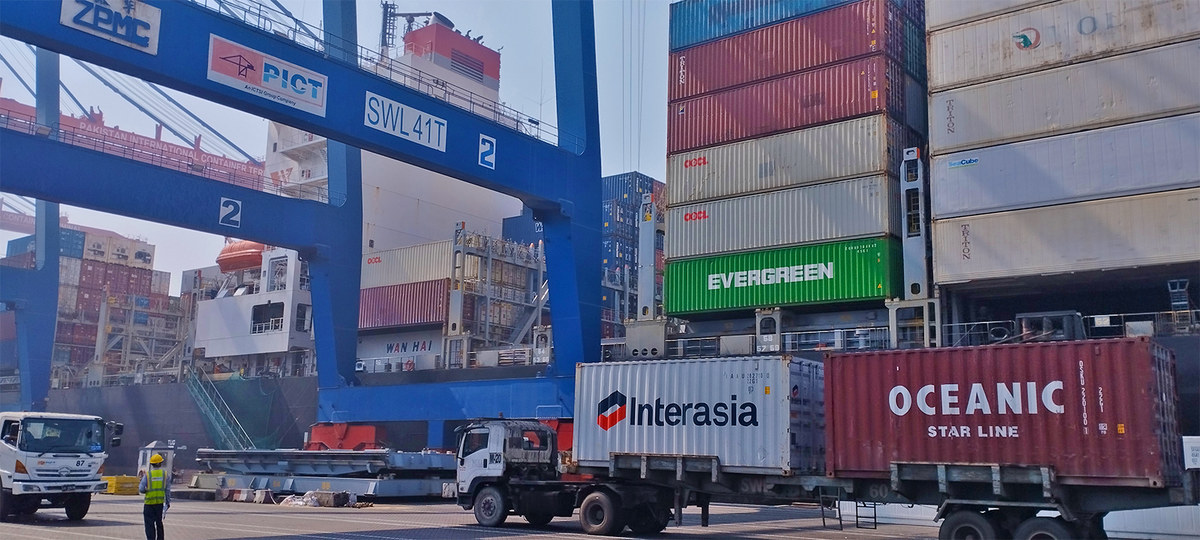
This picture taken on February 15, 2023, shows a general view of the Karachi seaport. (AN Photo)
Khan conceded the process of clearance had started, though he pointed out it had not achieved the normal flow and the backlog was continuing to impact operations.
PICT officials said they had acquired additional space from the Karachi Port Authority due to a lack of storage capacity.
Pakistani shippers also agreed there was a massive backlog to deal with despite the ongoing clearance process.
“Around 8,000 containers remain to be cleared from the ports and penalties are also being imposed,” Aasim Azim Siddiqui, Chairman of All Pakistan Shipping Association, told Arab News. “However, there is no crisis-like situation and the stakeholders are getting maximum relief in terms of space occupation charges and container rent.”
On the other hand, Khan said the current situation was well understood by principal investors who had invested $20 million in recent years and were also providing support to alleviate the critical economic conditions of Pakistan.
However, he maintained a potential investment from overseas investors was also stuck up due to the current economic crunch.
“Potential foreign investment could be in millions of dollars, but due to the lack of profit on their investment, Pakistan’s reputation is getting hit which also makes it difficult to attract foreign direct investment in the country,” Khan said.
Due to import restrictions, the export sector is also being affected as import consignments are lying at the port while they face a raw material shortage to make finished exportable goods.
“Terminal operators themselves are also facing difficulties with the clearance of spare parts,” he said, adding that importing spare parts from Türkiye for necessary maintenance was becoming difficult.
Despite tough conditions faced by the terminal operators, Khan said they had waived off their charges amounting to Rs32 million.
He said the management was negotiating with the government for the renewal of the terminal’s 21-year agreement that will expire in the middle of this year.
“Keeping in view the importance of port infrastructure that plays a key role in the uplift of the country’s economy under the current situation, it is necessary to renew the concession agreement in the same way as the concession agreements of other operators were renewed,” he said.
According to Khan, the operators were planning to invest as much as $100 million after the agreement’s renewal for the improvement of the infrastructure of PICT to increase the efficiency and capacity of the terminal.
Stressing the need for a transshipment facility in Pakistan, the PICT chief said that three million Twenty Equipment Units (TEUs) of cargo were annually handled in Pakistan, even if a small share was obtained from the transshipment market.
He added the transshipment facility will double the cargo handling capacity to six million TEUs within a five-year period while adding to national income.


