



LAHORE: For a country whose global reputation used to be defined by cars and cell phones, South Korea is now leading a global cultural revolution, with the dystopian drama “Squid Game,” award-winning films such as “Parasite” and K-Pop stars like BTS, also known as the Bangtan Boys, appearing as ubiquitous as any Samsung smartphone — even in a South Asian city like Lahore.
Welcome to the scenes of a burgeoning K-Pop revolution in the heart of Pakistan, complete with groups of young people, choreographed dances, street performances, karaoke parties, nicknames, fan armies and trending hashtags.
Last year, Spotify statistics showed the 18-24 age group in Pakistan was over 50 percent more likely to be listening to K-Pop than any other genre of music. The BTS Yet to Come concert was released to packed cinemas in Pakistan this year and last year, a dozen K-Pop events were held in Lahore, each attracting crowds of up to 500 people. Multiple street dance performances are regularly arranged and music videos and documentaries shot with money young fans say they are spending from their own pockets.
No doubt, Lahore is becoming Pakistan’s most important cog in the Korean popular culture machine, thanks to super fans like Leneha Junsu and Nayab Husnain and groups like Dynamite Crew, Pakistan’s first public dance cover performers.
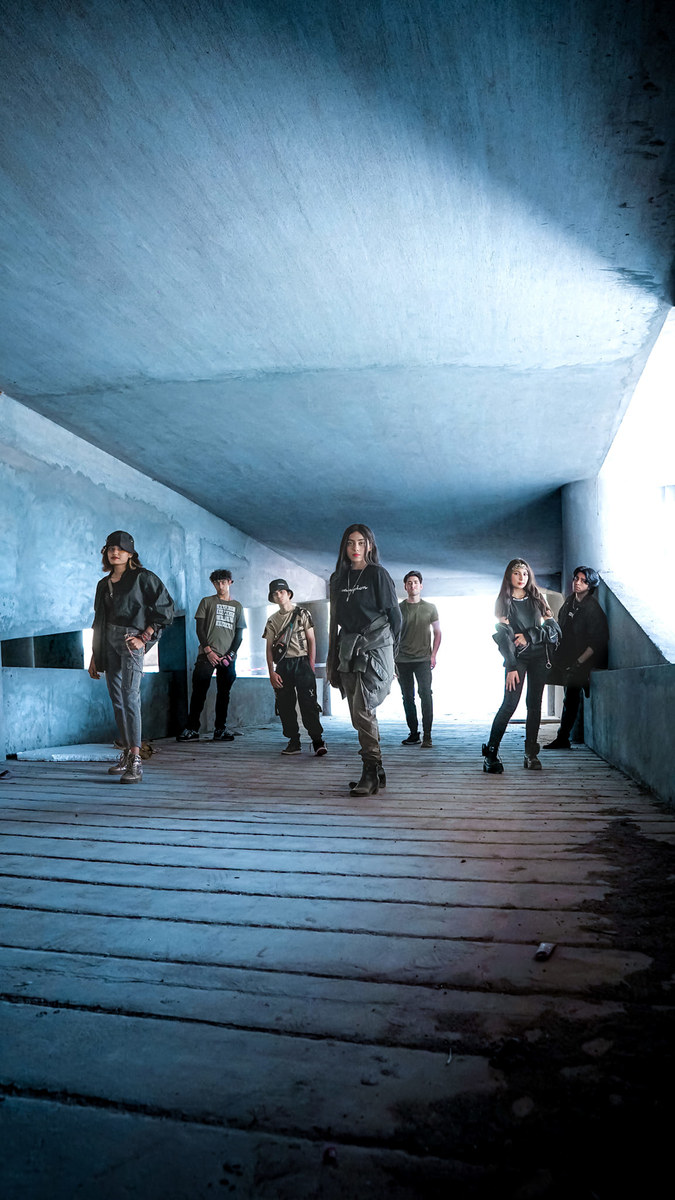
The picture shows group members of Pakistan's first public K-pop group coverist, Dynamite Crew. (Dynamite Crew/Facebook)
And the love isn’t one sided. Last year the K-Pop band Blitzers shot parts of their music video, ‘Hit The Bass’ in Lahore, while Islamabad’s Sophia Mujahid, perhaps the most well-known K-Pop performer in Pakistan, was invited to tour South Korea by the Korean embassy in Islamabad after winning the K-Pop World Festival twice in 2016 and 2017. Last year, she was invited to the event as a judge, when the dance category was won by Lahore’s Dynamite Crew.
“It was like nothing I had heard or seen before,” super-fan Leneha told Arab News, describing how she “fell in love” with K-Pop in 2010, after which she started meeting other fans through Facebook groups.
By 2016, she was organizing fan meet-ups and other events throughout the city and now does so under the banner of KCon.
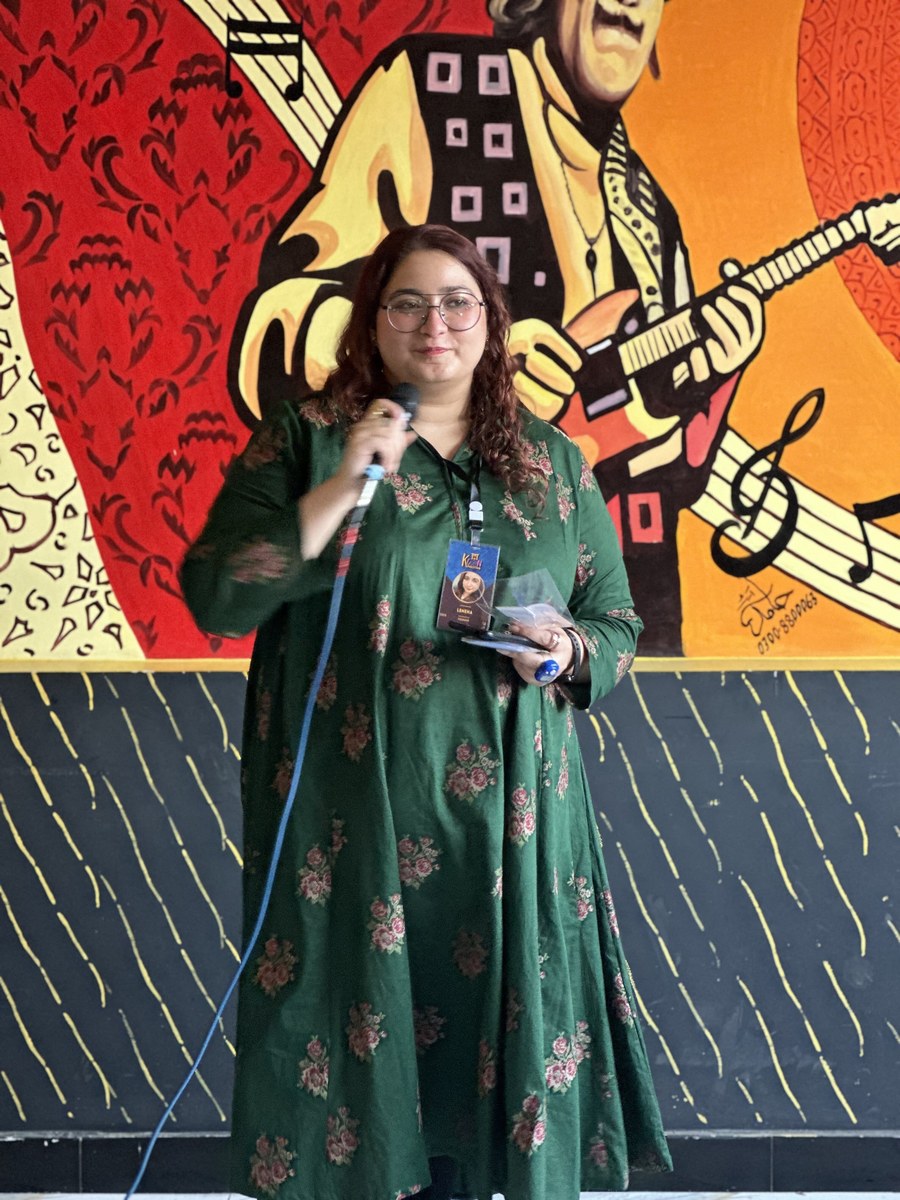
Founder of KCon, Leneha Junsu, is seen speaking during a karaoke event in Lahore, Pakistan, on February 4, 2023. (KCon/Facebook)
“Back in 2011, when I was 21, I was working for en.korea.com, which was a website for English K-Pop news, with the aim of bringing their brand of music to a bigger audience,” Leneha said. “I was doing that until 2014. I was also an administrator to a few international K-Pop boy groups. I have done a few projects with the South Korean Embassy.”
Leneha has a dedicated group of collaborators who work with her to promote K-Pop in Pakistan:
“When we started promoting K-Pop people weren’t that aware [of it]. We even went to 8XM [the music channel] and they played BTS and other K-Pop groups on our request.”
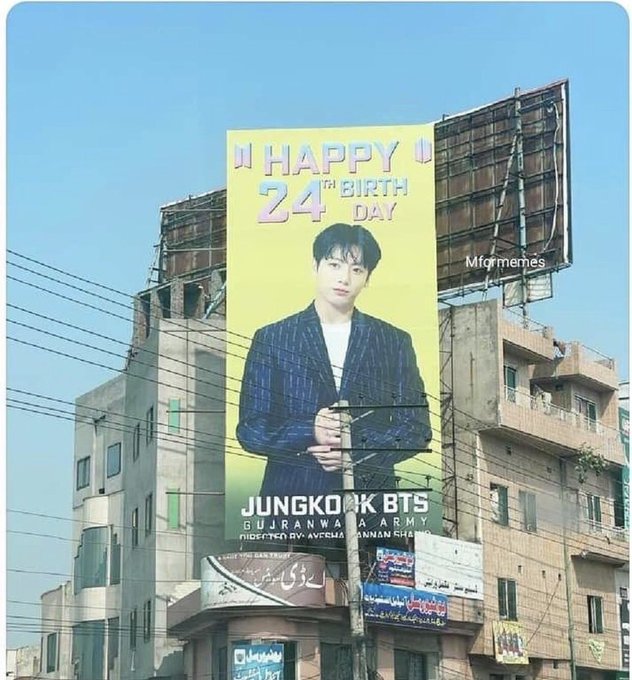
A billboard wishing Jungkook from BTS a happy birthday was spotted in Gujranwala, Pakistan. (Photo courtesy: Social media)
Iman Afroze, one of Leneha’s collaborators, is making a documentary on the BTS Army called “The Journey of Pak Army,” army being what fans of K-Pop groups call themselves around the world. And just like other BTS armies globally, the Pakistani groups too engage in social work and community engagement, with tens of thousands of social media accounts trending BTS Army on social media in Pakistan whenever it is an idol’s birthday, or a star is engaged in a charity or social work initiative.
Leneha and Afroze are currently working on a project translating a BTS documentary in Urdu, called @urdu.bangtan on Instagram.
Started four years ago, Leneha’s KCon events attract hundreds of people and include Korean word guessing games, karaoke and trivia about Korean music and television stars. People who attend the gigs come having learnt the dances, the lyrics, and even the language.
Another popular event is Nayab Husnain’s K’Festa, which has been held thrice and is arguably the single largest K-Pop gathering in Pakistan. Husnain was only 19 when she organized the first event over a year ago, becoming a K-Pop fan after watching interviews of BTS:
“They love their fans, their first priority is to spread messages like ‘love yourself,’ and when I read the lyrics of the songs, they were saying things like ‘I’m learning how to love myself’. That was very inspiring.”
BTS songs send out messages of hope, self-worth and resilience, Husnain said, which resonated with young Pakistanis who followed them.
“That’s when I talked with my friends and decided to do a community-based event in 2021,” the organizer said, using her 70,000 TikTok and 14,000 Instagram followers to get the message out.
Before shifting to organizing K-Pop events, Nayab was mostly focused on doing Korean-inspired make-up tutorials on her social media pages, with many of her young followers saying it was the sense of style and fashion K-Pop groups exude that had them hooked.
And no one in Pakistan encompasses that sense of style better than dance cover group Dynamite Crew, who have performed at KCon and K’Festa events, danced at Korean embassy functions and now even taken their talent to the streets.
The group was started in 2020 by Kazim Raza, 20, and Joy Azeem, 21.
“We found each other on Instagram back in 2019 because we were both making dance covers, we decided to collaborate,” Azeem said.
Raza subsequently started looking for dancers in Lahore and just two years after their first performance, the group won the K-Pop Pakistan Festival’s dance category in 2022.
Raza, the de-facto leader of Dynamite Crew, said the group only had eight permanent members but held auditions when they needed more dancers.
Azeem’s introduction to K-Pop was BTS’s Blood, Sweat and Tears: “I was very impressed with the visuals, and that they danced so professionally, even performed their own stunts, and I wanted to be just like that. I learned it was possible to be that multi-talented.”
Other than BTS’ choreography, Azeem was also enthralled with the band’s fashion, styling, makeup, outfits and music. Though she has covered extremely popular girl groups like Blackpink, her favorite group remains BTS.
Indeed, for many Pakistani fans, the appeal of K-Pop is not just in the music. Bands like BTS are not just singing and dancing sensations but a “source of deep inspiration and attachment” for followers.
“I got more into K-Pop when I was going through depression, I used to listen to BTS mostly, their lyrics were very relatable,” a fan called Yuna, who identified herself only by her first name, said.
“They came to me, I didn’t go to them,” she added, explaining the lure of the band’s lyrics and “messages of community, togetherness and social work.”
“I suddenly felt I wasn’t all alone in the world anymore,” Yuna said. “I forgot all my worries, I entered this fantasy world where I forgot all the bad things that had happened to me.”


