

Philippines adjusts to demographic change in UAE-bound workforce

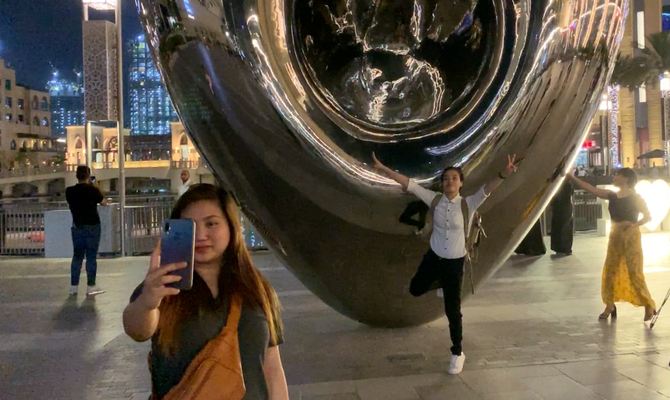
Young Filipinos take photos at a recreational area near Burj Khalifa, Dubai, the United Arab Emirates, in July 2019. (AN Photo)
Short Url
Updated 15 February 2023
Follow

Philippines adjusts to demographic change in UAE-bound workforce

  • UAE is 2nd-largest employer of Philippine expats after Saudi Arabia
  • Young educated professionals looking abroad for work, ambassador says

MANILA: The Philippines is adjusting to the changing demographics of its migrant workers in the UAE, Manila’s new ambassador said on Wednesday, as growing numbers of young educated Filipinos seek employment abroad.

Out of more than 2 million overseas Filipino workers, whose remittance inflows account for about 9 percent of their country’s gross domestic product, around 650,000 live in the UAE — the second-largest employer of Philippine expats after Saudi Arabia.

Most of them traditionally found employment in the hospitality and services industries, as well as in households.

But the trend is now changing as an increasing number of young Filipino professionals look overseas for work, Ambassador Alfonso A. Ver, who assumed his post in Abu Dhabi last month, told Arab News.

“The demographics of Filipinos coming to the UAE is changing, and the Philippine government is responding to this change,” he said.

“We note that the demand for medical professionals and nurses is very high, and this has been made clear by the UAE side, so this is an area we are looking at where both sides can work on.”

About 10 percent of Filipino workers in the Gulf state are employed in the health sector, according to a 2019 study by EON, a Philippine public relations company in Dubai.

Their dedication became particularly visible during the COVID-19 pandemic, when many became frontline workers supporting the UAE’s response to the outbreak. Those who lost their lives while on duty received state recognition from the rulers of Abu Dhabi and Dubai.

“Throughout the pandemic, Filipinos in all fields of endeavor continued with their work here in the UAE, and those at the forefront of vaccine trials, the doctors and nurses, were recognized for their efforts to fight the virus,” Ver said.

“The Filipinos in the UAE are significant not only in number ... they are known for their professionalism, talent and skill, combined with innate friendliness, which is why they are respected and embraced by the UAE.”

The envoy said that under his leadership, the Philippine government’s team in the UAE will look for ways to “leverage the goodwill between Filipinos and the UAE” and promote cooperation between the two countries.

The key role in the efforts has been played by expat Filipinos themselves, to point that Ver refers to them as his “fellow ambassadors.”

He said: “This impact of Filipinos residing in the UAE opened doors and allowed the embassy to engage meaningfully with the host government.

“From the time UAE’s founding father Sheikh Zayed established this country, Filipino professionals such as engineers, architects and later those in the medical field such as doctors and nurses arrived on UAE shores to help build this nation.

“The strong presence of Filipinos in all aspects of UAE life is felt to this day, and I believe this is an advantage, a leverage that we should continue to build on.”


Sweden seizes false-flagged ship with suspected stolen Ukrainian grain

Updated 08 March 2026
Follow

Sweden seizes false-flagged ship with suspected stolen Ukrainian grain

  • The Russian embassy in Stockholm said it had been informed by the Swedish coast guard that 10 of the crew were Russian citizens

STOCKHOLM: Police in Sweden have seized a false-flagged cargo ship off its southern coast believed to belong to Russia’s shadow fleet and suspected of transporting stolen Ukrainian grain, authorities said Saturday.
The 96-meter (315-foot) Caffa left Casablanca in Morocco on February 24 and was headed for Saint Petersburg, Russia when armed Swedish police boarded it on Friday off the southern town of Trelleborg.
“The vessel is on the Ukraine sanctions list. Information indicates that it has essentially been used to transport grain that is stolen, as we understand it, from Ukraine,” the coast guard’s acting head of operations, Daniel Stenling, told a press conference.
“We have been able to establish that the vessel is sailing under a false flag. She is registered in Guinea, but that registration is in fact false,” he added.
“A majority” of the 11 crew members were Russian, Stenling said.
The Russian embassy in Stockholm said it had been informed by the Swedish coast guard that 10 of the crew were Russian citizens.
“The Russian embassy in Sweden is in contact with the competent Swedish authorities and is ready, if necessary, to provide consular assistance to the Russian nationals among the crew,” it wrote on Telegram.
One crew member was under investigation for violation of the maritime code on seaworthiness and on ship safety, Stenling said, refusing to disclose the suspect’s identity or crew role.
“The investigative measures we have taken so far reinforce our suspicions and our view that there are extensive maritime safety deficiencies on this vessel,” he said.
The Swedish Transport Agency was to inspect the ship and determine whether it was seaworthy and authorized to continue its journey.

- ‘Risk of accidents’ -

Moscow’s “shadow fleet” consists of vessels with opaque ownership used to skirt Western sanctions.
“It’s a problem for us that we are seeing more ships that don’t respect the law of the sea,” Stenling said, noting that “the risk of accidents increases when ships are not certified.”
“We might not even know what kind of crew is on board, what kind of skills they have, what certifications they hold, and they often lack insurance if something were to happen,” he added.
Ukrainian Foreign Minister Andriy Sybiga on Saturday thanked Sweden.
“Collective action against such vessels is gaining momentum. This is a welcome development,” he wrote on X.
“Sanctions work when they are strictly enforced. Together, we must stop the activities of Russia’s shadow fleet to protect Europe’s security and environment.”