

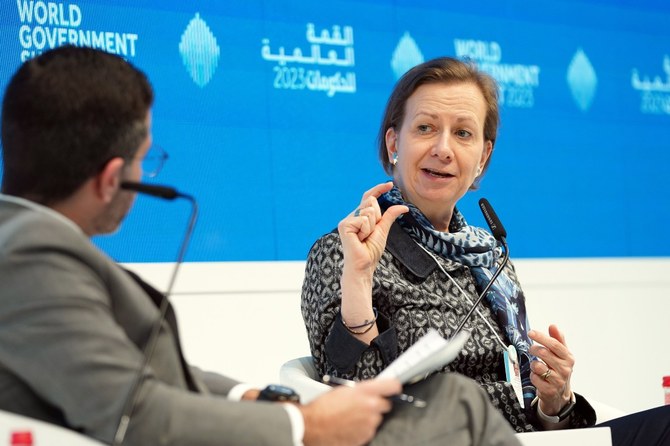

DUBAI: The world has reached “an inflection point in history” where leaders have an opportunity to make positive decisions on policies that could have an impact on future generations, the World Government Summit was told on Monday.
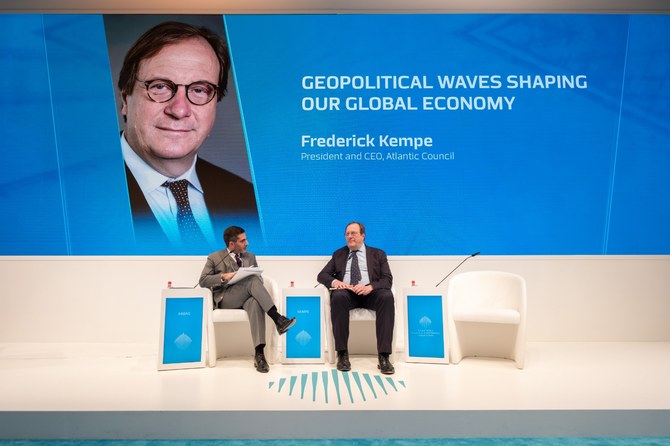
Speaking on a session addressing geopolitics and economics, Frederick Kempe, president and chief executive officer of the Atlantic Council, said “There were failures and successes after each world war.”
He said since 2020 there has been a number of significant historical moments – not least the outbreak of Covid-19 and more recently Putin’s invasion of Ukraine.
He described the war in Ukraine as a “wake up call for us all,” but added that “Putin has not been victorious.”
Kempe added that elsewhere “We haven’t gone into the deepest darkest recession. We have inflation somewhat under control.”
He described 2023 as a “hinge” where the current situations could either end well, or not.
But he warned that turning points in history did not follow a calendar and took as long – or short – a time as it took for an outcome to be established.
Referring to inflection points, from an American standpoint, after World Wars One and Two and the Cold War, he said there were periods of time which he referred to as a “plastic moment where history can be shaped – for better or for worse.”
“After World War One we missed a historic moment, the League of Nations failed. the Versailles Treaty failed.”
Post World War Two, Kempe said “we did better.”
The event of the Turkiye- Syria earthquakes that have killed tens of thousands, saw world leaders respond, sending aid in various forms.
But there was a still a risk for things to worsen – the quake death toll continues to rise and in Ukraine Putin’s forces continue to push.
He said the world had reached “an inflection point in history” where leaders had an opportunity to make positive decisions on policies that would have “an outsized influence that can have generational outcomes.”
He said that he believed the worse outcome would be if Russia was successful in its invasion of Ukraine.
The future of the world is not just decided by the barrel of a gun on a battle field – more now than ever before, commerce is a dominant player.
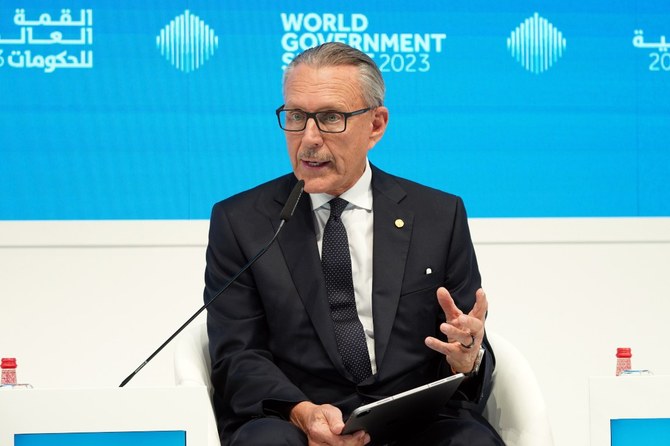
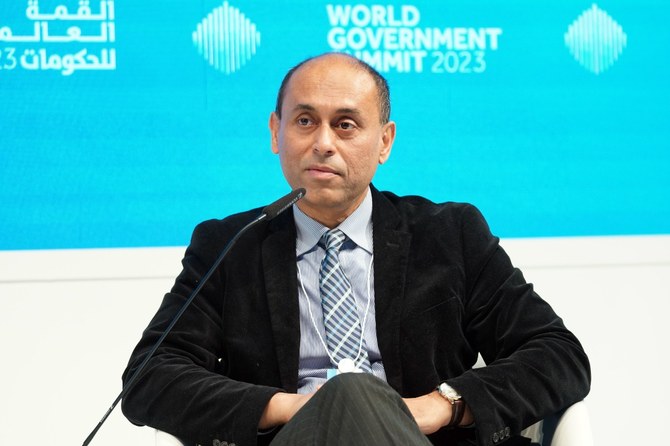
Chairman of construction firm Walbridge and former US ambassador to the UAE, John Rakolta Jr., and Dean of Said Business School at the University of Oxford, Prof. Soumitra Dutta, said there was a need for global cooperation with investment capitals.
During the session Rakolta said governments could learn from privately owned businesses.
“The private sector has the ability to identify a problem and look at ways to solve it. We measure risks, we are not afraid to make mistakes, as our biggest failures become our biggest lessons,” he added.
Dutta said: “The world is divided between the haves and the have-nots and the gap between the two is large. You need good governance and institutions to attract good investment.
“We have to work together; we have to continue making connections to each other. It is important to understand we do not become great separately but by coming together.”
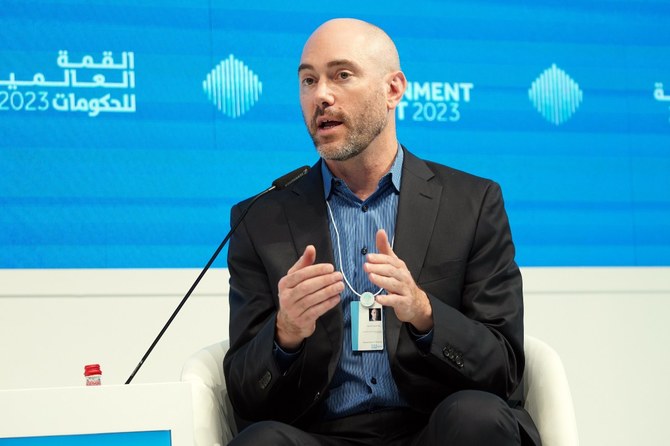
The final session, held under the title Enhancing a Global Economy for a Growing Population, was hosted by Michala Marcussen, group chief economist of Societe Generale, and David Rosenberg, co-founder and CEO of AeroFarms.
American indoor agricultural company AeroFarms plans to expand into Saudi Arabia this year in partnership with the Kingdom’s Public Investment Fund.
Rosenberg said: “We need to embrace the technologies of robotics, animation, and computing powers.”
He highlighted how shortages of food and water supplies, brought about by climate, war, and natural disasters, could be resolved with the use of technology.
On global cooperation, Marcussen said: “We have witnessed a decline in recent years on global cooperation and working across borders to work together but it is the best solution for positive outcomes.
“It is not only the right technology that we need but the correct behaviors put forth by governments,” she added.
Monday’s panel was moderated by the Arab News editor-in-chief, Faisal J. Abbas, at the World Government Summit.


