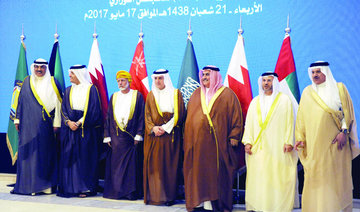
CHICAGO: A senior US delegation led by Special Envoy for Iran Rob Malley is participating in meetings in Riyadh this week focused on confronting the increasing threats posed by Tehran in the region.
During a press briefing on Monday attended by Arab News, US Deputy Assistant Secretary of Defense for the Middle East Dana Stroul laid out the network of Iranian terror activity that is spreading worldwide and especially targeting members of the Gulf Cooperation Council.
Stroul said the US-GCC meetings that began on Monday are focused on countering Iran’s continued threats to Saudi Arabia, the wider Gulf, and American forces stationed in Iraq and Syria to combat Daesh.
“Iranian aggression … is a serious concern,” she said, adding: “Increased Iranian and Russian military cooperation … has serious implications for security in the Middle East.”
Regarding threats faced by Saudi Arabia from the Houthis, she said the Yemeni militia has not shown an interest in peace and has used the recent truce to rearm with Iranian weapons.
“We’ve seen no change in Iranian willingness or activity to transfer weapons to the Houthis,” Stroul added. “We haven’t seen the Houthis be good-faith actors in extending the truce ... or take genuine movements toward a political process.”
She said the danger of Iran providing weapons to Russia is that Tehran can see how they are used in Ukraine, make improvements, and apply them to their violence against Saudi Arabia and other Gulf states.
Stroul added that US forces in Iraq and Syria “are under constant threat from Iranian allied militia groups that seek to constantly harass our forces,” which “undermines” their ability to combat Daesh.
“It also directly undermines, threatens and jeopardizes the recovery efforts of those local communities who only a few years ago were under … caliphate rule experiencing the worst depravities and atrocities. It’s truly destabilizing,” she said.
“We hold Iran accountable and responsible for these attacks because Iran is arming, training, equipping and guiding these groups.”
The US-GCC meetings, which are scheduled to continue until Feb. 16 in Riyadh, are focused on four areas of concern: air and missile defenses, maritime security, an Iran Working Group focused on Tehran-sponsored violence, and a Terrorism Working Group.
American Gen. Bradley Cooper, who participated in the briefing, said US-GCC cooperation has resulted in the confiscation of arms being shipped by Iran, much of them to its allied militias in Yemen.
“In just the last two months alone, five major interventions at sea have resulted in US and partner maritime forces seizing more than 5,000 weapons, 1.6 million rounds of ammunition, 7,000 proximity fuses for rockets, over 2,000 kg of propellant used for rocket-propelled grenades, and $60 million in illegal drugs,” Cooper said.
“In 2021, we seized over $1 billion in illicit drugs and 15,000 illegal arms, all headed toward Yemen.”
The US is working this week with GCC partners to expand the offshore monitoring region to protect those countries from Iranian terrorism.