


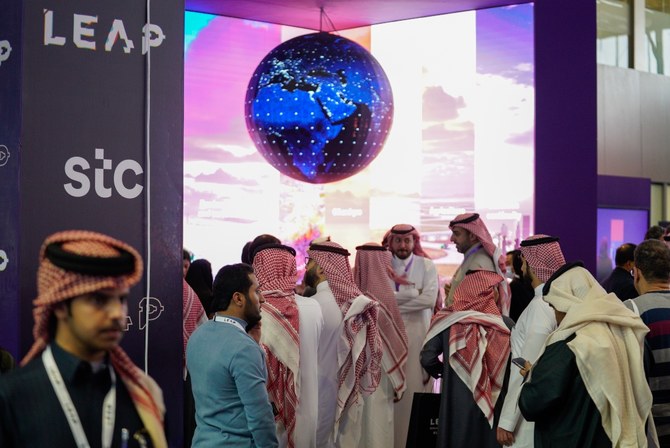

RIYADH: This year’s LEAP technology conference, which ended in Riyadh on Thursday, explored various cutting-edge tech in the fields of artificial intelligence, smart cities, finance, medicine, space, and the fourth industrial revolution, among others.
Salman Faqeeh, managing director of Cisco Saudi Arabia, told Arab News that Saudi Arabia is focusing on the development of artificial intelligence that would bring advantages in the short and long term.
“Saudi Arabia’s artificial intelligence focus is in line with Cisco. AI is an area that would (benefit) business, education, and healthcare. It needs to be addressed in the right way, because that could affect how utilizations of AI will move forward.”
Bader Bahaian, country manager at statistical analysis firm SAS, said that his team participated at LEAP23 to “address pressing challenges to improve decision-making, accelerate digital transformation across all industries, and open new doors for future customers and partnerships.”
He explained: “SAS advanced analytics, cloud-native, and advanced fraud detection solutions backed by AI will support organizations in Saudi Arabia to advance on their roadmap to achieve business sustainability in line with the goals of Vision 2030. Using SAS analytics and AI solutions, we aim to provide organizations with the capabilities to transform data into intelligence that propels the business forward.”
Yarob Sakhnini, vice president, emerging markets EMEA at Juniper Networks, said that Juniper’s participation at LEAP23 was focused on helping organizations to achieve business transformation, resilience and sustainability through high-performance networks.
“The government of Saudi Arabia revealed a number of initiatives over the years, aiming to become one of the most technologically advanced nations in the world,” Sakhnini said.
“This highlights the need for organizations to ensure their networking-solution choices are future-ready and flexible to accommodate emerging technology and customer experience-led trends.
“For example, as 5G network capabilities expand into new service areas such as mission-critical communications and (the internet of things), organizations’ networking solutions will need to cope with the demands of the changing traffic dynamics.”
The four-day conference also saw numerous agreements and partnerships established between the private and public sectors locally and internationally.
More than 700 tech leaders from 50 countries participated at LEAP23, which registered over 250,000 attendees.


