Pakistan, IMF agree on more talks, delaying bailout 

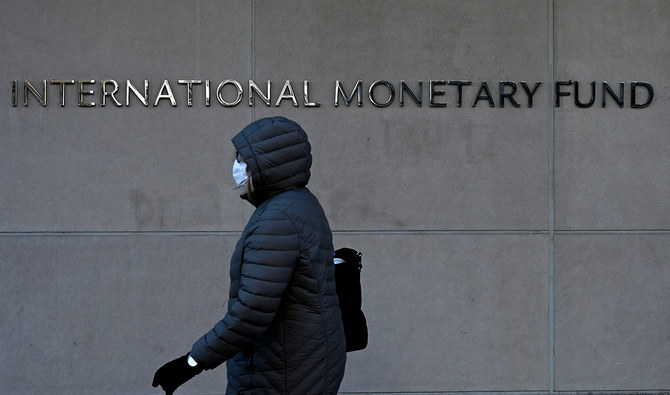
A woman walks past the International Monetary Fund headquarters in Washington, DC, on January 26, 2022. (AFP)
Short Url
Updated 10 February 2023
Follow

Pakistan, IMF agree on more talks, delaying bailout 

  • Finance ministry officials and IMF both said the talks did not result in a ‘board discussion’ 
  • A $1.1 billion tranche from the IMF is necessary to prevent Pakistan from a looming default 

KARACHI: Pakistan and the International Monetary Fund have agreed to continue talks on a deal, delaying the disbursement of $1.1 billion in funding critical to keeping the South Asian economy afloat. 

Finance ministry officials and the IMF both said the talks, which began late last week and were due to end on Thursday, did not result in a “board discussion,” a meeting that would lead to the release of the funds which are part of a $6.5 billion bailout that Pakistan signed in 2019. 

The tranche was initially expected to be paid out last December. 

“Virtual discussions will continue in the coming days,” IMF Pakistan Mission Chief Nathan Porter said in a statement, adding that considerable progress had been made. 

Pakistan’s Secretary of Finance Hamed Sheikh had told Reuters late on Thursday that the IMF had asked for more time “for staff-level negotiations.” To release the funds, the IMF needs to reach a staff-level agreement with Pakistan, which then needs to be approved by the IMF’s head office in Washington. 

The money is necessary to prevent Pakistan from defaulting on external payment obligations, and an IMF deal paves the way for other organizations and governments to provide funds, analysts say. 

The fiscal adjustments demanded by any deal, however, are likely to fuel record high inflation, which hit 27.5 percent year-on-year in January. 

Finance Minister Ishaq Dar is due to speak to the media later on Friday. In addition to the stalled tranche, $1.4 billion remain of the $6.5 billion bailout program, which is due to end in June. 

The IMF funding is crucial for the country’s $350 billion economy, which is facing a balance-of-payments crisis with foreign exchange reserves dipping to less than three weeks of import cover. Last week, Prime Minister Shahbaz Sharif called Pakistan’s economic situation “unimaginable.” 


UN torture expert decries Pakistan ex-PM Khan’s detention

Updated 12 December 2025
Follow

UN torture expert decries Pakistan ex-PM Khan’s detention

  • Khan’s party alleges government is holding him in solitary confinement, barring prison visits
  • Pakistan’s government rejects allegations former premier is being denied basic rights in prison

GENEVA: Pakistan’s former prime minister Imran Khan is being held in conditions that could amount to torture and other inhuman or degrading treatment, the United Nations’ special rapporteur on torture warned Friday.

Alice Jill Edwards urged Pakistan to take immediate and effective action to address reports of the 73-year-old’s inhumane and undignified detention conditions.

“I call on Pakistani authorities to ensure that Khan’s conditions of detention fully comply with international norms and standards,” Edwards said in a statement.

“Since his transfer to Adiala Jail in Rawalpindi on September 26, 2023, Imran Khan has reportedly been held for excessive periods in solitary confinement, confined for 23 hours a day in his cell, and with highly restricted access to the outside world,” she said.

“His cell is reportedly under constant camera surveillance.”

Khan an all-rounder who captained Pakistan to victory in the 1992 Cricket World Cup, upended Pakistani politics by becoming the prime minister in 2018.

Edwards said prolonged or indefinite solitary confinement is prohibited under international human rights law and constitutes a form of psychological torture when it lasts longer than 15 days.

“Khan’s solitary confinement should be lifted without delay. Not only is it an unlawful measure, extended isolation can bring about very harmful consequences for his physical and mental health,” she said.

UN special rapporteurs are independent experts mandated by the Human Rights Council. They do not, therefore, speak for the United Nations itself.

Initially a strong backer of the country’s powerful military leadership, Khan was ousted in a no-confidence vote in 2022, and has since been jailed on a slew of corruption charges that he denies.

He has accused the military of orchestrating his downfall and pursuing his Tehreek-e-Insaf (PTI) party and its allies.

Khan’s supporters say he is being denied prison visits from lawyers and family after a fiery social media post this month accusing army leader Field Marshal Asim Munir of persecuting him.

According to information Edwards has received, visits from Khan’s lawyers and relatives are frequently interrupted or ended prematurely, while he is held in a small cell lacking natural light and adequate ventilation.

“Anyone deprived of liberty must be treated with humanity and dignity,” the UN expert said.

“Detention conditions must reflect the individual’s age and health situation, including appropriate sleeping arrangements, climatic protection, adequate space, lighting, heating, and ventilation.”

Edwards has raised Khan’s situation with the Pakistani government.