Finland to discuss NATO ratification that may leave Sweden behind

1 / 2
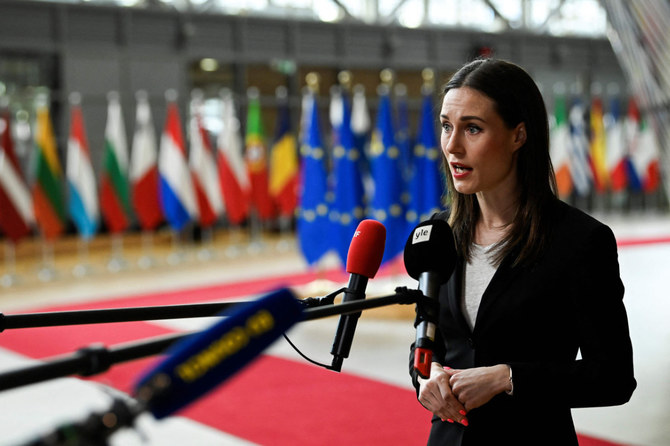
Finland's Prime Minister Sanna Marin faces the media as she arrives for a summit at EU parliament in Brussels on Feb. 9, 2023. (AFP)
2 / 2
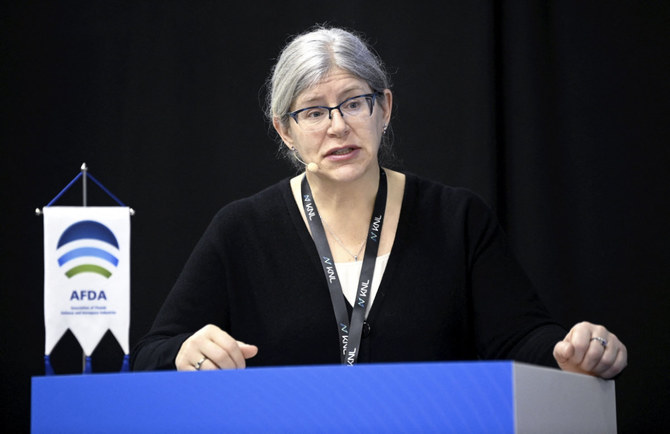
NATO Assistant Secretary-General Wendy Gilmour gives a keynote speech at the SecD-Day Conference and Exhibition in Helsinki, Finland, on Feb. 8, 2023. (LEHTIKUVA / AFP)
Short Url
Updated 10 February 2023
Follow

Finland to discuss NATO ratification that may leave Sweden behind

  • Finland and Sweden sought NATO membership shortly after Russia’s invasion of Ukraine last year
  • Sweden's application is being delayed by NATO member Turkiye, which wants Stockholm to take a tougher line against the Kurdistan Workers’ Party

HELSINKI: Finnish parliamentary groups are expected to discuss on Friday when to ratify NATO’s founding treaties, in a move that could lead the country to proceed with membership ahead of neighboring Sweden, amid growing support among the Finnish public to go it alone.
The two Nordic countries sought NATO membership shortly after Russia’s invasion of Ukraine last year, and while most member-states have ratified the applications, Turkiye has yet to give its approval.
“Our position on Finland is positive, but it is not positive on Sweden,” President Tayyip Erdogan said last week.
Turkiye’s differing view on Finnish and Swedish memberships is putting pressure on Finnish leaders to push ahead. A 53 percent majority of Finns polled on Feb. 2 for daily Ilta-Sanomat said they did not want Finland to wait for Sweden. Some 28 percent said it should.
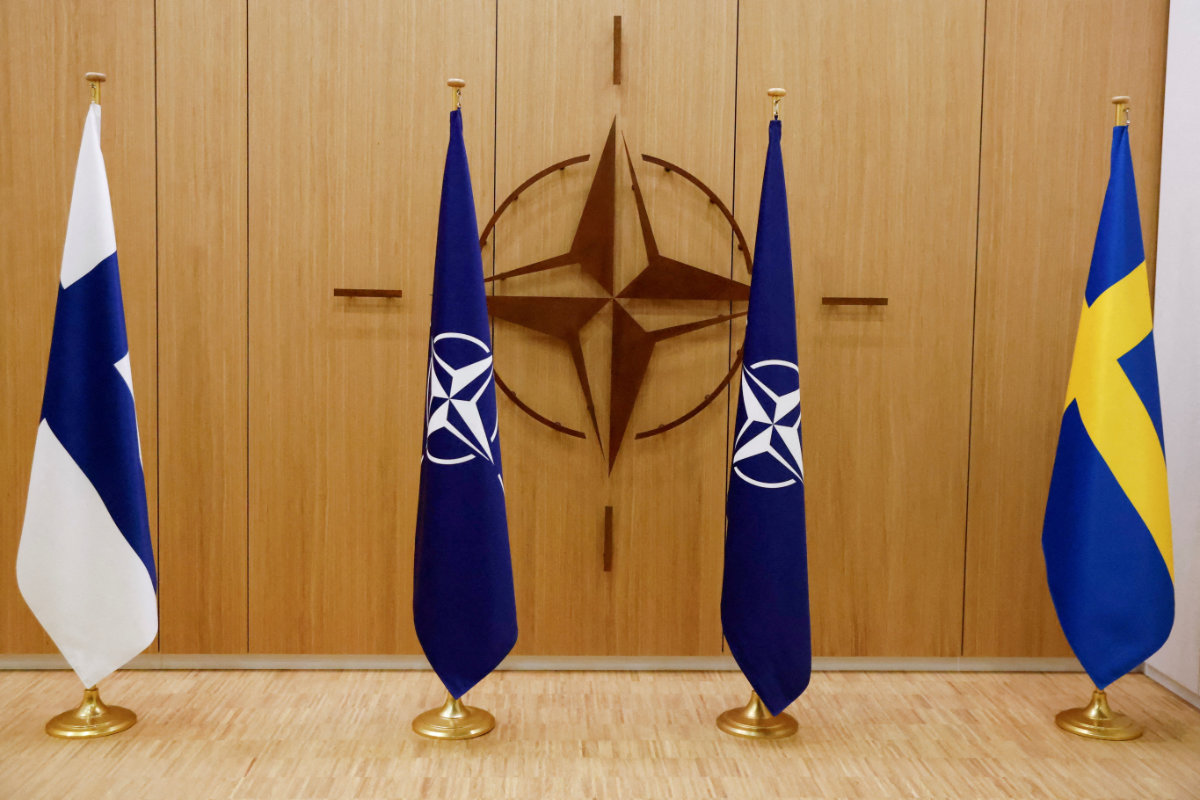


A view of the flags of Finland, NATO and Sweden during a ceremony to mark Sweden's and Finland's application for membership in Brussels, Belgium, on May 18, 2022. (REUTERS/File Photo)

On Friday, parliamentary groups in Finland will decide whether parliament should ratify NATO’s founding treaties before it goes into recess on March 3, before a parliamentary election on April 2.
If parliament on a later date votes in favor of approving the treaties, as it is widely expected to do, the president must proceed with the application within three months and as soon as all existing NATO members have also ratified Finland’s bid, which could effectively lead to proceeding with NATO membership without Sweden.
For that to happen, Turkiye and Hungary need to ratify the Finnish membership first and NATO to officially invite Finland as a member.
Finland’s Chancellor of Justice Tuomas Poysti told Ilta-Sanomat the process would leave Finland some room to wait for Sweden if need be, but not endlessly.
Officially, Finland has reaffirmed time and time again that it wants to join NATO with Sweden.
Sweden is Finland’s closest defense ally. In case of a conflict with Russia, with which Finland shares a 1,300-km (800-mile) border, NATO would need Swedish territory to help Finland defend itself, for instance in terms of logistics.
Ankara wants Helsinki and Stockholm in particular to take a tougher line against the Kurdistan Workers’ Party (PKK), which is considered a terror group by Turkiye and the European Union, and another group it blames for a 2016 coup attempt. 


France, Algeria to resume security cooperation: minister

Updated 18 February 2026
Follow

France, Algeria to resume security cooperation: minister

  • Algeria plays a key role in the latter, sharing borders with junta-led Niger and Mali, both gripped by terrorist violence

ALGIERS: France and Algeria agreed on Tuesday to restart security cooperation during a visit to Algiers by French Interior Minister Laurent Nunez, marking the first sign of a thaw in diplomatic ties.
After meeting with President Abdelmadjid Tebboune, Nunez said both sides had agreed to “reactivate a high-level security cooperation mechanism.”
The visit took place against a backdrop of thorny relations between France and its former colony, frayed since Paris in 2024 officially backed Moroccan sovereignty over the disputed Western Sahara region, where Algeria supports the pro-independence Polisario Front.
Nunez said Monday had been devoted to working sessions aimed at “restoring normal security relations,” including cooperation in judicial matters, policing and intelligence.
He thanked the Algerian president for instructing his services to work with French authorities to “improve cooperation on readmissions.” Algeria has for months refused to take back its nationals living irregularly in France.
The renewed cooperation is expected to take effect “as quickly as possible” and continue “at a very high level,” Nunez confirmed.
According to images released by Algerian authorities, the talks brought together senior security officials from both countries, including France’s domestic intelligence chief and Algeria’s head of internal security.
Invited by his counterpart Said Sayoud, Nunez’s trip had been planned for months but repeatedly delayed.
Both sides have a backlog of issues to tackle. Before traveling, Nunez said he intended to raise “all security issues,” including drug trafficking and counterterrorism.
Algeria plays a key role in the latter, sharing borders with junta-led Niger and Mali, both gripped by terrorist violence.
Ahead of the trip, Nunez had also mentioned the case of Christophe Gleizes, a French sports journalist serving a seven-year sentence for “glorifying terrorism.”
It is unclear whether the matter was discussed with Tebboune, from whom the journalist’s family has requested a pardon.