

No one-size-fits-all solution to achieving net zero, says Saudi energy minister  

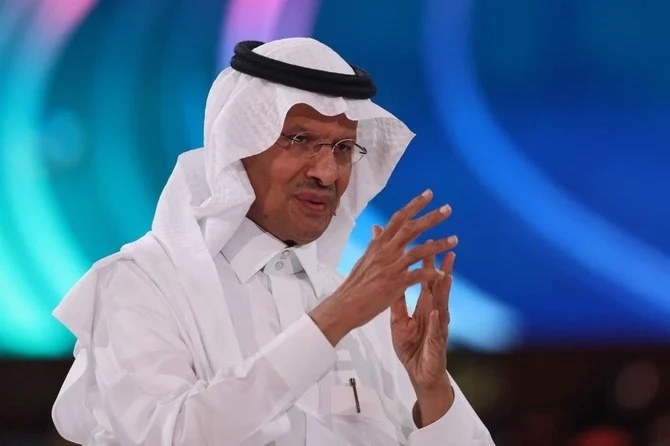
Saudi Energy Minister Prince Abdulaziz bin Salman. (AFP/File)
Short Url
Updated 05 February 2023
Follow

No one-size-fits-all solution to achieving net zero, says Saudi energy minister  

RIYADH: As the world pushes to achieve net zero, there is no one path or a defined one-size solution that fits all, said Saudi Energy Minister Prince Abdulaziz bin Salman during an energy event in Riyadh. 

“There are many pathways that get us there ... pathways that take into account national circumstances, economic development, and solutions that are local, national, regional, and global,” the minister said during his inaugural speech at the 44th International Association for Energy Economics conference. 

The energy event, which is being held for the first time in the Middle East and North Africa region in Saudi Arabia with the King Abdullah Petroleum Studies and Research Center and Saudi Association for Energy Economics, will run from Feb. 4 to 9. 

The conference’s theme this year is “Pathways to a clean, stable, and sustainable energy future”.  

The minister who also held a conversation with energy expert Daniel Yergin at the IAEE 2023 added that there is always a better chance for collective efforts and holistic solutions.  

“Cocooned solutions tend to bring people far and tend to create more chaos. So, in the endeavor of everybody trying to bring the solution to these problems, I’m afraid we might end up with a more chaotic situation than what everybody’s aspiring.” 

Prince Abdulaziz said that the Kingdom is working toward sequestration, which is the technique of capturing and storing carbon dioxide from the atmosphere. 

“We are reaching out to everybody around the globe, trying to market our hydrogens. We’re going to move by producing electricity, converting it to hydrogen.” 

The minister added that the world needs hydrocarbons, not fossil fuels.  

“To have the world continue using hydrocarbons, you have to mitigate and you have to showcase that you are mitigating all greenhouse gases because people are overlooking methane,” he said.  

With sequestration in mind, the minister further added: “We have a proven record on methane emission. Let me see who is gonna match us. We will produce, we will continue to produce, we will be the last man standing.” 

He said that it has been the Kingdom’s endeavor to work on mitigating all greenhouse gas emissions in all sectors. 

“Our motto for advocacy simply said, we need the whole world to produce all sources of energy, albeit mindful of climate change.” 

Prince Abdulaziz spoke about the humanitarian aspect of clean energy, which is cooking or preparing food for the poor.  

“This is a noble humanistic cause that people need to focus on, as there are hundreds of millions of people who are devoid of modern energy resources,” he added.  

The conference offers academia, the scientific community, businesses, and governments the opportunity to examine the ways in which the energy environment is changing, and to investigate concepts and tactics that ensure long-term success in a low-carbon future. 


Gulf-EU value chain integration signals shift toward long-term economic partnership: GCC secretary general

Updated 5 sec ago
Follow

Gulf-EU value chain integration signals shift toward long-term economic partnership: GCC secretary general

RIYADH: Value chains between the Gulf and Europe are poised to become deeper and more resilient as economic ties shift beyond traditional trade toward long-term industrial and investment integration, according to the secretary general of the Gulf Cooperation Council.

Speaking on the sidelines of the World Governments Summit 2026 in Dubai, Jasem Al-Budaiwi said Gulf-European economic relations are shifting from simple commodity trade toward the joint development of sustainable value chains, reflecting a more strategic and lasting partnership.

His remarks were made during a dialogue session titled “The next investment and trade race,” held with Luigi Di Maio, the EU’s special representative for external affairs.

Al-Budaiwi said relations between the GCC and the EU are among the bloc’s most established partnerships, built on decades of institutional collaboration that began with the signing of the 1988 cooperation agreement.

He noted that the deal laid a solid foundation for political and economic dialogue and opened broad avenues for collaboration in trade, investment, and energy, as well as development and education.

The secretary general added that the partnership has undergone a qualitative shift in recent years, particularly following the adoption of the joint action program for the 2022–2027 period and the convening of the Gulf–European summit in Brussels.

Subsequent ministerial meetings, he said, have focused on implementing agreed outcomes, enhancing trade and investment cooperation, improving market access, and supporting supply chains and sustainable development.

According to Al-Budaiwi, merchandise trade between the two sides has reached around $197 billion, positioning the EU as one of the GCC’s most important trading partners.

He also pointed to the continued growth of European foreign direct investment into Gulf countries, which he said reflects the depth of economic interdependence and rising confidence in the Gulf business environment.

Looking ahead, Al-Budaiwi emphasized that the economic transformation across GCC states, driven by ambitious national visions, is creating broad opportunities for expanded cooperation with Europe. 

He highlighted clean energy, green hydrogen, and digital transformation, as well as artificial intelligence, smart infrastructure, and cybersecurity, as priority areas for future partnership.

He added that the success of Gulf-European cooperation should not be measured solely by trade volumes or investment flows, but by its ability to evolve into an integrated model based on trust, risk-sharing, and the joint creation of economic value, contributing to stability and growth in the global economy.

GCC–EU plans to build shared value chains look well-timed as trade policy volatility rises.

In recent weeks, Washington’s renewed push over Greenland has been tied to tariff threats against European countries, prompting the EU to keep a €93 billion ($109.7 billion) retaliation package on standby. 

At the same time, tighter US sanctions on Iran are increasing compliance risks for energy and shipping-related finance. Meanwhile, the World Trade Organization and UNCTAD warn that higher tariffs and ongoing uncertainty could weaken trade and investment across both regions in 2026.