

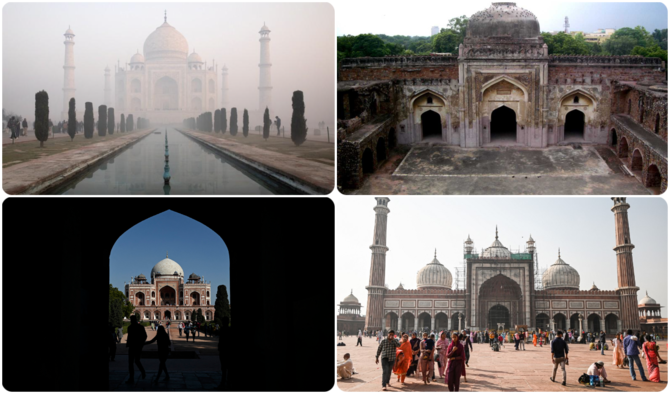

NEW DELHI: Middle Eastern influence on Indian architecture is most famously represented by the iconic Taj Mahal, but the mausoleum is not the only fine example of the unique style that throughout centuries developed into a blend of Arab, Persian and indigenous designs.
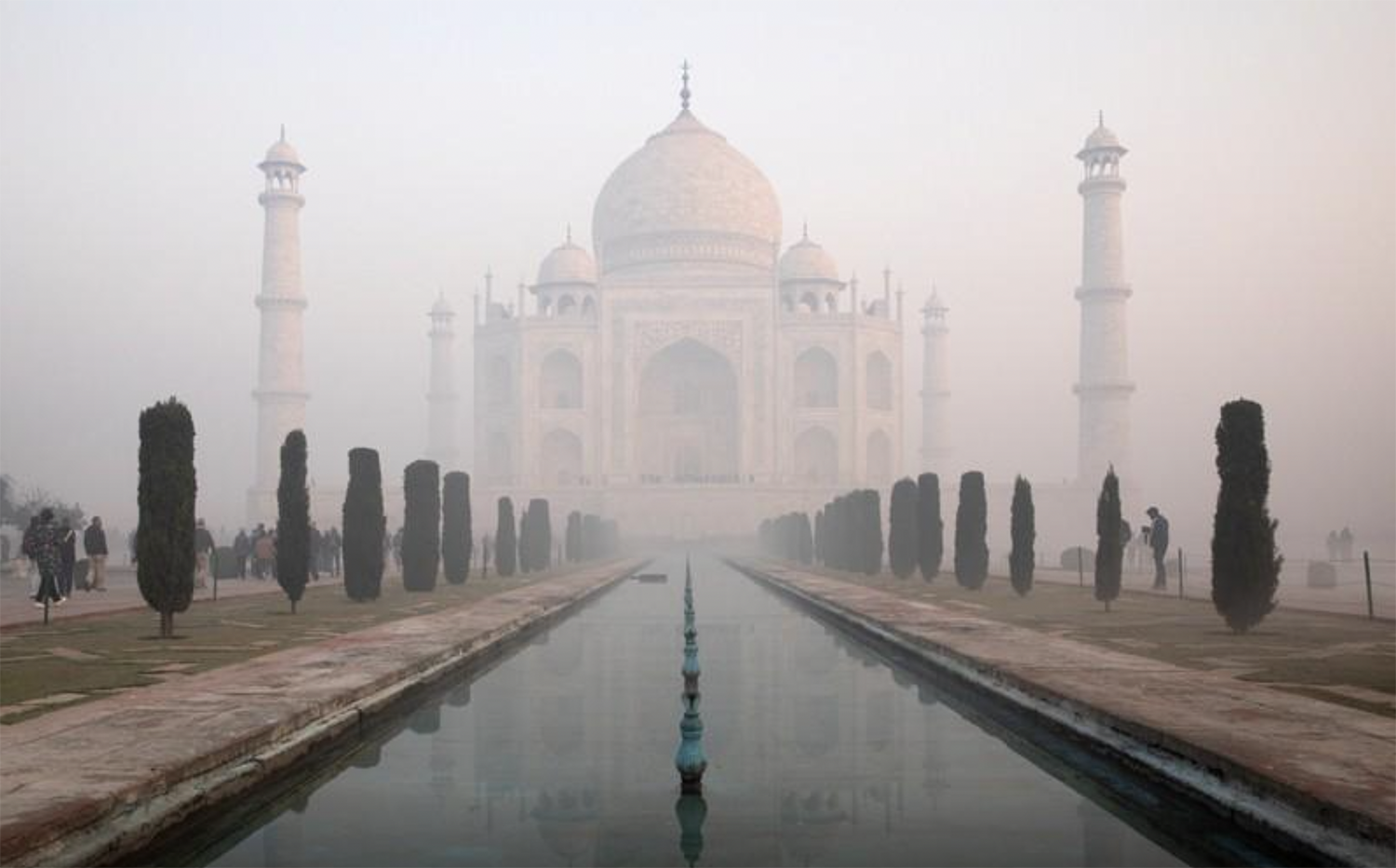
The Taj Mahal is seen through morning air pollution in Agra, India, Jan. 12, 2019 (Reuters)
The earliest examples of Islamic architecture to survive in the Indian subcontinent date from the late years of the 12th century, but the cultural influence of Islamic art had already been present there since the Arabs conquered the Sindh region — now in Pakistan — in 712.
As Muslims came to India, new features and architectural techniques were introduced in building design, including the use of the arch and dome, the construction of which was further refined by the Hindu craftsmen who long before had mastered the art of stonework.
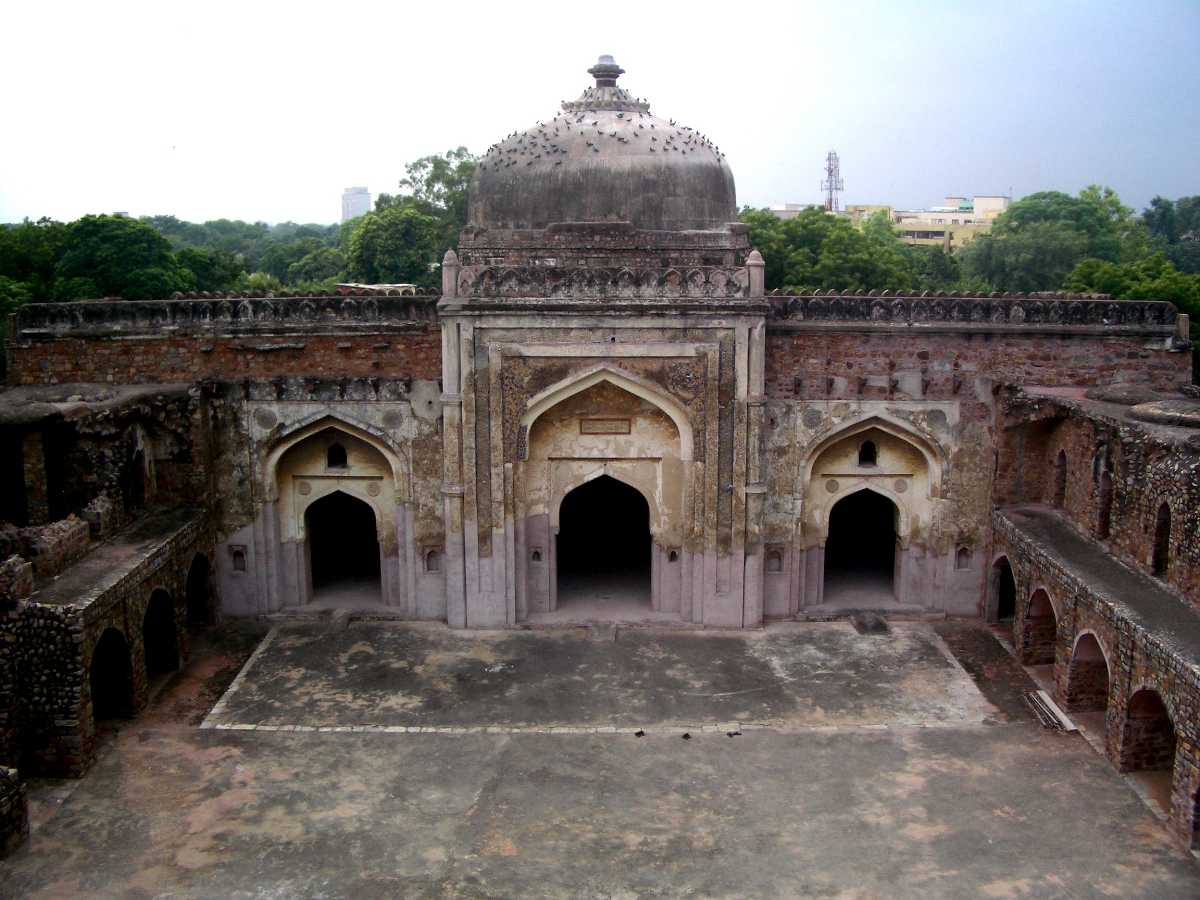
An undated file photo of Quwwat-ul-Islam Mosque in Qutb Minar complex in Delhi, India. (Photo courtesy: holidify.com)
The Quwwat-ul-Islam Mosque in the Qutb Minar complex in Delhi is the earliest surviving mosque in India. Its construction began in 1192, under Qutb-ud-din Aibak, a Turkic general, who later became the first ruler of the Sultanate of Delhi.
The mosque’s arched facade gives it an Islamic feel, but rich floral ornamentation is an Indian feature.
“Cultural interactions started from the Sultanate period onwards…The coming of Turks and their local interactions led to Hindu architecture influencing mosque architecture,” said Syed Ali Nadeem Rezavi, professor of history at Aligarh Muslim University and secretary of the Indian History Congress.
“Muslim rulers brought architects and engineers from Iran, the Arab world and Central Asia…but the master craftsmen and artisans were locals. The end result was the amalgamation of traditions.”
As time passed, new Muslim powers arrived in India, bringing their architectural heritage. At the same time, local sultanates emerged and flourished as well, developing their own forms. The Hindu kingdoms that retained different degrees of independence during the time of Muslim supremacy also produced important works and influenced predominant styles.
These multilevel exchanges yielded an architecture that was neither strictly Islamic nor strictly Hindu.
“There are many places in Gujarat where it is not easy to identify mosques and temples. In the northern Hindu city of Ayodhya, temples look similar to mosques because they have domes,” Rezavi told Arab News. “If you are talking about India’s history, you cannot talk in terms of Hindus and Muslims. There was no distinction between them. They borrowed each other’s characteristic features.”
But it was the Mughals who brought the Indo-Islamic style to its full bloom.
The advent of the Mughal dynasty, which ruled the subcontinent between the 16th and 19th centuries, marked the global revival of Islamic architecture with works that until today are examples of the highest quality and refinement.
Originally from Central Asia, the Mughals carried cultural elements borrowed from Arabs, Persians and Ottomans. As they settled in India, they fused them with the various provincial styles they found in their new domains.
For Anuj Srivastva, one of the most renowned Indian architects who teaches at the New Delhi School of Planning and Architecture, it is no wonder that when the British took control of the subcontinent in the 19th century, they regarded Mughal architecture as the classic Indian style.
“Indo-Saracenic architecture is an amalgamation of styles. It drew stylistic and decorative elements from native Indo-Islamic architecture,” he told Arab News.
“When the Mughals came, they carried Central Asian, Arab and Persian influences, and they created their own style and integrated it with the existing architecture in India.”

People visit the 16th century Mughal monument Humayun's Tomb in New Delhi, India, on February 12, 2022. (AFP/File)
The 1570 tomb of Humayun, the son of Babur, the founder of the Mughal Empire, inaugurated the Mughal dynasty’s style. The first garden tomb on the subcontinent, it inspired other major architectural innovations, which three generations later culminated in the construction of the Taj Mahal.
One of the most significant architectural achievements of Humayun’s son, Akbar, was the great fort at Agra and the city of Fatehpur Sikri. They also brought Middle Eastern styles deeper into the Indian realm.
“Fatehpur Sikri displays distinct Persian and Arabic influence,” Rezavi said.
“Some of the temples in the Hindu city of Mathura have the same carvings as Mughal King Akbar’s capital Fatehpur Sikri. You have the same architecture, the same carvings, the same styles, big vaults. Entire temple grounds are similar to the typical features that were used in mosques.”
It was during the reign of Akbar’s grandson, Shah Jahan, when Mughal architectural creativity reached its zenith.
He built the great Red Fort complex at Delhi in 1648, where the planning of the palace was based on Islamic prototypes but the pavilions and garden design reflect a fusion of all traditions of the subcontinent at that time. The structure influenced later buildings and gardens in Rajasthan, Delhi, Agra and beyond.
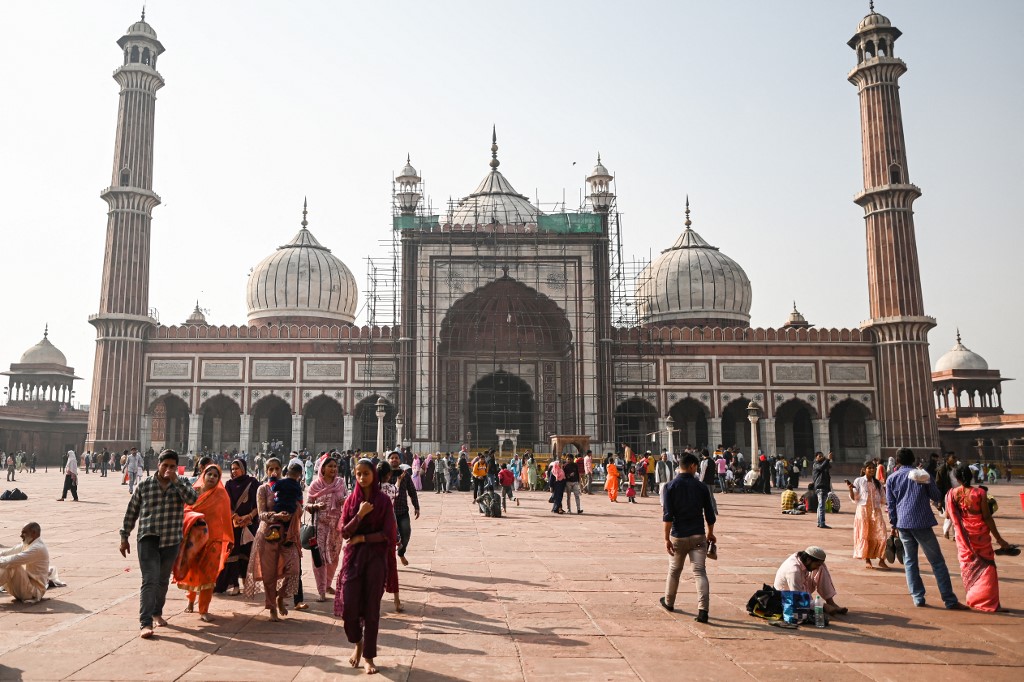
People visit the Jama Masjid complex in the walled city area of New Delhi, India on Nov. 26, 2022. (AFP)
The Jama Masjid was built by Shah Jahan in Delhi in 1656. Constructed in red sandstone and marble, it is one of the largest and finest mosques in India. It took a decade to complete and the work of thousands of artisans.
But the greatest masterpiece of Shah Jahan’s time is the Taj Mahal, a white-marble mausoleum he built in Agra in 1648, in memory of the emperor’s wife, Mumtaz Mahal.
Known as one of the world’s wonders and a “monument of love,” it is recognized by UNESCO as “the greatest architectural achievement in the whole range of Indo-Islamic architecture.”
For Rezavi, it is also a structure where native Indian styles reached their finest display.
“The architecture in India is an amalgamation of indigenous and Indo-Islamic tradition,” he said. “Look at the Taj Mahal. It has both Indian and Iranian influences, but I feel that indigenous influences are more prominent.”


