Pakistan’s UN envoy apologizes for comments on Pashtun culture in women education comments

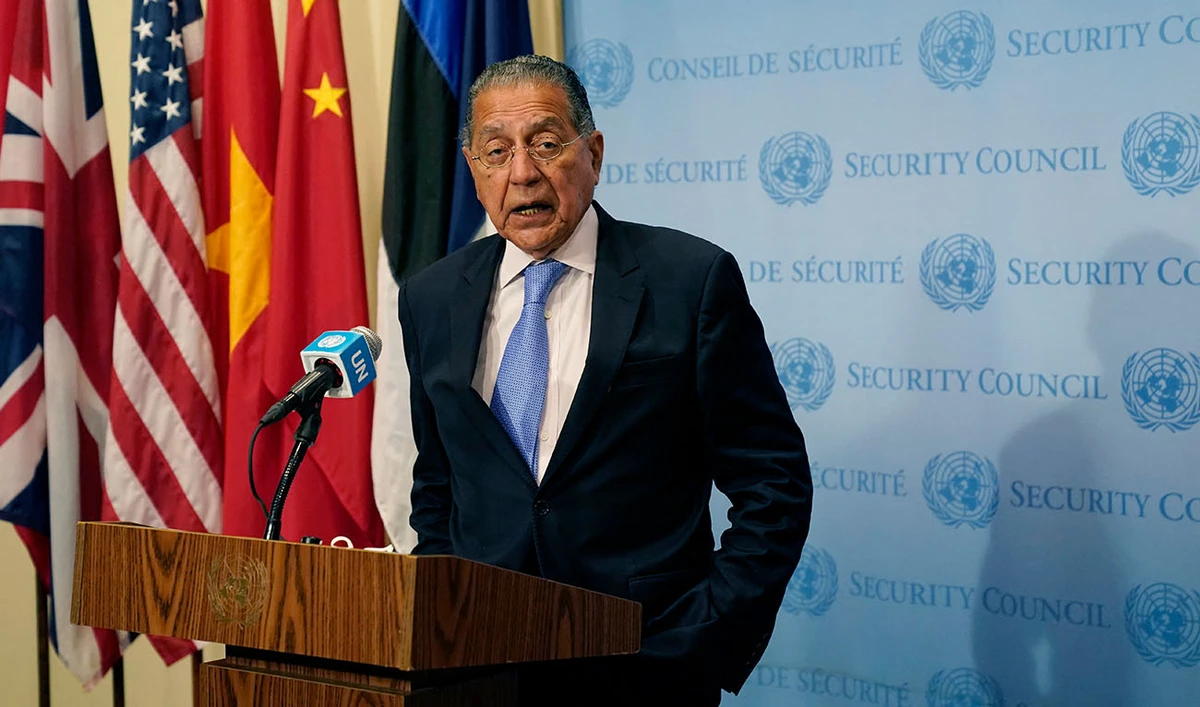
Pakistan's ambassador to the United Nations Munir Akram speaks outside a UN security council meeting on Afghanistan on August 16, 2021 at the United Nations in New York. (Photo courtesy: AFP)
Short Url
Updated 03 February 2023
Follow

Pakistan’s UN envoy apologizes for comments on Pashtun culture in women education comments

  • Munir Akram called keeping women at home ‘distinctive cultural reality’ of Afghanistan, Pashtuns
  • Pakistani envoy to the UN says he ‘misspoke’ his words as he had deep respect for Pashtun culture

ISLAMABAD: Pakistan’s envoy to the United Nations, Munir Akram, on Friday apologized for his comments about the Pashtun culture which drew flak on social media after he termed the Afghan Taliban government’s ban on women’s education and work a “distinctive cultural reality” of Afghanistan.

The Pakistani diplomat briefed member states on two high-level UN visits to Afghanistan on Thursday and said the Taliban’s decision to bar women from seeking education and employment did not stem from religious beliefs but was an aspect of the Pashtun culture that required women to stay at home and had remained unchanged for hundreds of years.

Akram’s statement was widely criticized on social media by both Pakistanis and Afghans, with Afghanistan’s ambassador to Sri Lanka asking the UN to “immediately refute this piece of disinformation” and saying Pashtun girls had been attending schools and universities since time immemorial.

In response to the criticism, Akram issued an apology, saying his words “did not accurately reflect Pakistan’s position.”

“My apologies for the hurt caused by my comments at the humanitarian briefing on Afghanistan,” he wrote on Twitter. “I [misspoke] & my words did not accurately reflect Pakistan’s position.”

“I have deep respect for Pashtun culture,” he continued. “Denying women & girls access to education is neither Islamic nor Pashtun culture.”


Earlier, Akram said he meant “no disrespect” to the Pashtun culture which was “highly progressive and deserves all respect across the world,” the state-owned Associated Press of Pakistan (APP) news agency quoted him as saying.

The Pakistani envoy said he had referred to a “peculiar perspective” of a small minority, which had resulted in restrictions on Afghan women, according to the report.

The restrictions were “not consistent with Islam and the Sharia, which provides all rights to women, including to work and education,” he added.

Last year, the interim Taliban government in Afghanistan provoked anger in many parts of the world when it issued edicts banning women from attending universities and secondary schools. The Afghan government also ordered local and foreign aid organizations to ban women from working in their offices.

Afghanistan’s Taliban rulers justified the move by saying some women had not adhered to their interpretation of the Islamic dress code.
At ECO meeting, Pakistan proposes ‘Regional Innovation Hub’ to curb natural disasters

Updated 5 sec ago
Follow

At ECO meeting, Pakistan proposes ‘Regional Innovation Hub’ to curb natural disasters

  • Pakistan hosts high-level 10th ECO Ministerial Meeting on Disaster Risk Reduction in Islamabad
  • Innovation hub to focus on early warning technologies, risk informed infrastructure planning

ISLAMABAD: Pakistan has proposed to set up a “Regional Innovation Hub on Disaster Risk Reduction” that focuses on early warning technologies and risk informed infrastructure planning, the Press Information Department (PID) said on Wednesday, as Islamabad hosts a high-level meeting of the Economic Cooperation Organization (ECO).

The ECO’s 10th Ministerial Meeting on Disaster Risk Reduction (DRR) is being held from Jan. 21-22 at the headquarters of the National Disaster Management Authority (NDMA) in Pakistan’s capital. 

The high-level regional forum brings together ministers, and senior officials from ECO member states, representatives of the ECO Secretariat and regional and international partner organizations. The event is aimed to strengthen collective efforts toward enhancing disaster resilience across the ECO region, the PID said. 

“Key agenda items include regional cooperation on early warning systems, disaster risk information management, landslide hazard zoning, inclusive disaster preparedness initiatives, and Pakistan’s proposal to establish a Regional Innovation Hub on Disaster Risk Reduction, focusing on early warning technologies, satellite data utilization, and risk-informed infrastructure planning,” the statement said. 

The meeting was attended by delegations from ECO member states including Pakistan, Türkiye, Azerbaijan, Iran, Kyrgyzstan, Tajikistan, Turkmenistan and Uzbekistan. Representatives of regional and international organizations and development partners were also in attendance.

Discussions focused on enhancing regional coordination, harmonizing disaster risk reduction frameworks, and strengthening collective preparedness against transboundary and climate-induced hazards impacting the ECO region, the PID said. 

ECO members states such as Pakistan, Türkiye, Afghanistan and others have faced natural calamities such as floods and earthquakes in recent years that have killed tens of thousands of people. 

Heavy rains triggered catastrophic floods in Pakistan in 2022 and 2025 that killed thousands of people and caused damages to critical infrastructure, inflicting losses worth billions of dollars. 

Islamabad has since then called on regional countries to join hands to cooperate to avert future climate disasters and promote early warning systems to avoid calamities in future.