Pakistani troops kill 2 militants in raid near Afghan border

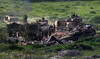
A Pakistani army soldier stands guard along with border fence at the Pak-Afghan border near the Punjpai area of Quetta in Balochistan on May 8, 2018. (Photo courtesy: AFP)
Short Url
Updated 03 February 2023
Follow

Pakistani troops kill 2 militants in raid near Afghan border

  • Military says militants killed during raid were involved in past attacks on security forces
  • Development comes days after suicide blast in mosque killed 101 people in Peshawar

ISLAMABAD: Troops raided a militant hideout in a former Pakistani Taliban stronghold near the border with Afghanistan on Friday, triggering a shootout that killed two insurgents, the military said.

Pakistani Prime Minister Shahbaz Sharif summoned the country’s opposition leader to forge a response to the recent surge in violence, including a mosque bombing that killed 101 people.

Troops on Friday recovered a cache of weapons in a militant hideout in North Waziristan, a district of the northwestern Khyber Pakhtunkhwa province, the military said in a statement. The militants killed during the raid had been involved in past attacks on security forces, it added.

The statement provided no further details, and the identity of the slain militants was not immediately known.

Troops routinely carry out such raids to trace and arrest the Pakistani Taliban, who are also known as the Tehrik-e-Taliban Pakistan.

The Pakistani Taliban are a separate group but are allies of the Afghan Taliban, who seized power in Afghanistan a year ago as US and NATO troops were in the final stages of their pullout. The Taliban takeover in Afghanistan has emboldened the Pakistani Taliban, who have stepped up attacks since November when they ended the cease-fire with the government.

The latest development comes days after a suicide bomber attacked a mosque on the compound of police in the northwestern city of Peshawar, killing 101 people. Authorities say the bomber wore a police uniform and the guards at the site assumed he was a police officer — their colleague — and did not search him.

On Friday, Sharif said in a televised address that he had invited his predecessor and now opposition leader, Imran Khan, and other officials to a conference Tuesday to discuss the next steps. There was no immediate response from Khan, who was ousted in a no-confidence vote in Parliament in April last year.

Sharif said Monday’s attack inside the mosque was carried out by a suicide bomber, and there was no truth in allegations and claims that it was a drone attack.

Pakistan blames the Pakistani Taliban, who maintain sanctuaries in Afghanistan, for orchestrating the bombing that wounded 225 wounded. Police say most of the casualties were not caused by the detonation of the bomber’s explosives but by the collapse of the roof of the 50-year-old Peshawar mosque. The force of the blast caused the roof, which was supported by outside walls but no pillars, to cave in.


Pakistan finance minister touts debt discipline, export focus at Davos panel

Updated 5 sec ago
Follow

Pakistan finance minister touts debt discipline, export focus at Davos panel

  • Aurangzeb says debt must fund exports, not consumption, for sustainable growth
  • He says Pakistan used fiscal buffers to respond to floods without external appeals

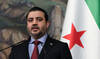
KARACHI: Pakistan’s Finance Minister Muhammad Aurangzeb said on Wednesday disciplined borrowing, export-led growth and careful debt management were central to stabilizing the country’s economy, as Islamabad looks to unlock new sources of growth amid rising global debt levels.

Speaking at a panel discussion on the sidelines of the World Economic Forum (WEF) in Davos, he said debt was not inherently harmful if used productively, but warned that emerging economies such as Pakistan could not afford to deploy borrowed funds for consumption.

“For countries like Pakistan, debt must be channeled into investments that generate exportable surplus,” Aurangzeb said, according to a statement circulated by the Finance Division. “It is not about the availability of debt or funding, but how wisely and effectively it is steered to create long-term economic value.”

Pakistan has been pursuing fiscal reforms as part of an International Monetary Fund-backed stabilization program, including cutting subsidies, broadening the tax base and restructuring state-owned enterprises, as the government seeks to restore macroeconomic stability and revive growth.

Aurangzeb said Pakistan had reduced its debt-to-GDP ratio to 70 percent from 75 percent, achieved a primary fiscal surplus and brought inflation down from a peak of 38 percent to single digits, allowing the central bank to cut its policy rate to 10.5 percent.

He also flagged ongoing debt-management reforms, including liability management operations and buybacks, and said Pakistan plans to enter China’s capital markets with its first Panda bond, structured as a green bond.

Addressing climate risks, Aurangzeb said building fiscal buffers had allowed Pakistan to respond to recent floods using domestic resources rather than international emergency appeals, underscoring the need for resilience in climate-vulnerable economies.

He added that public-private partnerships and capital markets were playing a growing role in financing development, citing a $3.6 billion syndicated financing for a major copper mining project expected to generate $2.8 billion in annual exports from 2028.

The finance minister is part of Pakistan’s delegation visiting Davos for the annual gathering of global leaders and investors.

The delegation is led by Prime Minister Shehbaz Sharif, who highlighted the country’s shift toward an export-driven growth model, with a focus on minerals, information technology, artificial intelligence and digital services, while speaking at a breakfast event on the sidelines of the forum.