



PESHAWAR: When Peshawar resident and police constable Muhammad Sohail was injured in an Improvised Explosive Device (IED) blast during election duty in 2013, he could never have imagined this would not be his last brush with death.
On Monday, Sohail was one of over 220 people injured after a suicide bomber struck a mosque inside a police compound in Peshawar, killing 101 people. The provincial police chief has said the attacker disguised himself in a police uniform and did not raise suspicion among guards before he carried out the attack, one of the deadliest ever in the capital city in Khyber Pakhtunkhwa province.
The northwestern province and other parts of Pakistan have seen a rise in militant attacks since late last year when Pakistani Taliban, or TTP, militants called off a truce with the government. The TTP has denied responsibility for the latest attack, which no group has claimed so far.
“This was the second time that I got injured in an attack,” Sohail said from his hospital bed at the Lady Reading Hospital.
“I was going to offer prayers. When I completed my ablution, the congregation was ready for prayers and I stepped into the verandah quickly. Then all of a sudden I heard a loud sound.”
The next thing Sohail remembers is waking up in the hospital surrounded by doctors and other patients.

Police officer Muhammad Sohail, wounded in the recent suicide blast at Peshawar police lines, being treated at Lady Reading Hospital in Peshawar, Pakistan on February 2, 2023. (AN photo)
The 2013 attack badly injured Sohail’s feet and left him bedridden for nearly three years, having to arrange Rs500,000 for his treatment after receiving little government help, he said.
“Everything is at your own risk here [in the police department],” the police constable said, adding that he planned to resign from the police force. “Why is this happening, there is no one to ask. If you die, you die, if you get injured, you are injured.”
Muhammad Mahboob, a Dera Ismail Khan resident who was in Peshawar for a month-long police refresher course, was also injured in Monday’s attack.
He described hearing the prayer leader saying “Allah-hu-Akbar,” right before the blast, which threw him up in the air and against a wall. He was buried under three feet of debris.
“I recited the kalima [Islamic phrase] thinking that life is over,” Mahboob told Arab News from hospital where he is being treated for pelvic fractures and awaiting surgery.
“I motivated myself to push for a last struggle for survival and tried to remove the bricks from around my body but my hands were motionless.”
After he called for help, four people came to his rescue.
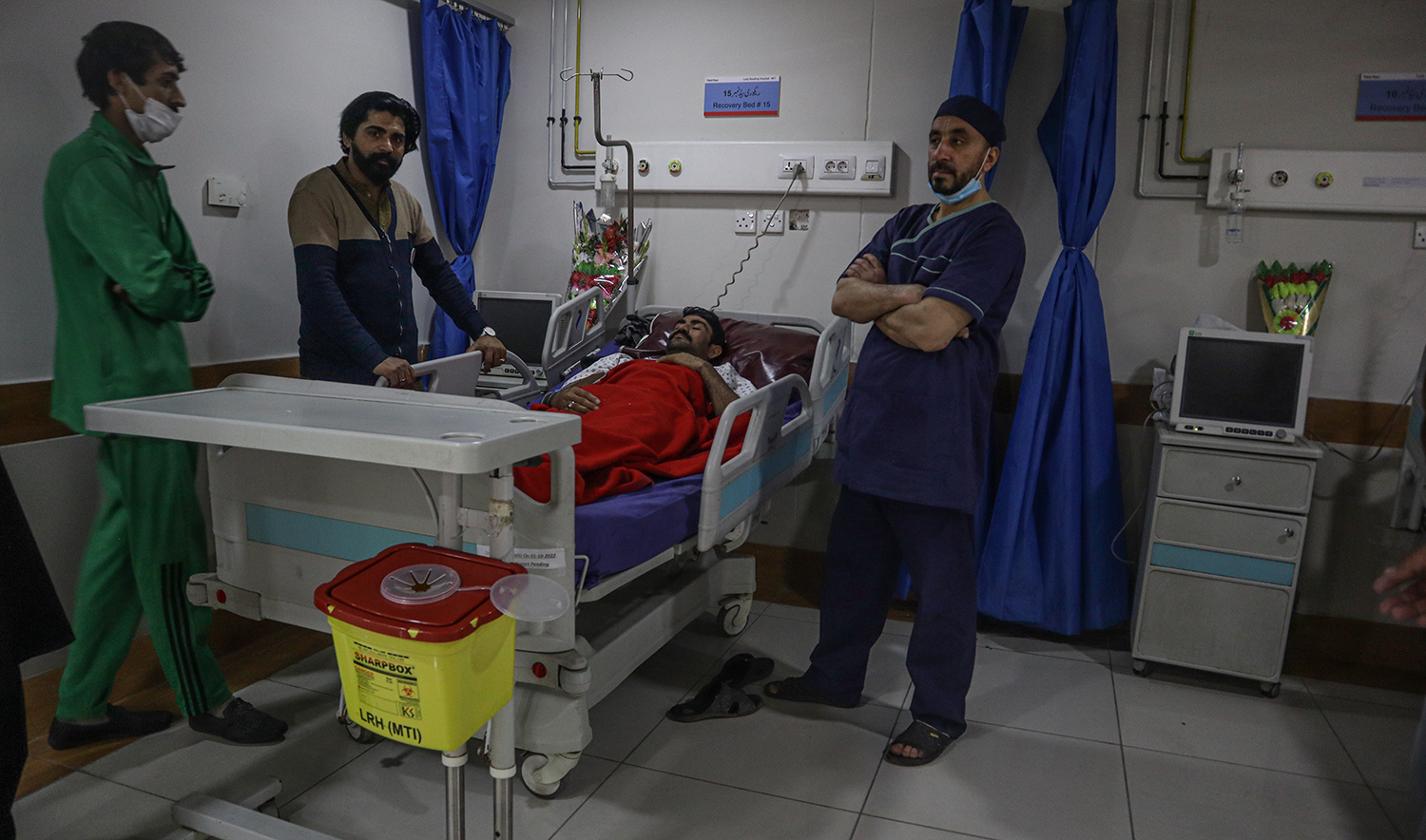
Medical staff looking after the survivors of the recent suicide blast at Peshawar police lines on February 2, 2023. (AN photo)
Lady Reading Hospital Spokesperson, Muhammad Asim, said 46 injured policemen were under treatment at Peshawar's largest medical facility, of which seven were in critical condition in the Intensive Care Unit (ICU):
“We have discharged almost 100 injured in the past three days after they got timely medical treatment.”
Inspector General of Khyber Pakhtunkhwa Police Moazzam Jan Ansari told the media on Thursday that senior police officers have visited the injured and they were being provided assistance from a police welfare fund.
Interim chief minister of Khyber Pakhtunkhwa Azam Khan has also promised financial support for the injured and the families of the dead. But on Wednesday, a large number of policemen protested in front of the Peshawar Press Club, demanding a fair investigation into the incident.
“We need an answer to the question of why is all this happening,” Mahboob said. “Every day when one scrolls through Facebook, you can see police being attacked. Just coffins are given shoulders and funerals are held, but no one answers the question: Why is this even happening?”


