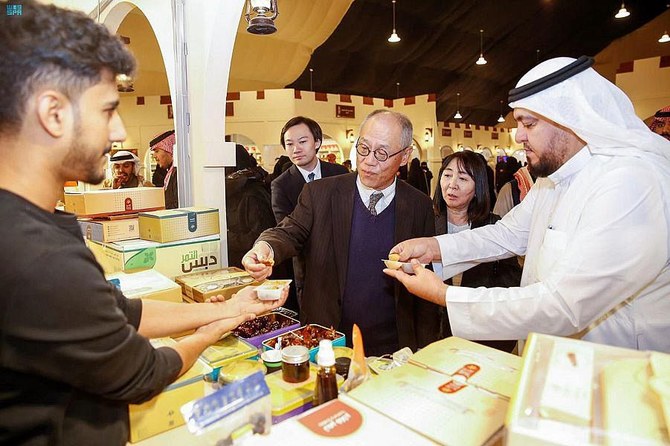
Japanese envoy visits Al-Asha date festival

Japanese Ambassador to Saudi Arabia Fumio Iwai visiting Al-Ahsa date festival at Al-Ahsa Heritage Castle in Al-Hofuf. (SPA)
Short Url
Updated 31 January 2023
Follow

Japanese envoy visits Al-Asha date festival

  • Ambassador Fumio Iwai expressed his happiness with the activities and programs he witnessed at the festival

AL-AHSA, Saudi Arabia: Japanese Ambassador to Saudi Arabia Fumio Iwai visited the Al-Ahsa date festival, which was organized by the Al-Ahsa municipality at Al-Ahsa Heritage Castle in Al-Hofuf.
The Japanese envoy expressed his happiness with the activities and programs he witnessed at the festival, pointing to his previous visits to a number of date festivals around the Kingdom.
Al-Ahsa is the largest date palm oasis in the world, with about 3 million trees spread across 30,000 acres.
The festival, which lasts until Feb. 18, includes various events and activities, in addition to an exhibition of 40 handicrafts popular in Al-Ahsa.


Saudi wildlife center releases 140 wild animals into royal reserve

The initiatives aim to enhance ecological balance and restore biodiversity in natural habitats. (SPA)
Updated 07 February 2026
Follow

Saudi wildlife center releases 140 wild animals into royal reserve

  • This milestone reflects significant progress in the management and governance of wildlife across the Kingdom, supporting the goals of the Saudi Green Initiative and aligning with the objectives of Saudi Vision 2030

RIYADH: The National Center for Wildlife released 140 wild animals into the King Salman bin Abdulaziz Royal Reserve as part of ongoing programs to reintroduce endangered species. The initiatives aim to enhance ecological balance and restore biodiversity in natural habitats.

The release, carried out in cooperation with the King Salman bin Abdulaziz Royal Reserve Development Authority, included 30 Arabian oryx, 70 reem gazelles (sand gazelles), and 40 houbara bustards, the SPA reported on Thursday. 

The initiative forms part of efforts to reintroduce species to their natural habitats and establish stable, self-sustaining wildlife populations capable of breeding, contributing to improved ecosystem functioning and sustainability.

The NCW continues to implement its strategic plans for wildlife development, with the total number of animals reintroduced through its specialized programs now exceeding 10,000.

This milestone reflects significant progress in the management and governance of wildlife across the Kingdom, supporting the goals of the Saudi Green Initiative and aligning with the objectives of Saudi Vision 2030.