


KABUL: Afghans are calling for more international support following increasingly restrictive edicts issued by the Taliban administration, as the US special representative for Afghanistan began a trip on Monday aimed at refining an international response to support the country.
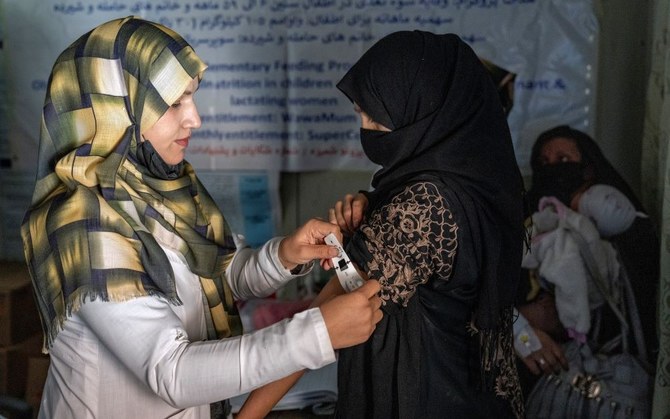
The Taliban has introduced a series of restrictions on Afghan women since taking control of the country in 2021, including barring women from university and secondary schools. Authorities in December ordered all NGOs to ban women employees, though those in health were allowed to return to work earlier this month.
The moves drew widespread condemnation, with high-ranking UN officials and leaders of major international organizations visiting Afghanistan this month to try and reverse the Taliban’s crackdown on women and girls.
Special Representative for Afghanistan Thomas West will travel to Pakistan, Germany and Switzerland on a mission to “consult with partners, Afghans and humanitarian relief organizations,” the US Department of State said in a statement, in one of the latest efforts to address the situation in the South Asian country.
“SRA West will work with counterparts to refine a unified regional and international response that reflects a collective commitment to Afghan women and girls’ rights, and access to vital aid,” the statement added.
Afghans are hopeful that West’s trip could benefit Afghanistan, with some urging the international community to increase pressure on the Taliban.
“No doubt this mission will help in the case of Afghanistan. I believe if this mission is implemented in a way to find a solution for the misery of Afghan people it will most definitely work,” Mohibullah Sharif, an Afghan political expert based in Kabul, told Arab News.
“However, if like previously, the mission is only for securing the interests of regional and international players, this will bring no good for Afghans and will worsen the situation.”
Life in Afghanistan has grown increasingly difficult for women, said Shamsia Hassanzadah, a member of the Afghan Women’s Network and former director of Star Education Center in Kabul, who was affected by the ban on women working for NGOs.
“Women in NGOs should be allowed to work because a woman’s work is very important for their family economy,” Hassanzadah told Arab News, adding that she was the breadwinner in her family.
“We want the international community to bring further pressure on the current government of Afghanistan and we believe such steps and measures will help to decrease the Taliban’s restrictions toward Afghan women,” she added.
“It will also prevent or even stop the Taliban from issuing further decrees against women’s education and employment in Afghanistan.”
Afghanistan needs more support from the UN and the global community, according to women’s rights activist Farimah Nikkhwah, who was also affected by the recent ban.
“In the current situation, Afghanistan needs the special attention of the UN and the international community to prevent the negative and illogical actions of the Taliban,” Nikkhwah told Arab News.
UN Under-Secretary-General for Humanitarian Affairs Martin Griffiths said last week following a Kabul visit that Taliban ministers are working on new guidelines to allow women more freedom in humanitarian work.
“The needs of Afghanistan, for us, are of the highest importance because of its people, because of its obvious, deserved priority for us in our humanitarian world. The need for Afghanistan to be properly serviced by humanitarian operations is also a global priority,” Griffiths told AFP in an interview.
When it comes to Afghan girls’ education, pleas are also coming from within the country, said Dr. Hatef Mokhtar, head of the Afghanistan International Strategic Studies Center.
“Afghans want Afghanistan to come out of isolation,” Mokhtar told Arab News.
“The opening of Afghan girls’ schools is not the voice of the world, but it is the voice of the Afghans themselves. The Islamic Emirate of Afghanistan should take this issue seriously and open the girls’ schools as soon as possible.”


