Saudi Arabia top of women’s health list for Arab countries, ranks ahead of UK

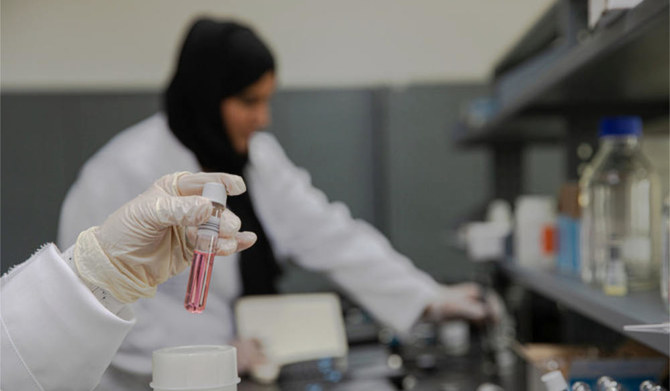
Saudi Arabia ranks as the top Arab country in women’s health. (AN file photo)
Short Url
Updated 27 January 2023
Follow

Saudi Arabia top of women’s health list for Arab countries, ranks ahead of UK

  • Saudi women are now leading in lots of fields thanks to our government which has been continuously encouraging and supporting us to go ahead at national and international levels

RIYADH: Saudi Arabia has ranked as the top Arab country for women’s health, being placed ahead of the UK on a global list.

According to the recently released Hologic Global Women’s Health Index’s 2021 report, the Kingdom and the UAE were positioned 28th and 35th, respectively, the highest rankings for nations in the Arab world.

Dr. Mona Salahuddin Al-Munajjed, a prominent sociologist at the forefront of those influencing women’s affairs in Saudi Arabia, told Arab News: “I am not surprised by these new findings. On the contrary, I am happy by the great results.

“I am proud that my country has made incredible positive developments in education, health, and other fields for both men and women.

Saudi women are now leading in lots of fields thanks to our government which has been continuously encouraging and supporting us to go ahead at national and international levels. This means we are going in the right direction in fulfilling our Saudi Vision 2030.

Dr. Mona Salahuddin Al-Munajjed, Sociologist

“Saudi women are now leading in lots of fields thanks to our government which has been continuously encouraging and supporting us to go ahead at national and international levels. This means we are going in the right direction in fulfilling our Saudi Vision 2030,” she said.

Lebanon and Turkey held some of the lowest scores, named in the bottom 10 of the 122 countries listed at 118th and 119th, respectively.

The UK was ranked two positions behind Saudi Arabia at 30th.

The medical technology company’s global report struck a chord in the UK, where the cash-strapped National Health Service is battling staff shortages and patient-treatment backlogs. Ambulance workers recently held their biggest strike and junior doctors have voted for industrial action.

The US came in 23rd in the index behind Germany, New Zealand, and Singapore but ahead of France. Taiwan and Latvia scored the highest and Afghanistan the lowest in the global index.

The health survey showed a decline in women’s ability to meet their basic needs as well as record levels of stress, worry, and anger.

The UK dropped three points in the latest index, ranking on a par with Poland, Slovenia, and Kosovo, besides Kazakhstan. It was among the fastest-declining countries for emotional health, according to the report.

The US remained an exception because higher health spending did not translate into better outcomes, said the report.

The findings were based on interviews with almost 127,000 women and men, with questions encompassing preventive care, emotional health, opinions of health and safety, and basic needs.

Hologic Inc. and partner Gallup interviewed women to rate multiple measures, from mental health to preventive care.

The purpose of the global index is to identify critical gaps in what the world understands about the health and well-being of women and girls, to eventually find solutions.


Saudi minister emphasizes environment as key to public health, economic growth 

Updated 5 sec ago
Follow

Saudi minister emphasizes environment as key to public health, economic growth 

  • Riyadh conference features more than 450 exhibitors from 35 countries displaying sustainability efforts 
  • Abdulrahman Al-Fadhli highlights Kingdom’s environmental achievements and Vision 2030 goals

RIYADH: Minister of Environment, Water and Agriculture Abdulrahman Al-Fadhli said Saudi Arabia considers the environment vital for public health and economic growth, noting that Vision 2030 has been key in revitalizing ecosystems and advancing sustainability in the Kingdom’s national transformation.

He made the remarks during the opening of the IFAT Saudi Arabia conference and exhibition in Riyadh, which brought together global leaders in the circular economy, decision-makers, and investors, highlighting Saudi Arabia’s role in promoting environmental action, knowledge exchange, and partnerships in water and waste management.

Running until Jan. 28, the exhibition focuses on waste management, environmental services, and water, presenting the latest technologies, solutions, and best practices, the Saudi Press Agency reported.

With more than 450 exhibitors from 35 countries and 10 national pavilions, the exhibition highlights the Kingdom’s role as a regional hub for environmental and sustainability sectors.

Visitors explore solutions in waste management, recycling, water treatment, and circular-economy applications, supporting the Kingdom’s sustainability goals and enhancing resource efficiency.

The minister noted significant advancements in the water sector, citing an integrated system covering production, transportation, distribution, treatment, and reuse, with a capacity exceeding 16 million cubic meters per day.

Saudi Arabia also operates one of the world’s largest water transport networks and currently reuses about 33 percent of treated water to support environmental sustainability and improve resource efficiency.

Al-Fadhli highlighted the achievements of the Saudi Green Initiative, which has rehabilitated more than 500,000 hectares of degraded land, planted more than 151 million trees, and expanded protected land and marine areas to about 18 percent, with a target of 30 percent by 2030.

He also noted the establishment of a national regulator for waste management and a comprehensive framework for the waste value chain. The sector offers more than 500 investment opportunities, projected to reach hundreds of billions of riyals over the next 25 years, supported by more than 900 facilities in the Kingdom.

Al-Fadhli expressed hope that the conference would foster partnerships and practical solutions, strengthen the waste management system, and advance the circular economy for a sustainable future.

The National Center for Waste Management signed several memoranda of understanding on the sidelines of IFAT Saudi Arabia to strengthen cooperation in waste management, sustainability, and circular economy practices.

The MoUs reflect the center’s efforts to expand strategic partnerships and enhance institutional integration in line with the Kingdom’s Vision 2030 goals to protect the environment, improve quality of life, and advance the circular economy.